
RV life is not what Instagram shows you. The sunsets and the drone shots over the beach are real, we have taken them, but nobody films the other part. The organizing, the donating, the fixing, the cleaning, the laundry, the cooking, the groceries. That is most of it. That is just life, and it happens to be happening in a fifth wheel.
This weekend was almost entirely that. Last week the macerator quit on us mid-dump, and we ended the video with full tanks, a pump that would not turn on, and a replacement power cord on the way from Amazon. The cord arrived. This is what happened next.
The new cord arrived and nothing changed
We had two problems the first time around. The macerator was clogged, and Nathan had to get it turning by hand. Somewhere in the middle of that the pump was switched on while it was not actually running, and that burned out the power plug. So the new cord was the obvious first move.
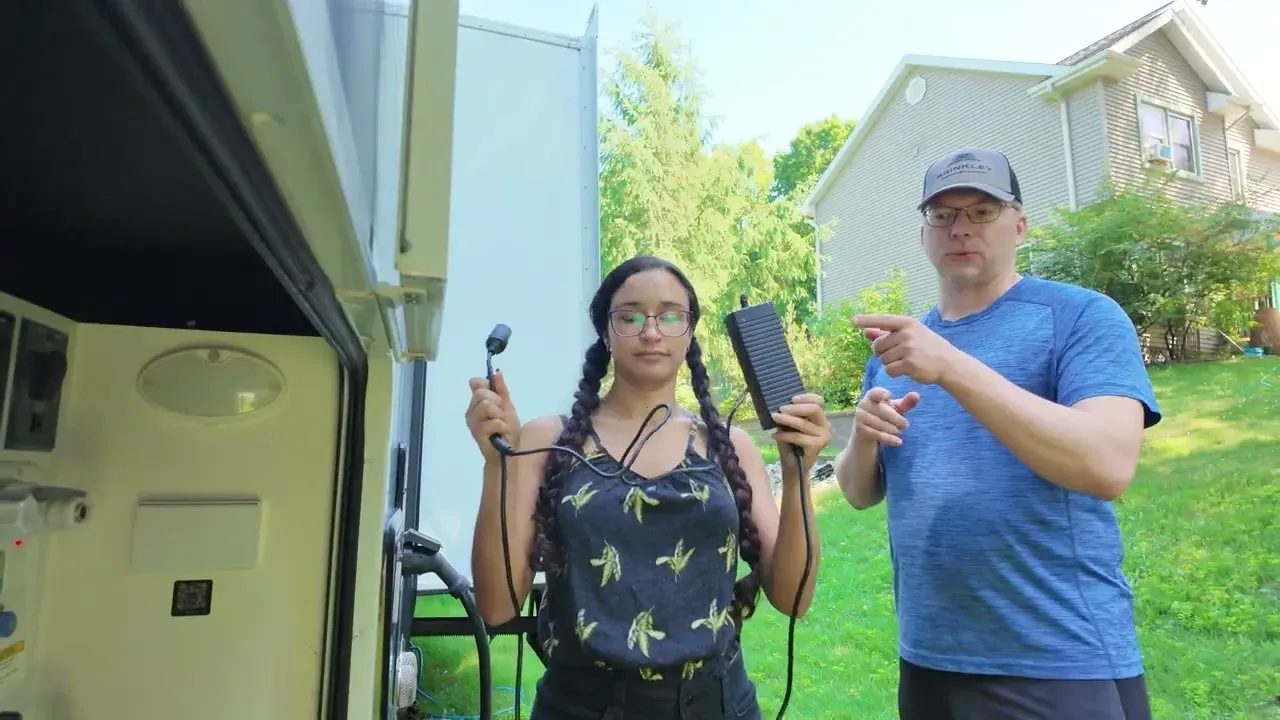
Fabiola brought it out to the truck like a present, which is roughly how excited we both were about spending another Saturday on the waste tanks. Nathan's answer to "are you excited to go do this project" was a flat no. This is our real life and we do like it, but nobody is thrilled about this particular job.
We plugged the new cord in and the green light came on. That was the good news. We pulled on gloves, hooked the pump back up to the black tank, opened the vent side so the tank could actually breathe, and opened the valves. It had been warm all day and there was enough pressure behind the valve that it popped when it opened, which tells you how long that tank had been sitting.
Then we hit the switch, and nothing happened.
The green light kept going out
The next twenty minutes were the kind of troubleshooting that does not look like much on camera. The green light was on. Then it was off. Then it was on again if you moved the cord. Every time we pressed the button, the light died, which felt like something was pulling all the power the moment the motor tried to draw it.
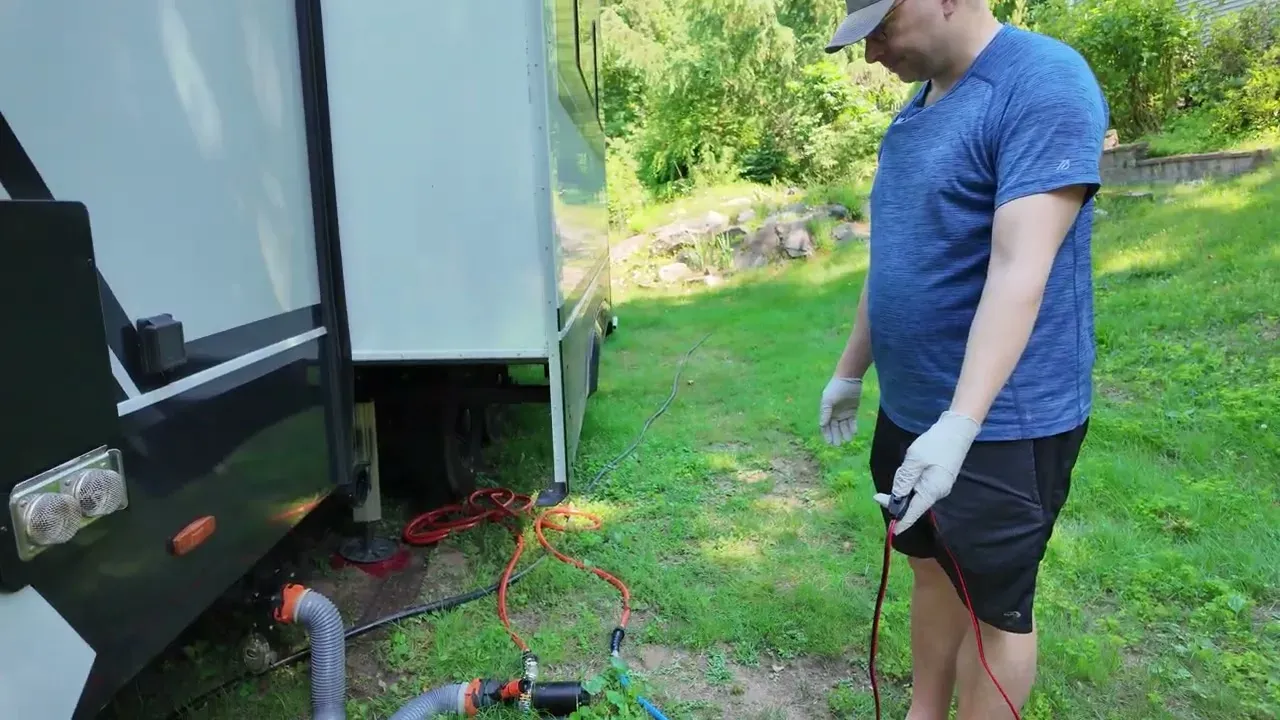
That could have been the pump shorting out, so we tried a different outlet, then the truck. Two things turned out to be true at once. One, the plug had not been pushed in all the way, and Fabiola pointed out the reason: Brazilian plugs are a different shape, and after her first few years here the American ones still do not feel seated to her when they are. Two, Nathan had turned the truck off while we were mid-test, which is why the truck outlet proved nothing at all.
Once both of those were sorted, the green light stayed on and stayed on. Good, solid power. And the pump still would not turn.
If you are working through the same thing on your own rig, we wrote up the full sequence in our macerator troubleshooting guide, including the manual turn on the back of the unit that saved us last time.
Then we got the drill out
The tool bag came out, and the first thing we learned is a lesson for the hardware store rather than the campsite. When you buy a drill bit set, check that it actually includes a standard flat head. Ours looked complete and matched the brand and had somehow no flat head in it at all, which is a fantastic thing to discover while sitting in the grass next to a full black tank. We found one loose in the bottom of the bag.
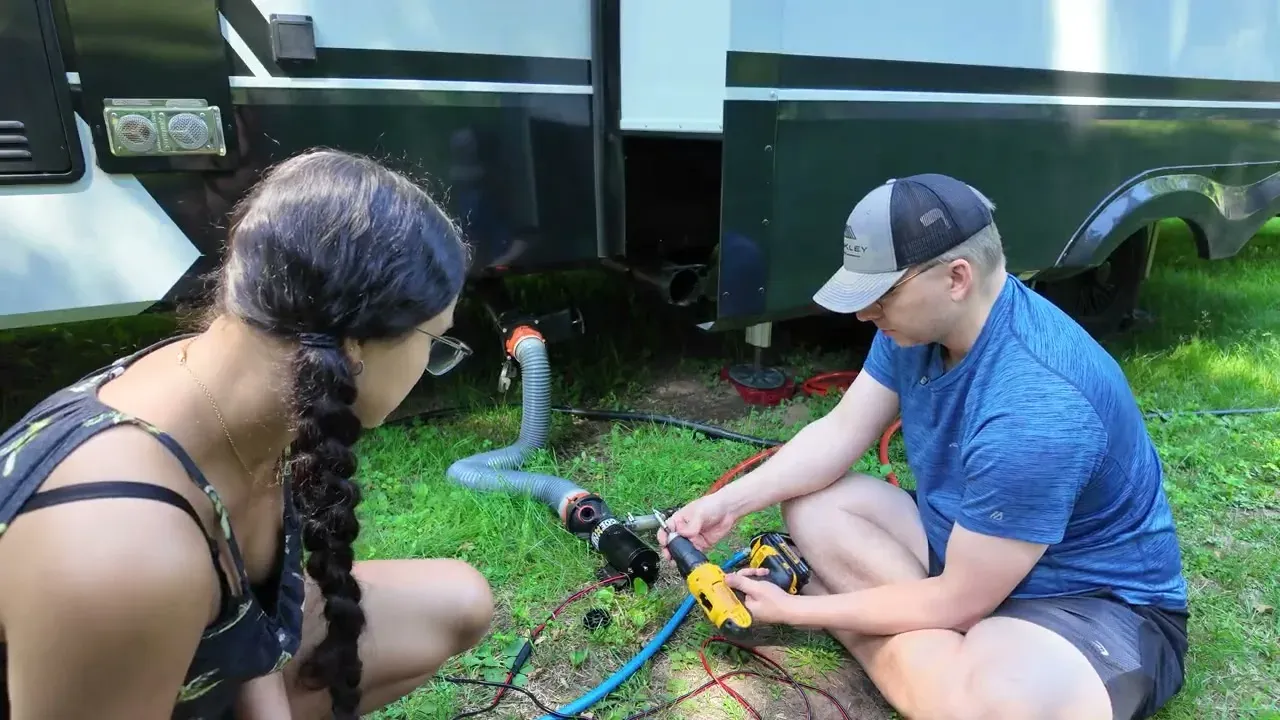
The fix, once we got there, is genuinely simple. Put the drill on the shaft at the back of the macerator, run it until the impeller is spinning freely, then pull the drill off and hit the power switch fast while it is still turning. The motor picks it up and keeps going.
It made a sound. Then it moved. Then water started climbing the hose and both of us lost it a little, which you can see in the video, and Fabiola was so happy she would not let Nathan near her because he was covered in what he was covered in.
Here is the part worth knowing if you have a pump doing this. It will not start on its own after that. Every single time, you have to give it the drill first, and then it runs fine. It is like an old car that needs a push. That is not a permanent repair and we know it, but it moved the tanks, and it means the pump is seized rather than dead.
Why we could not just skip the macerator
A fair question if you have never moochdocked: why not skip the pump entirely and drag the tote to the dump station?
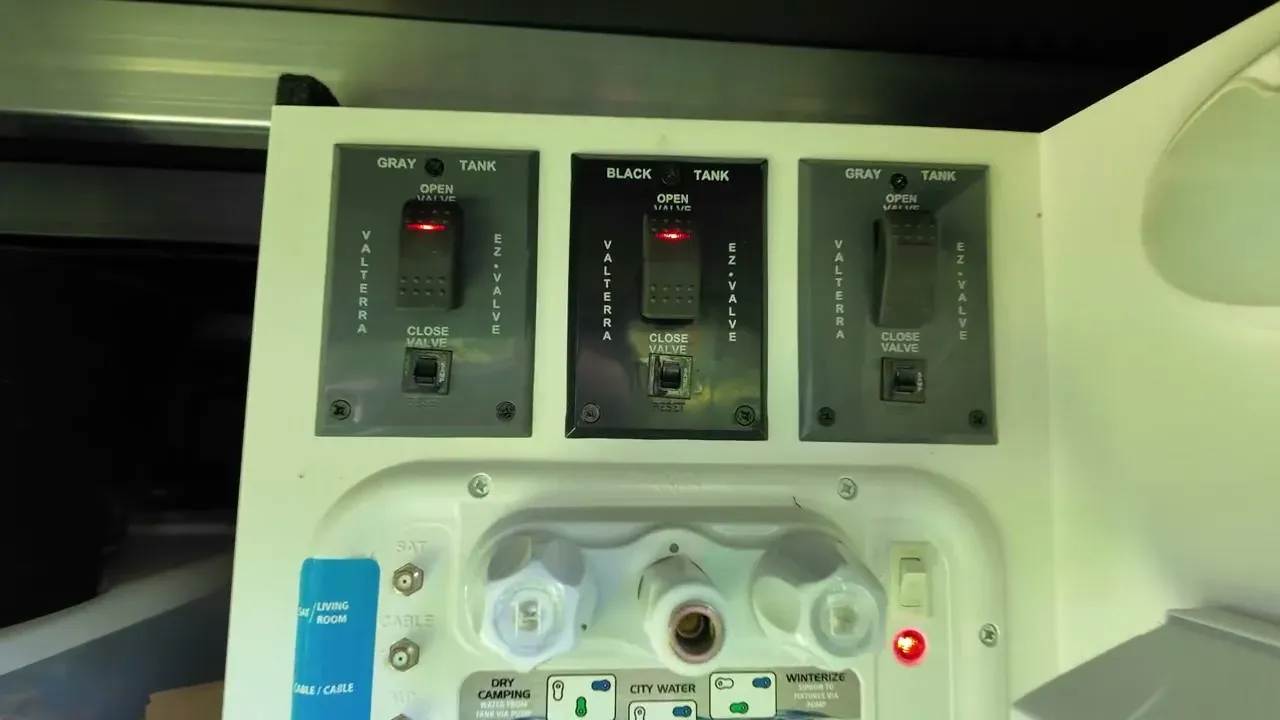
We are parked at family, which is a spot we are grateful for, and there is no sewer hookup. The dump station is the tourist park in Marquette, about twenty minutes away through town and out on the highway. That is a drive, not a walk. On top of that our waste outlet sits high relative to where the tote sits, so gravity does not do the work for us. Without the macerator the tanks were not moving, and we still had a week here with dishes piling up in the sink.
If you are setting this up for the first time, the whole sequence is in our guide to dumping with a tote tank, and the hoses, valves and tank we use are listed on our tanks and sanitation gear page.
Five dollars at the tourist park
The dump at the Marquette tourist park is $5, and it is a clean, easy one. A few things we do every time:
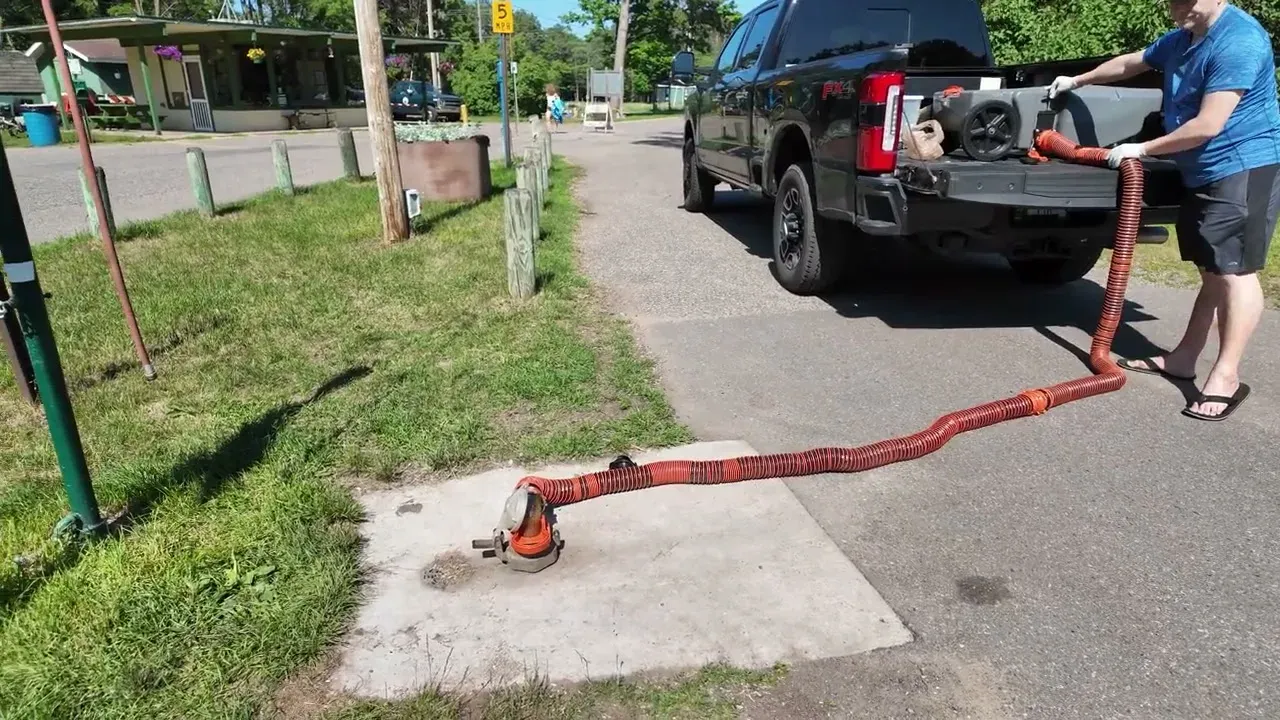
Keep the caps on while you are transporting the tote, and put the valve down before you pull the cap so you are not relying on hope. Open the valve a little first and check for leaks before you commit to the full flow. Nothing came out at first, which is normal, because it has to build up before it reaches the end of the hose.
The one that actually gets you a cleaner tote: when it looks finished, rock the tank back and forth. A surprising amount of what settles in the bottom of the tank and sits in the low spot of the hose comes through on that second push. We did two full rounds this time.
Fabiola made the point that stuck with us. In a house you never think about any of this. You pay a bill, the system exists, and nobody goes out to the street to move their own waste along. You only think about it when you are the plumber.
Dinner on the griddle while the second round drained
While Nathan ran the second tote load, Fabiola loaded the truck with clothes for Goodwill and then got the Blackstone going, which on ours means lighting it with a match. The bugs in the Upper Peninsula in August are as bad as everyone says.
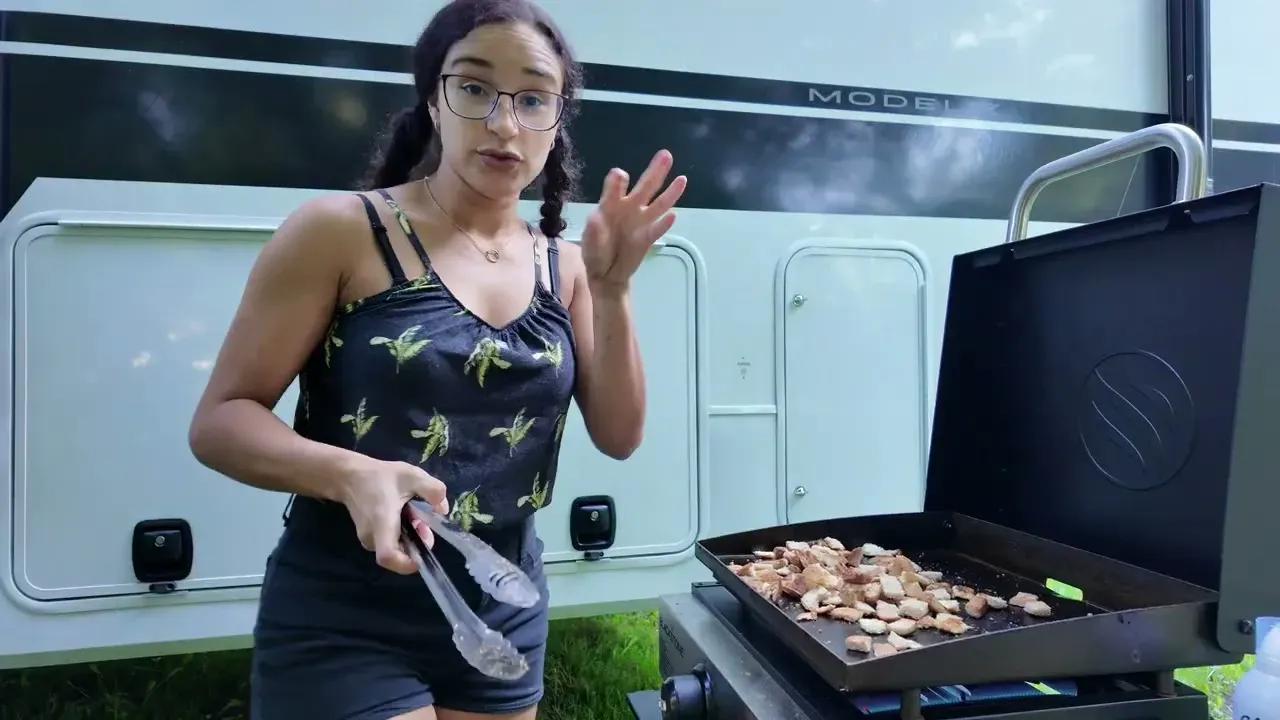
Dinner was smashed ground beef on tortillas with steak seasoning, bell peppers cooked down slow in the corner of the griddle where the heat is lower, and croutons made from the bread ends we do not like eating. Nothing gets thrown out in this house. She sprays the oil on rather than pouring it, almost like a light seasoning pass, so the whole surface stays greasy without pooling anywhere.
The beef goes onto the tortilla raw and the whole thing cooks beef-side down, which is the part that makes it work. We wrote it up properly as our Blackstone smash tacos recipe.
If you want the setup, the table, the tools and the storage are on our camp kitchen page, and if yours is new, start with how to season a griddle before you cook on it.
One safety note that is only funny because of how it ended. Nathan stood up straight into the slide corner while working outside, and the only reason it did not open his head up is that we keep pool noodles on the sharp edges. They look ridiculous. Keep them on.
Add two hours to whatever you planned
Sitting down to eat, neither of us had done half of what we meant to do that day.
That is the honest rule we have landed on after a year of this. Whatever you are planning, add two hours. Driving with the RV, add two hours. A small project like a silly macerator pump, add at least an hour, and in this case it turned into two videos.
The bigger version of that is what we actually talked about over dinner. When we moved into the RV, Fabiola expected freedom, the ability to go wherever she wanted. What nobody tells you is that a full time job takes the same five days it always did. You travel on weekends, which is when everything you wanted to see is open. During the week things close early, or you are tired from working all day, and the museum in the town you drove to is shut.
Everyone's priorities are different and that is fine. What has helped is getting good at the small stuff. Coffee at a window that happens to look at a lake. A sunset you catch from a grocery store parking lot. Some weeks that is the whole trip, and it is enough.
We are finally going west
Here is the news we have been holding onto. We are going to Yellowstone.
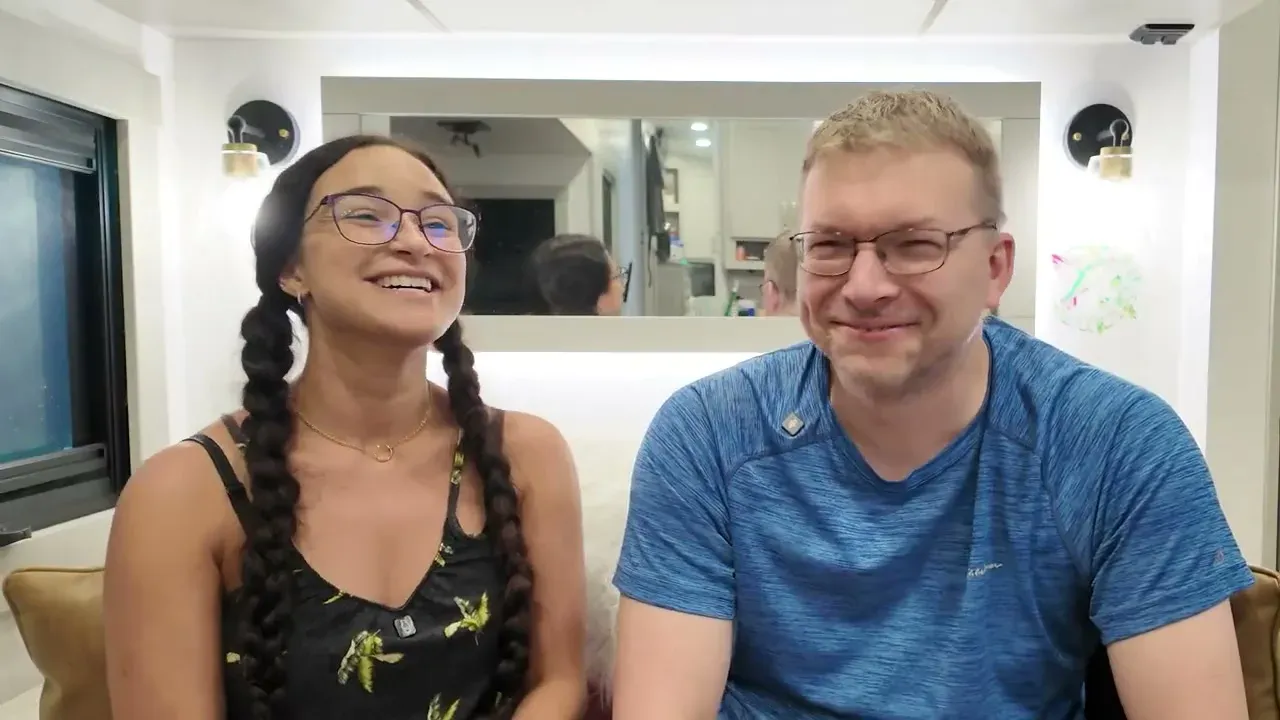
Not all the way to the ocean, but far enough west that it is a real trip, with a loop built in on the way. This one matters to Fabiola more than anything else we have planned. When she was fifteen in Brazil, she did not have a computer at home, so she paid for an hour at a LAN house to research the places you should see before you die. She found a photo of a hole in the ground full of blue and yellow and was convinced it was not on Earth. It was Yellowstone. She has wanted to stand there since.
She has been in the US three years now. We are bringing the house with us.
Nathan is taking actual days off for it, which is the part that makes it different from our usual pattern of driving somewhere, taking a photo and turning around. We want hikes, waterfalls, Old Faithful, and the buffalo standing in the road holding up traffic. We will not get to every national park on the way and we have made our peace with that, mostly. The house is mobile. We can come back.
There is also a rally coming up before Yellowstone, camping with a YouTube couple we watched long before we owned an RV, plus a couple of meetups. More on all of it soon.
Planning it is Nathan's job, and Fabiola will tell you he does not do it alone anymore. She has started calling his AI assistant Claudia, on the grounds that Claudia is a better name than Claude, and she says it constantly. Here is the part neither of us noticed at first: in Portuguese, artificial intelligence is inteligência artificial, so it shortens to IA instead of AI. Claude plus IA lands on Claudia. She got the correct Portuguese name by accident.
Claudia is also why a travel day now takes a few minutes to plan instead of most of an afternoon. Nathan wrote up how that actually works, including the part where it tells us what time we have to leave to beat a campground's check-in cutoff, over on his site.
And then, canjica
The night ended the way Fabiola wanted it to, with her favorite Brazilian dessert. Canjica is white corn simmered in sweetened milk with coconut and ground peanuts, somewhere between a rice pudding and a sweet soup.
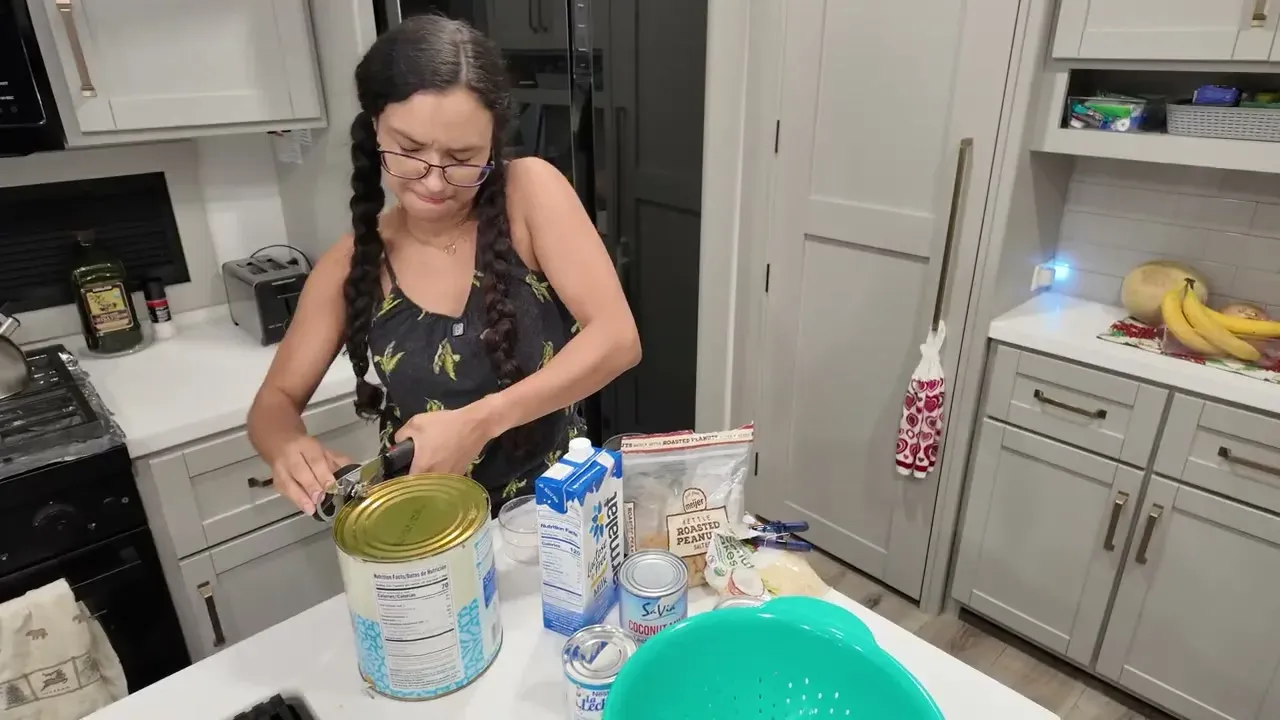
She used the restaurant size can of hominy from Walmart, which she opened on camera and called the biggest can she has ever opened in her life. It is about four normal cans worth. Buy the regular size unless you are feeding a crowd.
The rule that makes or breaks it: drain and rinse the corn until the water runs clear, because that starchy brine will make the whole pot taste like the can. After that it is milk, coconut milk, sugar, condensed milk, coconut, ground peanuts, and a long slow simmer with the lid off in the Instant Pot we cook almost everything in. It never goes under pressure. The corn is already cooked.
The full recipe, the swaps for the Brazilian ingredients you cannot get here, and what to do if you find the dried corn instead are all in Fabiola's canjica recipe. It is better the second day, when the corn keeps drinking the milk and it thickens up.

We ate it with cinnamon on top, watching a show with family, at the end of a day where the only thing we truly accomplished was moving waste from one tank to another. That counts.
If you have a macerator doing the same thing, try the drill before you buy a new pump. And if you want the parts that do not make the videos, the newsletter is free.