
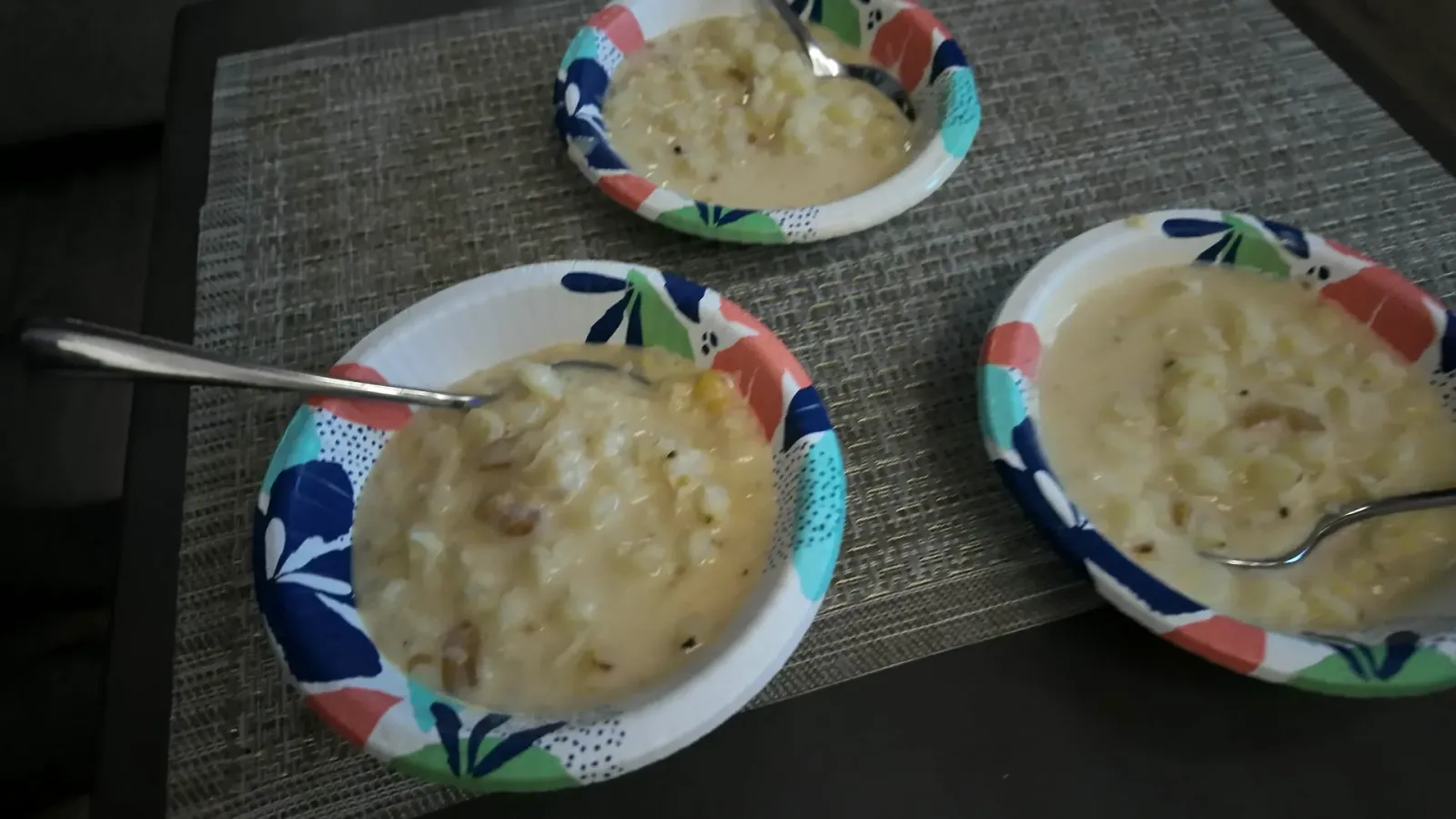
Canjica is the dessert Fabiola grew up with in Belo Horizonte. White corn simmered soft in sweetened milk with coconut and peanuts, somewhere between a rice pudding and a sweet soup. In Brazil it belongs to the June festivals, but nobody actually waits for June.
It also happens to be close to a perfect RV dessert. Everything in it is shelf stable: a can of hominy, a can of sweetened condensed milk, a can of coconut milk, a box of shelf milk, a bag of peanuts. Nothing needs the fridge until after it is cooked. It makes a lot, it is better the next day, and it cooks entirely in our Instant Pot on battery power, which means no propane oven turning the rig into a sauna and no generator.
Here is the thing that surprises people: this never goes under pressure. The corn comes out of the can already cooked, so the whole recipe is a long, slow simmer with the lid off. The Instant Pot is doing the job of a saucepan you do not have room for.
The corn: what you buy in Brazil vs the US
In Brazil this is a non-question. Every supermarket sells 500 gram bags labeled milho para canjica (sometimes canjicão, or just milho branco). It is dried white corn with the hull and germ stripped off, you soak it overnight, and it costs almost nothing.
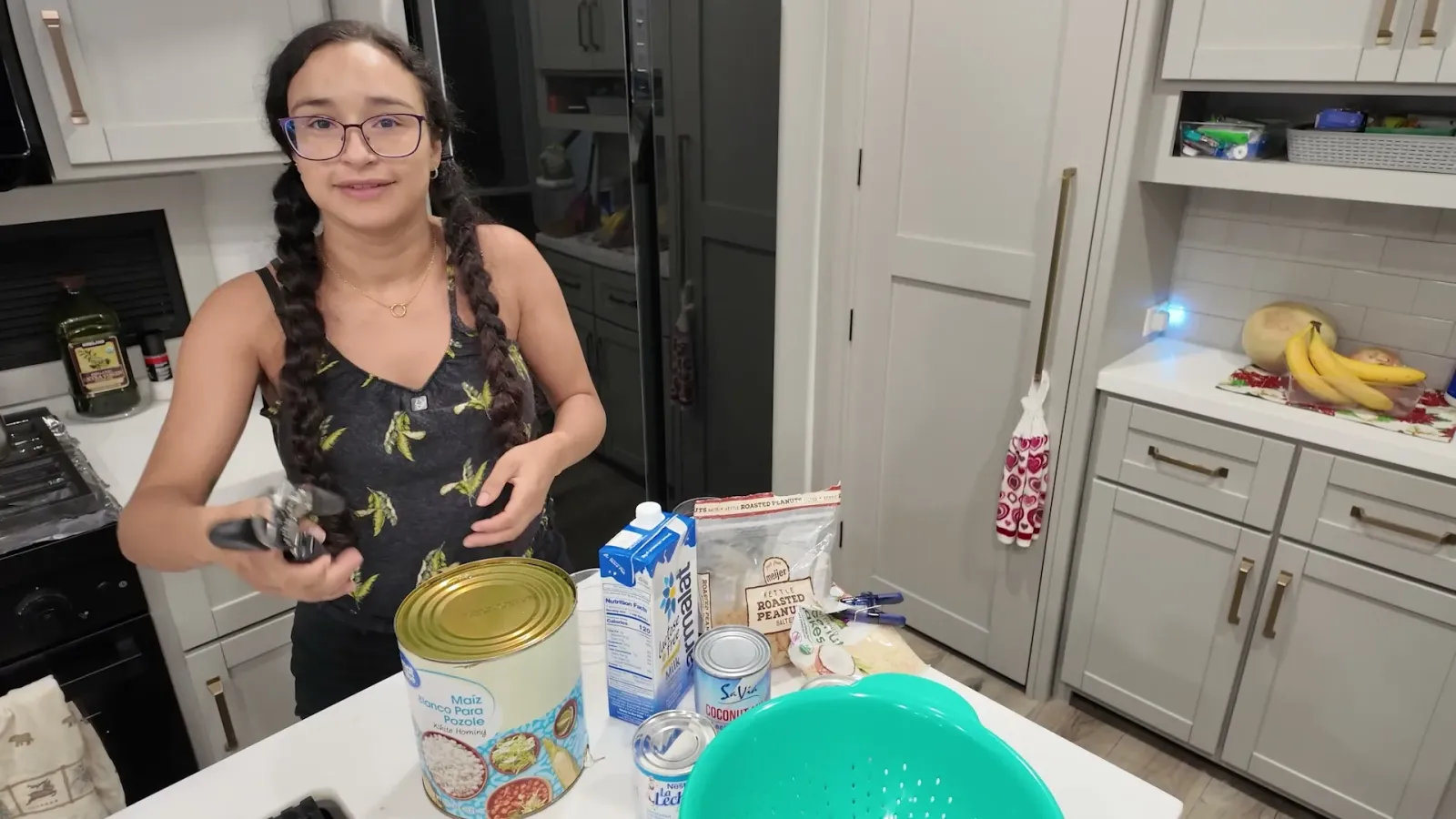
In the US you will probably not find that on a normal grocery run. What you will find, in the Latin aisle of basically any Walmart, is canned white hominy sold for pozole: a can labeled Maíz Blanco Para Pozole. That is the same white corn, already cooked. Fabiola used the giant restaurant-size can, which she opened on camera and described as the biggest can she has ever opened in her life. It is roughly four regular cans worth, so unless you are feeding a crowd, buy the normal size.
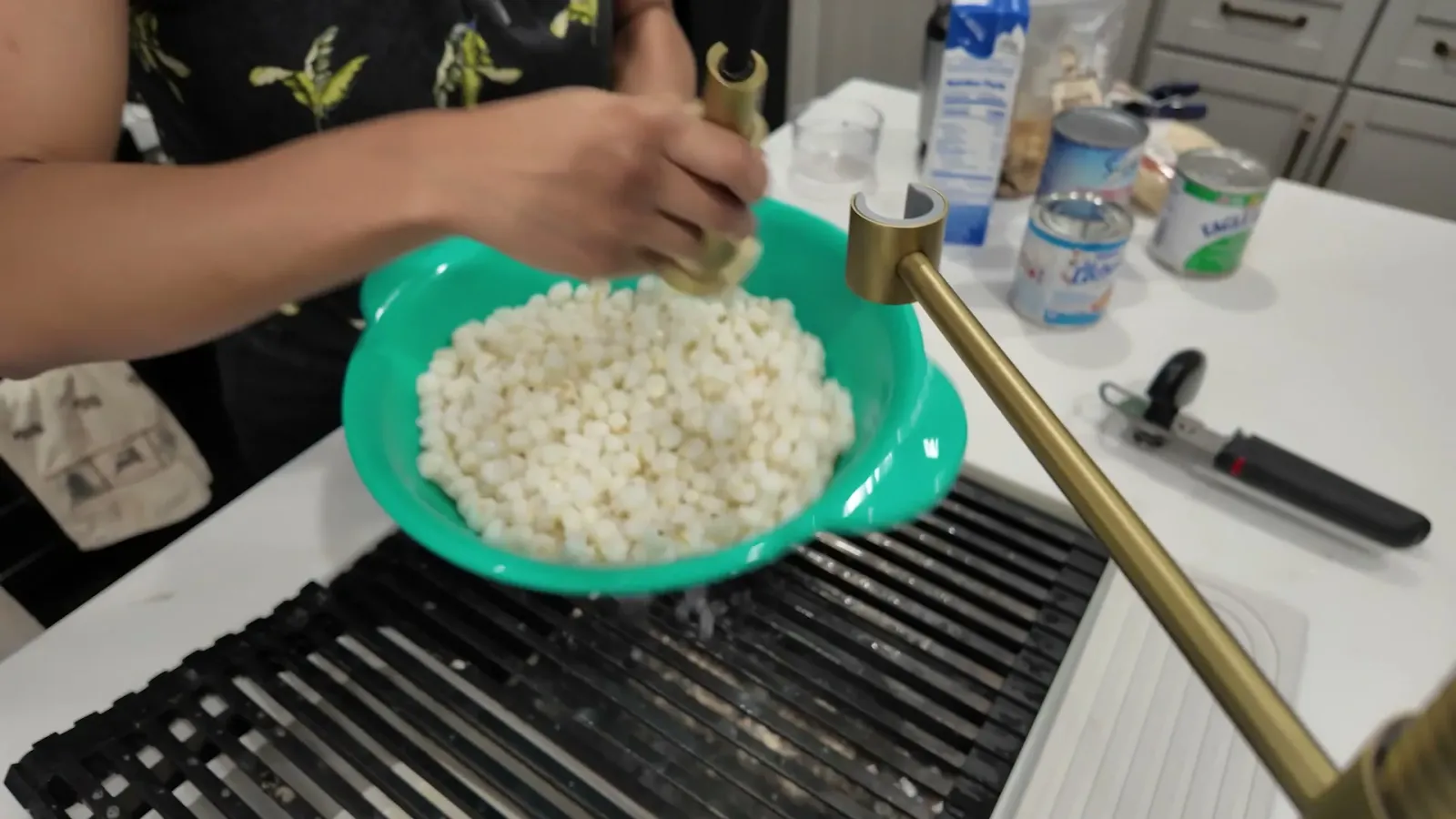
One rule with the canned stuff, and it is the difference between good canjica and mediocre canjica: drain it and rinse it properly under cold water. Canned hominy sits in a starchy, slightly metallic brine, and if you dump that into the pot the whole dessert tastes faintly like the can. Rinse until the water runs clear.
The other thing worth knowing is that Mexican pozole corn is nixtamalized, meaning it is soaked in slaked lime to loosen the hull, while Brazilian canjica corn is degerminated by machine and never sees lime. That gives pozole corn a faint masa note. In a savory pozole it is the point. Here, rinsing plus the cinnamon and coconut cover it, and you will not think about it once it is done.
If you can find the dried corn
Dried is the better texture if you want to chase it: firmer kernels that hold their shape instead of going soft. Latin markets sell it as posole or pozole, Rancho Gordo sells it online, and any Brazilian grocery in the US carries actual milho para canjica, usually Yoki.
If you go that route, this is the one time the Instant Pot's pressure function earns its keep. Soak 500 g of dried corn overnight, drain and rinse, then pressure cook it in 5 cups of fresh water for 30 minutes with a full natural release. Do not fill past the halfway line, because corn foams, and do not quick release it, because starchy foam sprays out of the valve. Once it is tender, drain it and pick the recipe back up at the milk stage below.
The other swaps worth knowing
Two Brazilian pantry staples do not map cleanly onto American ones, and both will change the result.
Shredded coconut. Brazilian coco ralado is unsweetened by default. American shredded coconut in the baking aisle is usually sweetened, and on top of a can of condensed milk the whole pot turns cloying. Buy unsweetened, sometimes labeled desiccated.
Creme de leite. The Brazilian box that goes in at the end is around 20 percent fat, thinner than American heavy cream. Nestlé media crema in the Latin aisle is the closest match. Heavy cream works if you use a little less. This one is optional and Fabiola skipped it in the video.
Sweetened condensed milk is the same product in both countries. She used Nestlé La Lechera, which is the same thing as Moça back home.
Ingredients
Makes about 8 servings, which is still more than two people should reasonably eat.
- 2 cans (25 oz each) white hominy, drained and rinsed well
- 2 cups whole milk, shelf stable UHT is fine and is what we carry
- 1 can (14 oz) sweetened condensed milk
- 1 can (13.5 oz) coconut milk
- 1 cup unsweetened shredded coconut
- 1/2 cup roasted salted peanuts, ground coarse
- Pinch of salt
- Ground cinnamon, to serve
Optional: a cinnamon stick and 3 or 4 whole cloves while it simmers, fished out before serving.
Method
Rinse the corn. Open the cans, dump the hominy into a colander, and rinse it under cold water until the water runs clear and the kernels stop feeling slippery. Do not skip this. Everything about the finished flavor depends on getting the brine off.
Grind the peanuts, carefully. A coffee grinder or small food processor works, in short pulses. You want a coarse, sandy grind that still has some texture. Fabiola went about five seconds too long on camera and turned hers into peanut butter, which still tastes fine but disappears into the pudding instead of giving it any bite. Pulse, look, pulse again.
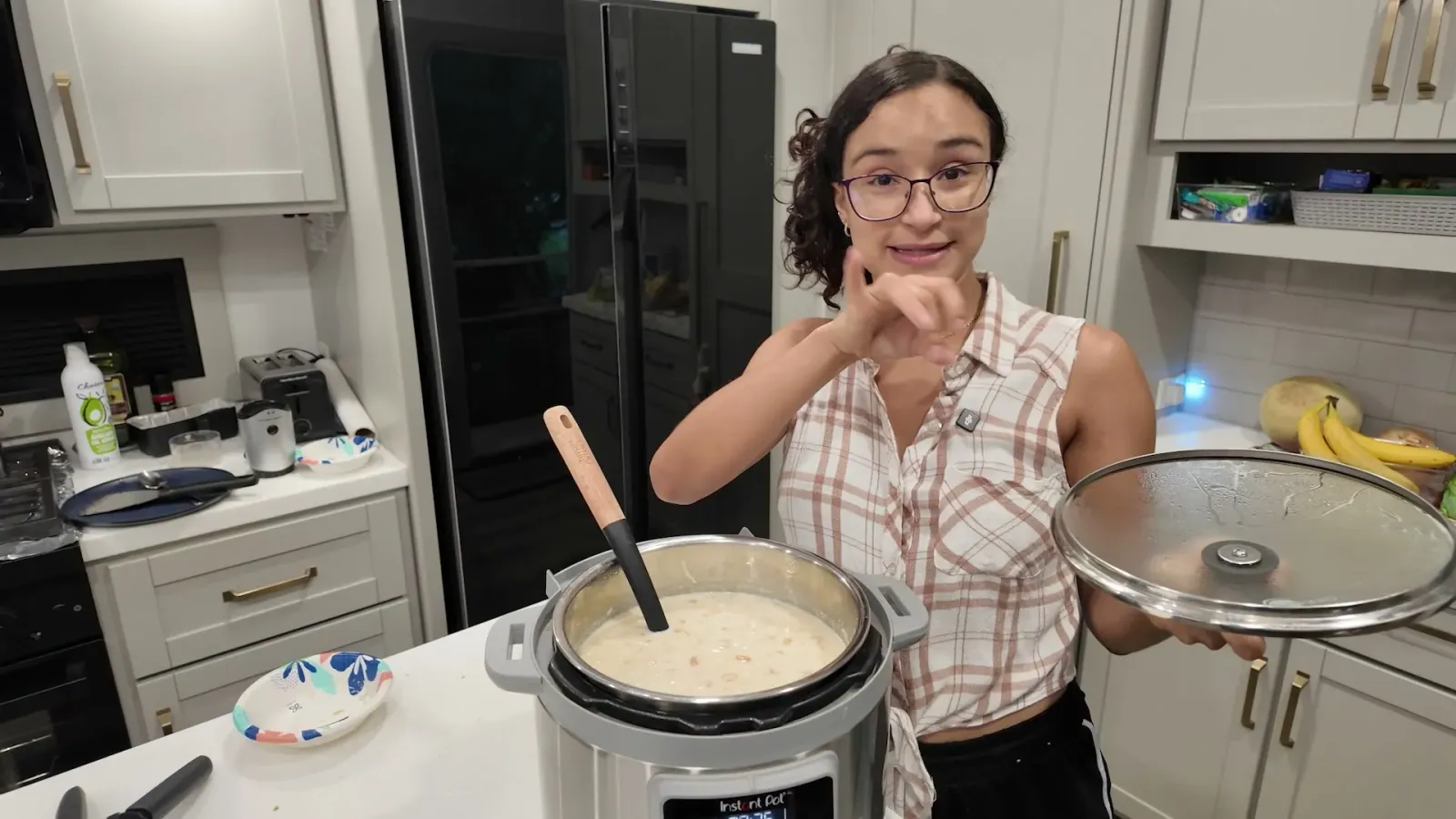
Bring the corn up in milk. Rinsed hominy and the whole milk into the Instant Pot, plus a pinch of salt. Set it to Sauté on low, lid off, and bring it to a bare simmer, stirring now and then. Give it 10 minutes or so to heat through and start smelling like corn.
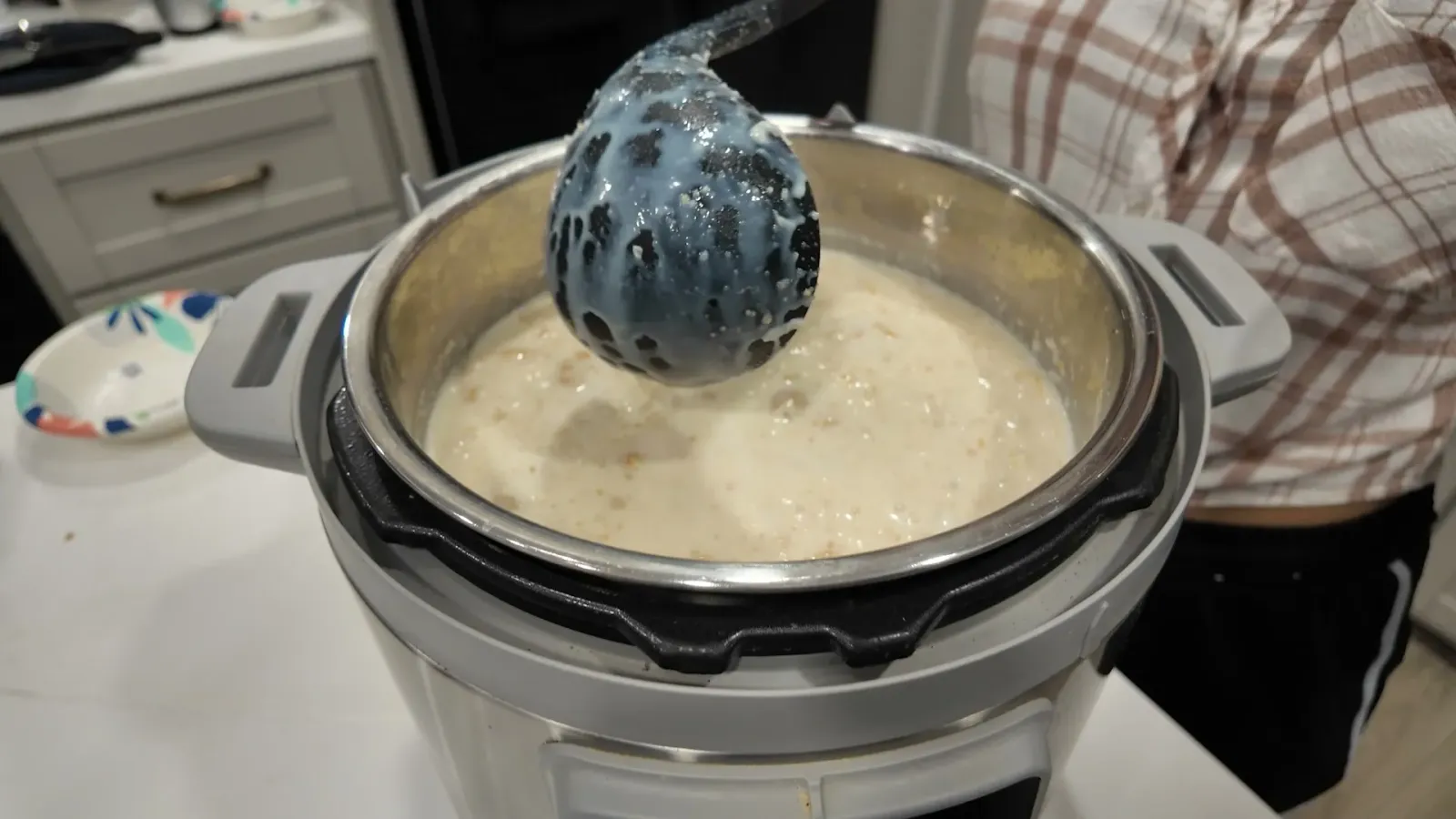
Add everything sweet. Condensed milk, coconut milk, shredded coconut, and the ground peanuts. Stir well and keep it at a low simmer, lid off, for 20 to 30 minutes, stirring often enough that nothing catches on the bottom.
This is the part where a pressure cooker would ruin it. Milk and condensed milk scorch on a hot pot base, which at best throws the Burn warning and at worst gives the whole batch a burnt taste you cannot get out. Lid off the whole time, spoon moving along the bottom.
Judge the thickness loose. Pull it when it looks slightly thinner than you want to eat it. It sets up as it cools and a lot more in the fridge. Serve warm in bowls with cinnamon over the top.
It is better tomorrow
This is Fabiola's own rule and she is right about it: canjica is better the next day. The corn keeps drinking up the milk overnight, so what was a loose sweet soup becomes a proper thick pudding by morning. If it goes too far, a splash of milk and a minute of stirring brings it back.
It keeps about five days in the fridge. Cold canjica straight from the container, standing in the kitchen at 6 in the morning, is a legitimate way to eat it and neither of us is going to pretend otherwise.
Notes from making this in a fifth wheel
Because nothing here goes under pressure, the power draw is the Sauté element cycling on and off for half an hour. That is a longer, gentler pull than a pressure cycle, and it is easy on a battery bank in the afternoon sun. We make this with the batteries already topped up rather than after dark. Our full setup is on our solar and battery page if you want the actual numbers.
The other RV advantage is that this is a pantry recipe. Cans and a box of shelf milk ride around in the rig for weeks, so canjica is something we can decide to make on a night when the fridge is nearly empty and we are nowhere near a store.
One more thing about the name
If you are in the northeast of Brazil and you order canjica, you will get something else entirely: a sweet green corn cream, closer to what the rest of the country calls curau. What this recipe makes is called mungunzá up there. Both are right, they are just different corn.