
There is a specific kind of hungry that happens at the end of a travel day. You have been in the truck for hours, you have eaten nothing but things that came out of a bag, the rig is not level yet, and someone still has to hook up water. Nobody is starting a real recipe in that state.
This is the recipe for that state. Fabiola describes it exactly: "travel day, you're tired but you want to eat something, you're starving, you're tired of fast food, snacks. I got you."
The day she filmed it we had driven Tampa to Orlando in sustained twenty mile an hour winds, and we had pulled away from the site with the entry steps still down, for the second time. What she wanted when we finally parked was not complicated. "I want rice, meat, and vegetables."
If you want the longer version with a proper seasoning blend and browned onions, that is the from-scratch stew. This one is built to get food on the table while you are still setting up camp, and it leans on a packet on purpose.
What makes it fast
Three shortcuts, all deliberate.
Pre-chopped stew meat. She buys the family pack of stew meat at Walmart, already cut. "Easy for you, if you don't want to deal with the cutting part."
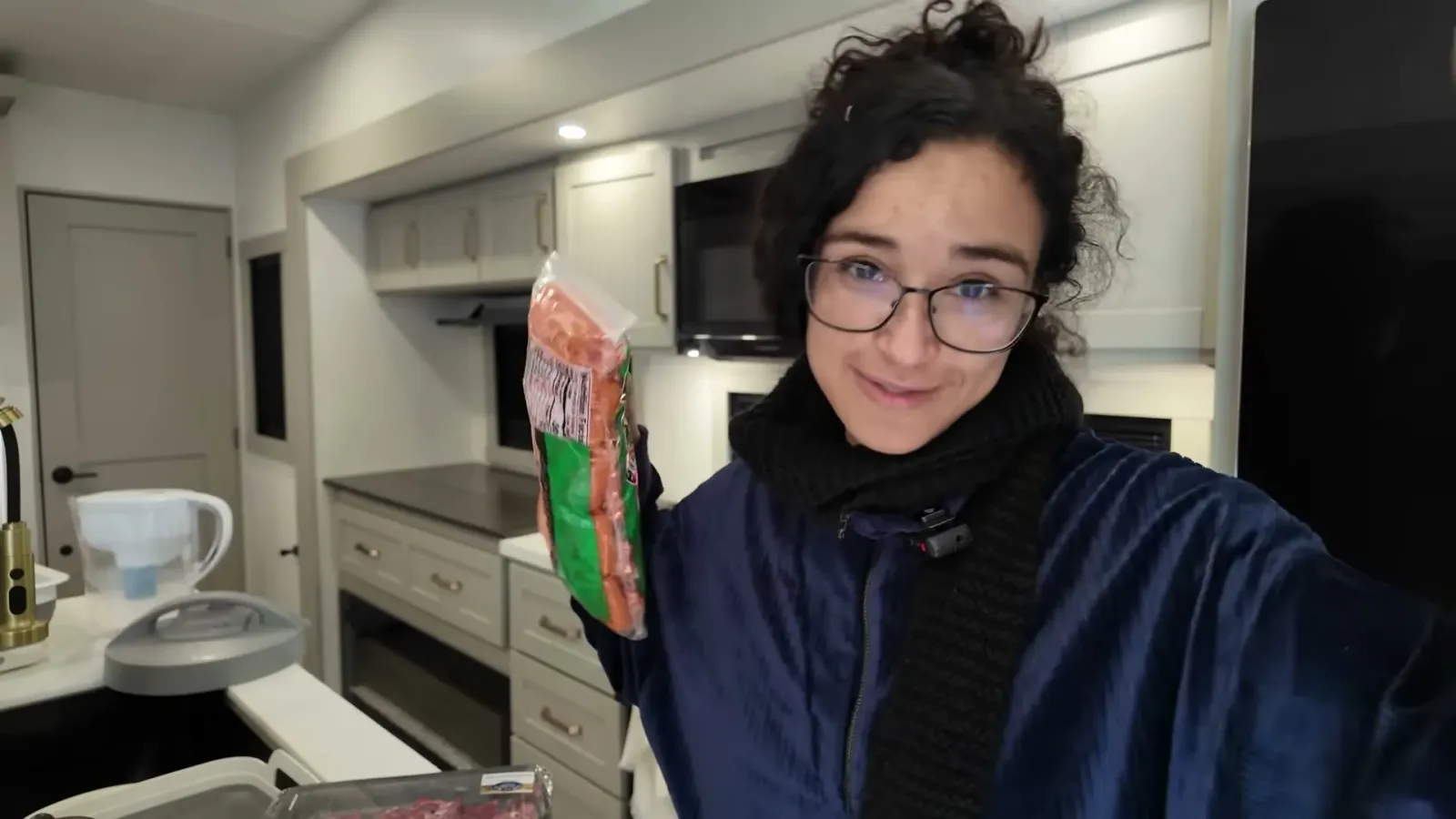
Frozen garlic. She buys garlic in bulk at Costco and freezes it in blocks. One block goes straight in, no peeling, no chopping.
A seasoning packet. No building a spice blend at the end of a long drive. The packet does it. Hers is McCormick Slow Cookers Savory Pot Roast, not a beef stew mix, which is worth knowing if you go looking for it on the shelf.
Everything else is the Instant Pot doing the work unsupervised while you deal with hoses and levelling. Set it, go outside, come back to dinner. That is the whole point of keeping one in the rig.
Travel day beef stew recipe
Serves: 6 to 8
Pressure time: 15 minutes
Ingredients
- 2½ to 3 lb stew meat, pre-chopped. The family pack from Walmart
- 1 tbsp olive oil
- 1 block frozen garlic, about a 1 inch cube, roughly 1 tbsp minced or 2 to 3 cloves
- Salt, a pinch at the browning stage
- 2 packets McCormick Slow Cookers Savory Pot Roast seasoning (1.3 oz each)
- 1½ lb small potatoes, red and gold, washed and left whole
- 8 oz baby carrots, half a standard 1 lb bag
- 1½ to 2 cups water
White rice, cooked separately, to serve.
Steps
- Set the Instant Pot to Sauté, add a little olive oil, and let the stew meat brown a little before any water goes in.
- Add the frozen garlic block, a pinch of salt and a tiny bit more olive oil.
- Add both seasoning packets.
- Add the washed small potatoes whole, then the baby carrots.
- Add water, stir so everything picks up a coat of seasoning, then add a little more. Stop before it looks like soup.
- Lock the lid with the valve sealed and pressure cook for 15 minutes.
- Make white rice while it cooks, and serve the stew over the rice with plenty of the broth.
The longer version of each step is below.
Where these numbers come from
Three of them are hers, said on camera: half a bag of baby carrots, two packets, and the packets being "for two to three lbs, I think."
The rest are read off the video or off the packet, and are marked here so you know which is which:
- The meat weight follows from the packet. McCormick rates one 1.3 oz packet for 2½ to 3 lb of meat plus 5 cups of vegetables. Fabiola used two, and said plainly the second was for the vegetables rather than for more meat, so the meat is one packet's worth.
- The potatoes are counted in the bowl she holds up to the camera: ten to twelve small red and gold potatoes, which is about 1½ lb. They go in whole. She does not cut them.
- The garlic block is sized against her fingers when she holds it up. It is roughly a 1 inch cube of her own frozen garlic, not a supermarket garlic cube, which are much smaller.
- The water is the one real estimate. The packet directions call for 1 cup per packet, but she wanted "a thicker broth, not a soup," and an Instant Pot needs at least a cup to reach pressure. Between 1½ and 2 cups matches what is in the pot on camera.
Method
Sauté, then brown the meat. Instant Pot on Sauté. A little olive oil. Meat in, and let it fry.
This is the one step she asks you not to rush, and she says why twice: "the secret for the stew meat to be good is if you let them brown a little bit." Then again, plainer: "let the meat brown a little bit before you put the water on it, so it's not going to be just like the boiling meat. You want to caramelize a little bit outside first."
Boiled meat and browned meat are different dinners. This is the thirty seconds of attention that separates them.
Garlic and salt. One block of the frozen garlic, salt, and a tiny bit more olive oil.
Seasoning, both packets. Two packets, because there are a lot of potatoes and carrots coming and they need to taste of something too. One packet is rated for the meat alone; the second is doing the vegetables.
Worth knowing: the packet instructions say to mix it into water first and add it as liquid, which is how McCormick writes it for a slow cooker. She tipped it in dry, straight onto the meat, read the instructions afterwards, and shrugged. "But I guess it worked also." It does, though mixing it into the water first is the safer route in a pressure cooker, where anything powdery sitting on the base can catch and throw a Burn warning.
Potatoes, then carrots. Washed small potatoes in, whole. Then half a bag of baby carrots.
Water, and not too much. Add water, stir so everything picks up a coat of seasoning, then add a little more. Stop earlier than you think. In her words: "not a lot of water though, we don't want this to be swimming in the water. It's not like a soup soup soup. I want it to be more like a thicker broth."
The meat gives up its own liquid under pressure, so a pot that looks slightly dry going in comes out right.
Lid on, sealed, fifteen minutes. Lid on, valve sealed, locked. Check the seal is actually closed. Pressure Cook, 15 minutes.
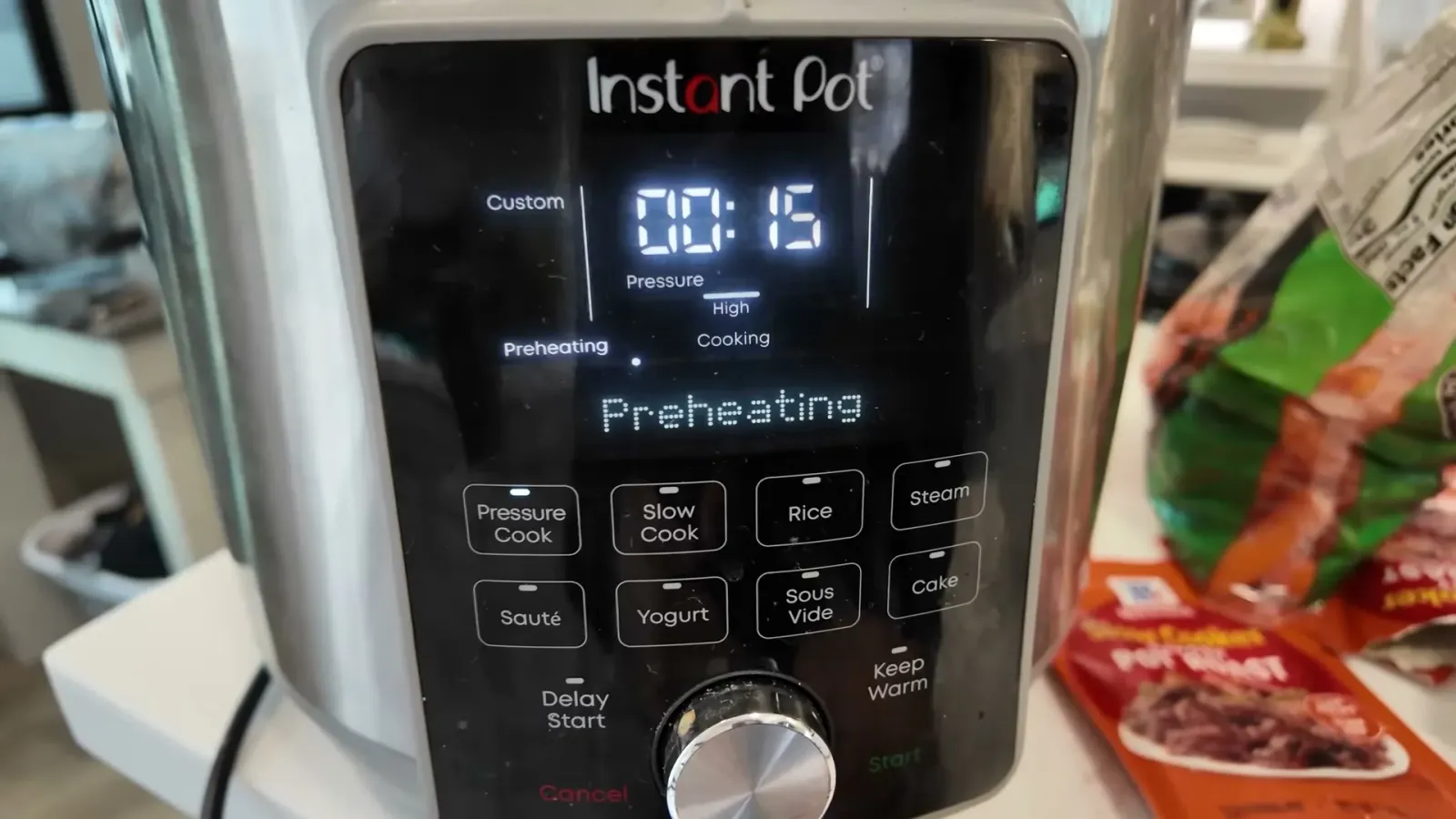
Make rice while it goes. White rice on the side. That is the whole remaining job, and it is the part that turns a stew into the meal she actually wanted.
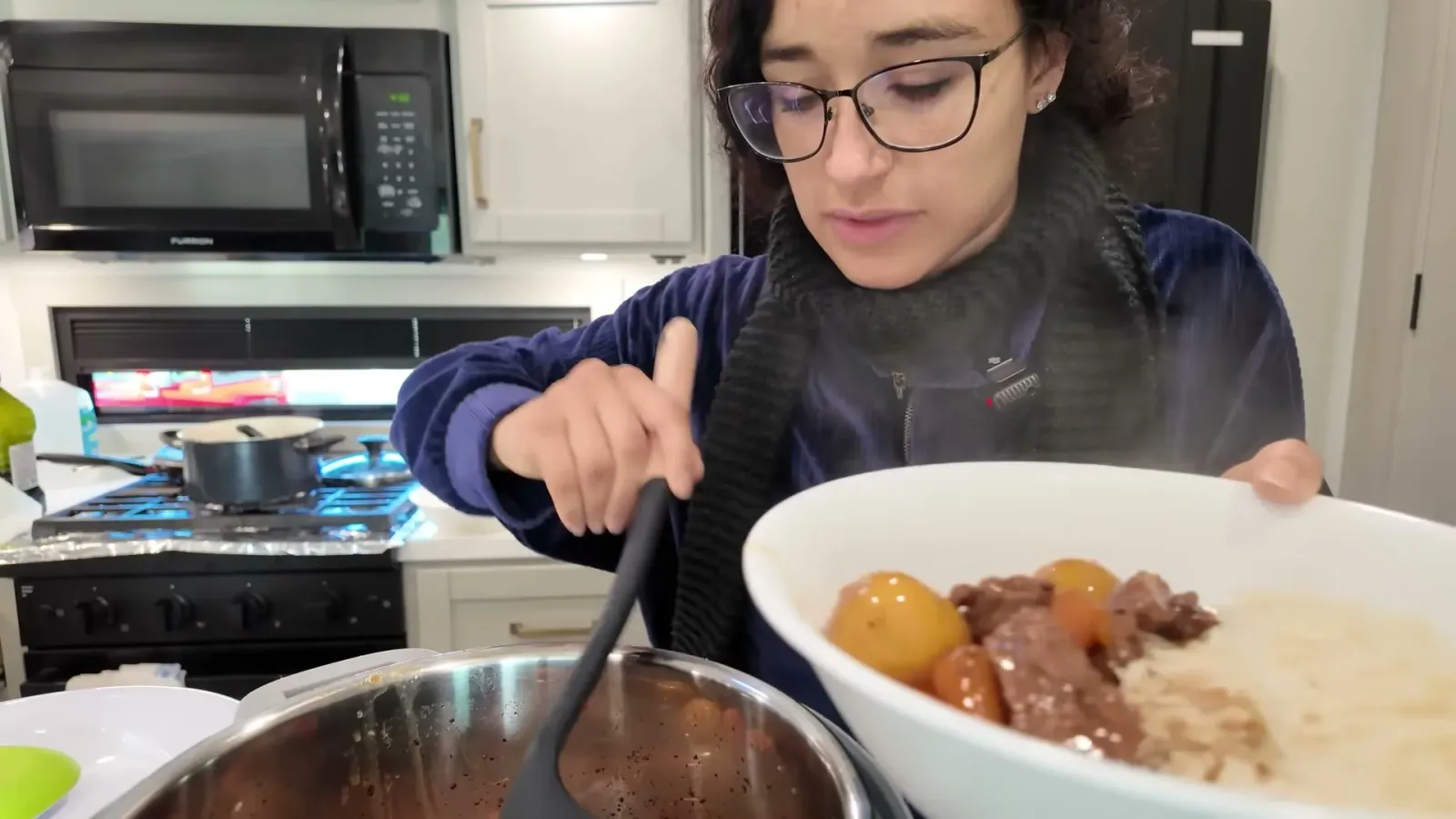
Serve the stew over the rice, with plenty of the broth. Nathan gets extra sauce.
If you are doing this on battery
Fifteen minutes under pressure is a short, manageable draw, and it happens while you are outside doing setup anyway. There is no propane oven running and nothing heating the rig at the end of a day when you already want the air conditioning on. On a travel day that arrives in the afternoon with sun still on the panels, it costs almost nothing.