
We live in a Brinkley Model Z 3515 fifth wheel, pulled by a Ford F-350, and we both work full-time jobs from inside it. Winters in Florida, summers in Michigan and Wisconsin, a travel day every week or two.
This is the post we wanted when we were deciding. Not the highlight reel and not the horror story, just what the life actually consists of once the novelty wears off. If you want the story of how we decided to do it, that is how we ended up living in an RV. This one is about what happens after.
A normal week is mostly normal
The thing that surprises people is how ordinary it is.
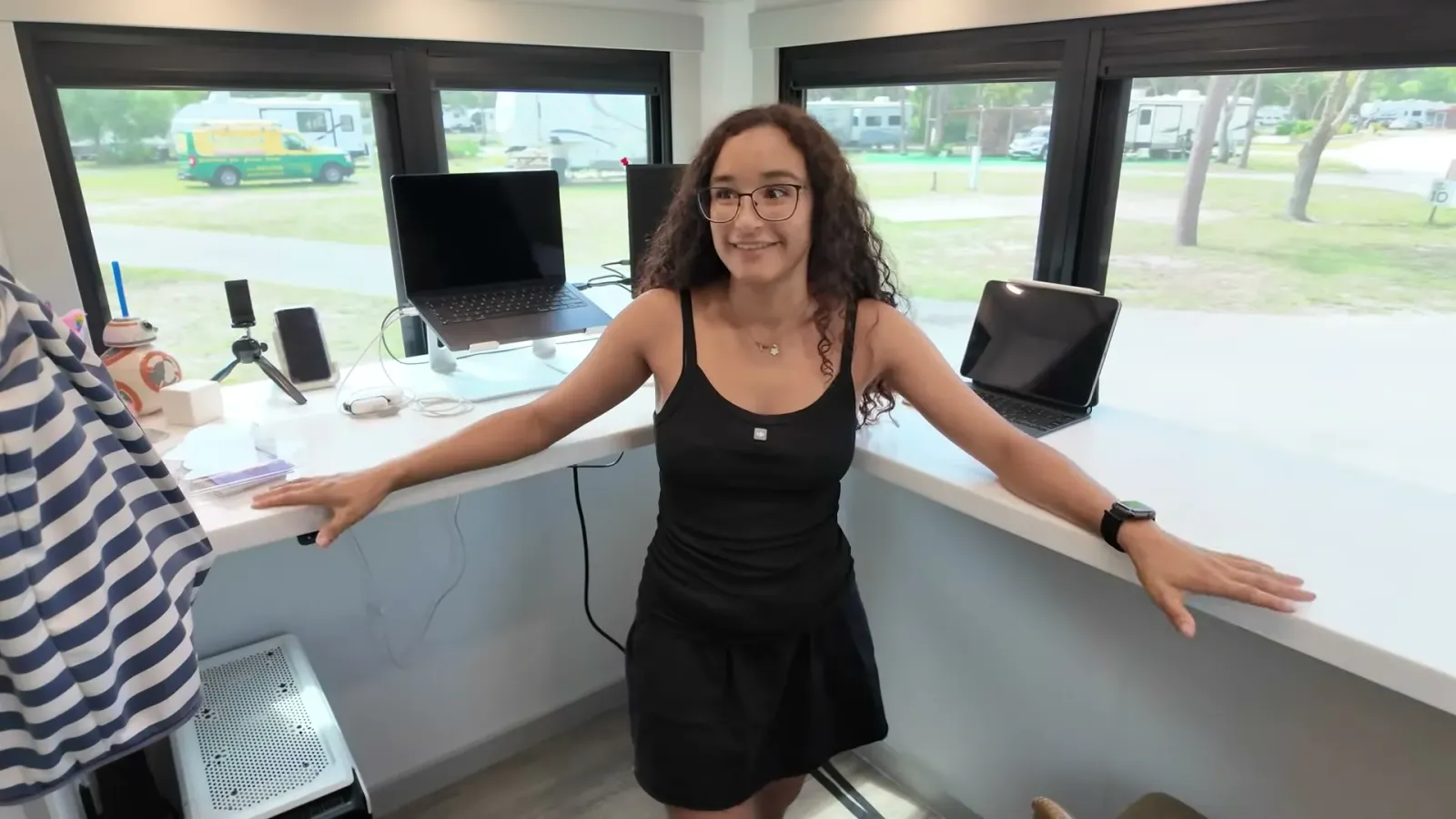
Most days we get up, make coffee, and work. Nathan is a programmer for a company in the US. Fabiola works full time too. We sit at desks about eight feet from the bed, put in a full day, and stop when it is done. Nobody is hiking at 2pm on a Tuesday.
What changes is the background. Every week or two we pick the rig up and put it somewhere else, and the window over the desk shows something different. That is the entire trade: the days look like anyone's days, and the map underneath them moves.
The second thing that changes is that chores get bigger. A load of laundry means finding a laundromat, and once cost us forty-one dollars and an entire afternoon in a small town. Dumping tanks is a job rather than a flush. Groceries mean whatever store is closest, not the one you like. None of it is hard. All of it takes longer than it did in a house, and that adds up to a real chunk of a week.
Working from a moving house
If you need income while you do this, internet is the whole ballgame and everything else is negotiable.
We run Starlink on the roof and pay for redundancy on purpose, because a workday that fails is more expensive than any campground. This also quietly shapes where we can go. We cannot chase the cheapest, most remote spot if it means a meeting drops, so our version of this life is less free than the version you see from people who travel for a season and then stop.
The upside is the one that made us do it. Nathan had already worked remotely from another hemisphere for two and a half years, so the question was never whether the work travels. It was whether the house could.
What it costs
More than people expect on fuel, less than people expect on campgrounds.
The truck is the biggest line by a distance. Diesel for a one-ton pulling 17,700 pounds adds up faster than anything else, and slower travel is the single most effective way to spend less. Campground fees are the thing everyone asks about and the thing that is easiest to control, through monthly rates and free nights on public land.
The two that blindsided us were groceries, which genuinely cost more on the road, and entertainment, because Florida has theme parks and we are not made of stone. The full breakdown is in what full-time RV life actually costs.
Where you sleep
Four tiers, and most weeks include more than one.
Campgrounds with hookups, which is the default when we need to be settled for a workweek.
Boondocking with no hookups at all, which our solar and battery setup makes genuinely comfortable rather than an endurance exercise. Our first ever trip in this rig was fifteen straight days of it, which was a bold way to find out whether the system worked.
Free overnight stops at Walmart, Cracker Barrel and the occasional casino on travel days, covered in overnighting at Walmart in an RV.
Moochdocking in a friend or family driveway, which is lovely and which comes with its own problems, mostly involving what to do with your waste tanks.
The rig moves, and that is its own skill
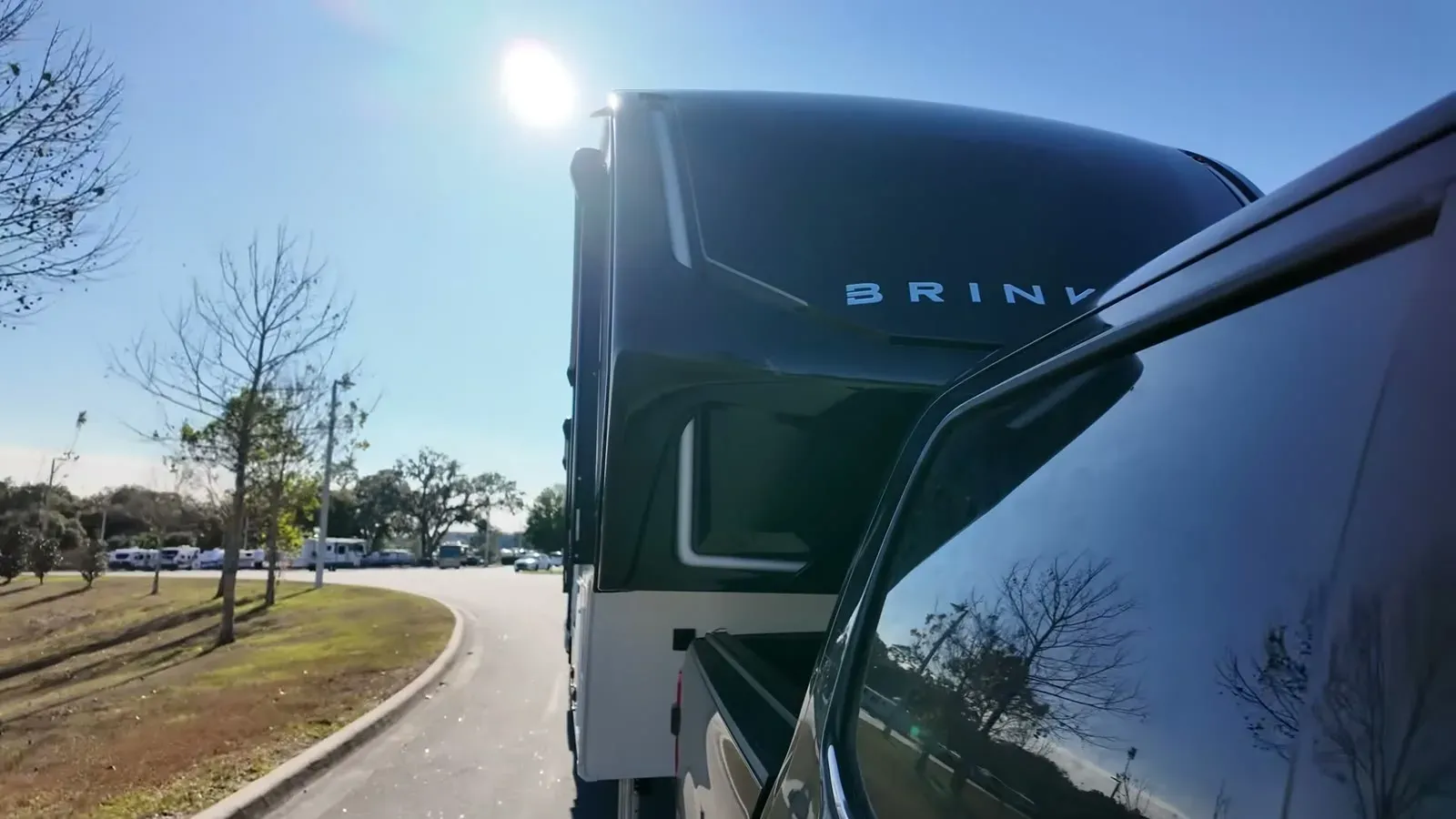
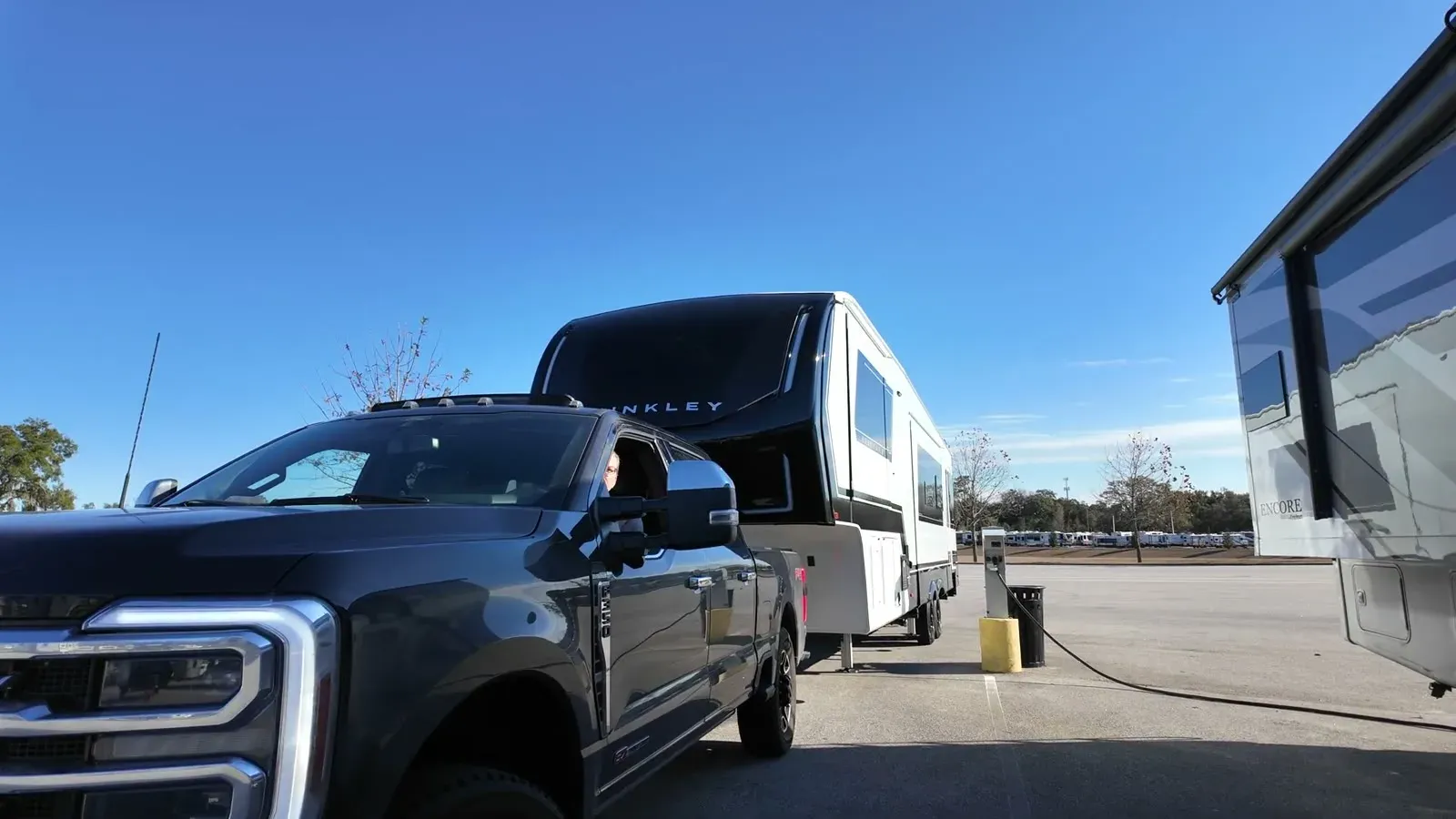
A travel day is not a drive. It is a procedure at both ends.
Ours starts with a thirty-item checklist we share live between two phones, because a fifth wheel going down an interstate is a slow-motion earthquake and everything on that list exists because something once hit the floor. That list is here.
Then there is the towing itself, which neither of us had ever done before we bought a 40-foot trailer. What truck you need, what pin weight and payload actually mean, and how to hitch without dread is in how to tow a fifth wheel.
We have one rule that has saved us more than any piece of gear: we do not back into an unfamiliar site after dark. It sounds small. It shapes entire travel days.
Things break, constantly
This is the part the brochures skip and the part you should plan for.
In our first stretch we have had mice get into the rig, a water leak, a campground with lead in the water that pushed us into installing real filtration, a macerator pump that died mid-dump, and a travel day where roadside assistance could not help us.
None of those ended the trip. All of them ate a day. If you are the kind of person for whom an unexpected repair ruins a week, that is genuinely worth knowing about yourself before you sell a house.
The flip side is that you get competent fast. A year ago we would have called someone. Now we open the panel first.
Who this does not work for
We are going to be honest about this because most posts on the subject are not.
It does not work well if you need a lot of personal space when you are annoyed. Two people in 400 square feet have nowhere to storm off to. You resolve things faster because the alternative is standing three feet apart pretending not to be upset.
It does not work if your income depends on being somewhere specific, or if your work needs bandwidth that Starlink cannot always promise.
It does not work if you want your weekends free. Ours often go to chores that a house absorbs invisibly.
And it does not work if you are doing it to escape something rather than to go somewhere. The rig comes with you and so does everything else.
Who it does work for
People who like their work and want to change the view. People who would rather have a smaller, simpler set of possessions. Couples who genuinely enjoy each other's company at close range for long periods.
We looked at Chicago, at lower Michigan, at Minneapolis, and every city had the same problem: choosing one meant giving up all the others. This life is what happened when we stopped trying to pick.

If you are thinking about it
Start with the money, because it decides everything else. Then work out whether your income can move. Then go look at rigs with a tape measure and a list of what you actually do all day, rather than what looks nice at a show.
Then get the thing weighed, learn to tow it, and accept that your first six months will include at least one day you would not put in a video.
We put the good and the bad on our YouTube channel every week, and the things that never make it into a video go out in the newsletter.