
Nathan is from Marquette, in Michigan's Upper Peninsula, where the town throws a festival every spring to celebrate having survived. So when we say we do not winterize our fifth wheel, it is not because we do not know what winter is.
It is because winter was one of the things we were trying to get away from. We looked hard at Minneapolis before we bought the RV and talked ourselves out of it for exactly that reason. When the forecast turns, we do not pump antifreeze through the plumbing. We hitch up and go south.
If that is your plan too, most winterizing advice does not apply to you, and following it anyway would mean draining a water system you are about to use in Florida next week. Here is what replaces it.
What winterizing is actually for
Winterizing solves one problem: water left in pipes freezes, expands, and splits them. The standard process drains the fresh tank and water heater, blows out or fills the lines with RV antifreeze, and leaves the rig sitting empty until spring.
Every part of that assumes the RV is unoccupied and unheated. A rig with two people living in it, running the furnace, is not the same object. The pipes inside a heated space are not going to freeze because the outside air is cold. The risk moves somewhere else.
Where the risk actually is when you live in it
The inside of the rig stays warm. What does not is everything hanging under it and outside it.
The hoses and anything at the spigot. Your fresh water hose sitting on the ground is the first thing to freeze, and it is the easiest to lose. Same for a pressure regulator or filter mounted outside at the pedestal. When we installed our water filtration system, we mounted the regulator inside the water bay instead of at the spigot where the manufacturer puts it, specifically because a regulator outside can freeze. That was a trade-off, and we say so on that page, but freeze protection is why we made it.
The underbelly and the bays. How protected these are depends entirely on your rig. Some fifth wheels have heated, enclosed underbellies with the tank heaters wired in. Some do not. Find out which one you own before you need to know, because the spec sheet answer and the reality of where your water lines actually run are worth checking in person.
The dump valves and sewer hose. A frozen valve is a bad day, and a black tank you cannot dump is a worse one.
What we actually do
We move. That is the honest headline and it is most of the strategy.
Full-time RV life means a travel day every week or two anyway, so following the weather is not a special maneuver, it is the normal operation of the thing. We spent our first winter in Central Florida. Summer takes us north to Michigan and Wisconsin. The rig chases about a 60 to 85 degree band and we plan travel days around weather more than scenery.
Our route planning already accounts for a rig with a height and a weight, and adding a temperature to that is not extra work. That is covered in how we plan travel days.
The second thing we do is accept that "south" is not a guarantee. Florida gets freeze warnings. Texas notoriously does. A cold snap can find you, and a rig that never winterizes still needs a plan for three nights at 28 degrees. That plan is usually: disconnect and drain the fresh hose overnight and run off the fresh tank instead, leave the furnace on rather than space heaters alone so the ducted heat reaches the underbelly, and open the cabinet doors under the sinks so warm air gets to the plumbing along outside walls.
None of that is winterizing. It is getting through a cold night with a working water system in the morning.
Your fresh tank is the backup plan, so keep it drinkable
That whole strategy leans on one thing: when the hose comes off, the fresh tank has to be water you actually want to drink and shower in. Which is a problem if the tank has been sitting.
Plenty of us hook up to the spigot and stay there. The city connection does the work, the pump never runs, and the fresh tank becomes something you fill for boondocking and otherwise ignore. That is exactly how ours went eighteen months without being sanitized, which we do not recommend and would rather admit than pretend.
Sanitizing is worth doing on a schedule regardless, every three or four months. But the freeze case is the specific argument for doing it before the cold arrives instead of after. The night you disconnect the hose is not the night to discover you are unsure about the tank, and it is a bad night to be hunting for a spigot to refill from.
The bleach-free method we finally used is an afternoon job with about fifteen minutes of actual waiting, and no chlorine taste sitting in the lines afterward. If you have a whole-rig filter system you can drop the packets straight into the canister and skip the bucket entirely. The filters, regulator and the rest of what we run for water are in our water gear list.
While you are in there: a full fresh tank is several hundred pounds, so if you are heading into a stretch where you might be running off it, that is worth knowing before a travel day rather than after.
The one job we do not skip
Here is where we will contradict ourselves slightly.
If the rig is ever going to sit for a stretch in the cold, actually sit, unoccupied and unheated, then winterize it properly. Storage between seasons, a repair that leaves it at a shop for weeks, a plan change that parks it up north. The moment nobody is running the furnace, every reason not to winterize disappears.
We have not had to do that yet. When we do, we will film it, because writing a step-by-step for something we have never done is exactly the kind of RV advice we try not to publish.
What to do instead this fall
If you are full-timing and the leaves are turning, the useful list is not a winterizing checklist. It is this:
Find out whether your underbelly is heated and where your water lines run. Check that your tank heaters work now, in October, and not on the first cold night. Get a small thermometer into the water bay so you know what it is doing down there. Sanitize the fresh tank while the weather is still pleasant, because it is your freeze night backup. Keep a spare hose, because the one that freezes is gone. And get your rig weighed before the travel season if you never have, because heading south is a lot of miles and that is a bad time to find out you are over on an axle.
Then watch the forecast and go. That is the whole system.
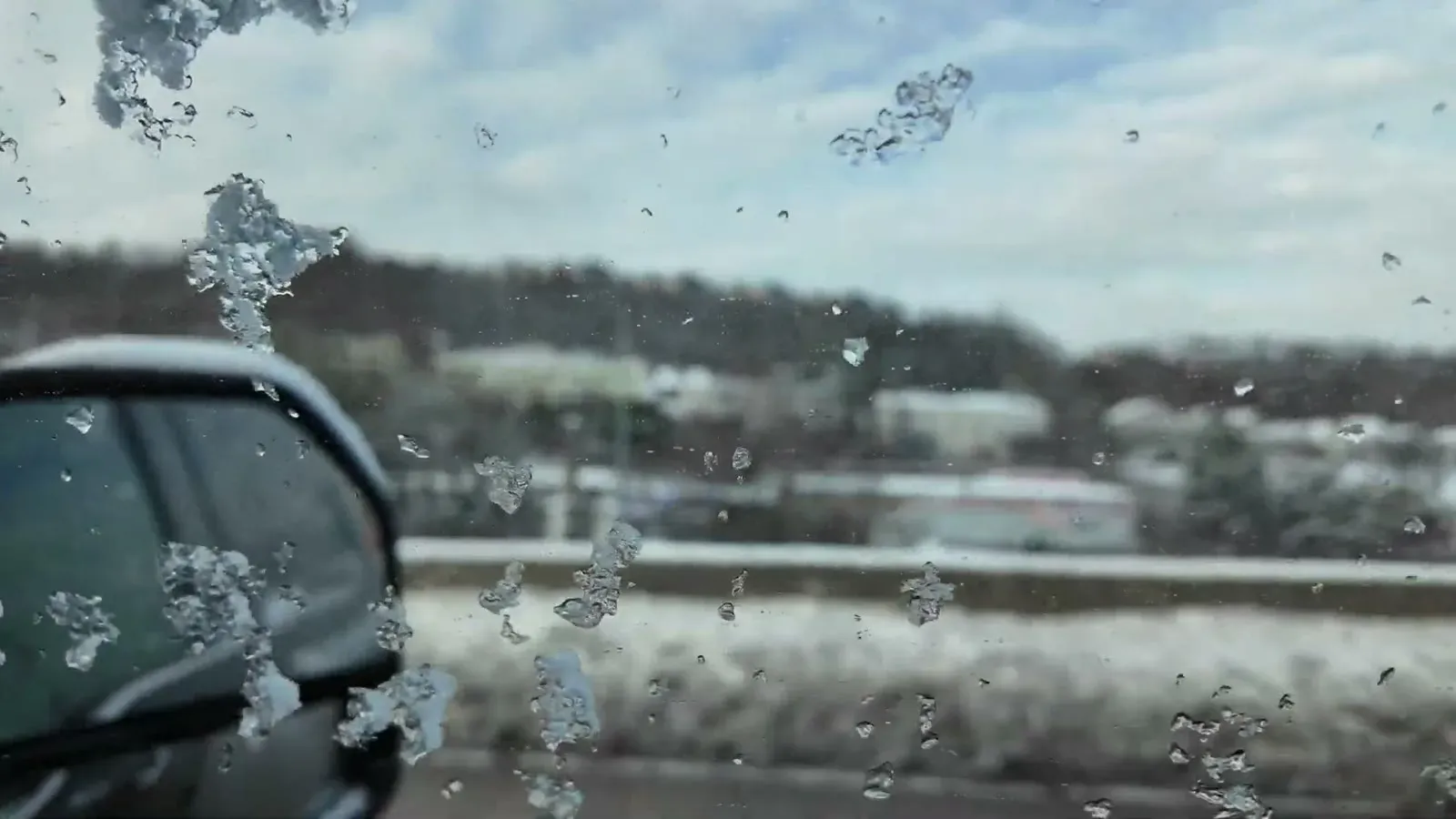
Our own version of it started with a five-day, two-thousand-mile drive from Michigan to Florida in a brand-new truck, through snow between Chicago and Cincinnati, to go pick up an RV we had not lived in yet. That drive is this video, and rolling into warm air at the end of it is still the moment this whole thing started feeling real.
This describes how we handle cold weather in our own rig, which has its own insulation, tank heaters and plumbing layout. Yours will differ. Check your owner's manual, and if the RV is going into unheated storage, winterize it properly or have a shop do it.