
We went a year and a half of full-time RV living without a proper water filtration system. Then one morning we found a notice on our door at a campground warning about lead in the water. That was the wake-up call. When you live in your rig, campground water is your only water, and you have no idea what is coming out of that spigot until something forces you to think about it.
We're Nathan and Fabiola. We live full-time in a Brinkley Model Z 3515 fifth wheel, towed around the country by a Ford F-350, and we document the whole thing on our Nomads Amor YouTube channel. Water has been one of our biggest recurring lessons, from that lead scare to a midnight toilet leak that flooded our basement storage, to running the fresh tank completely dry on a boondocking trip. At Appalachian Springs in Pigeon Forge, the water came out of the spigot brown.
This page is everything we actually use to filter, haul, regulate, and keep an eye on our water. Nothing here is theoretical. Every item has either saved us from a problem or gotten us through one.
Some links on this page are affiliate links, including Amazon links. As Amazon Associates we earn from qualifying purchases, at no extra cost to you. We only list gear we actually own and use.
Filtering what comes out of the spigot
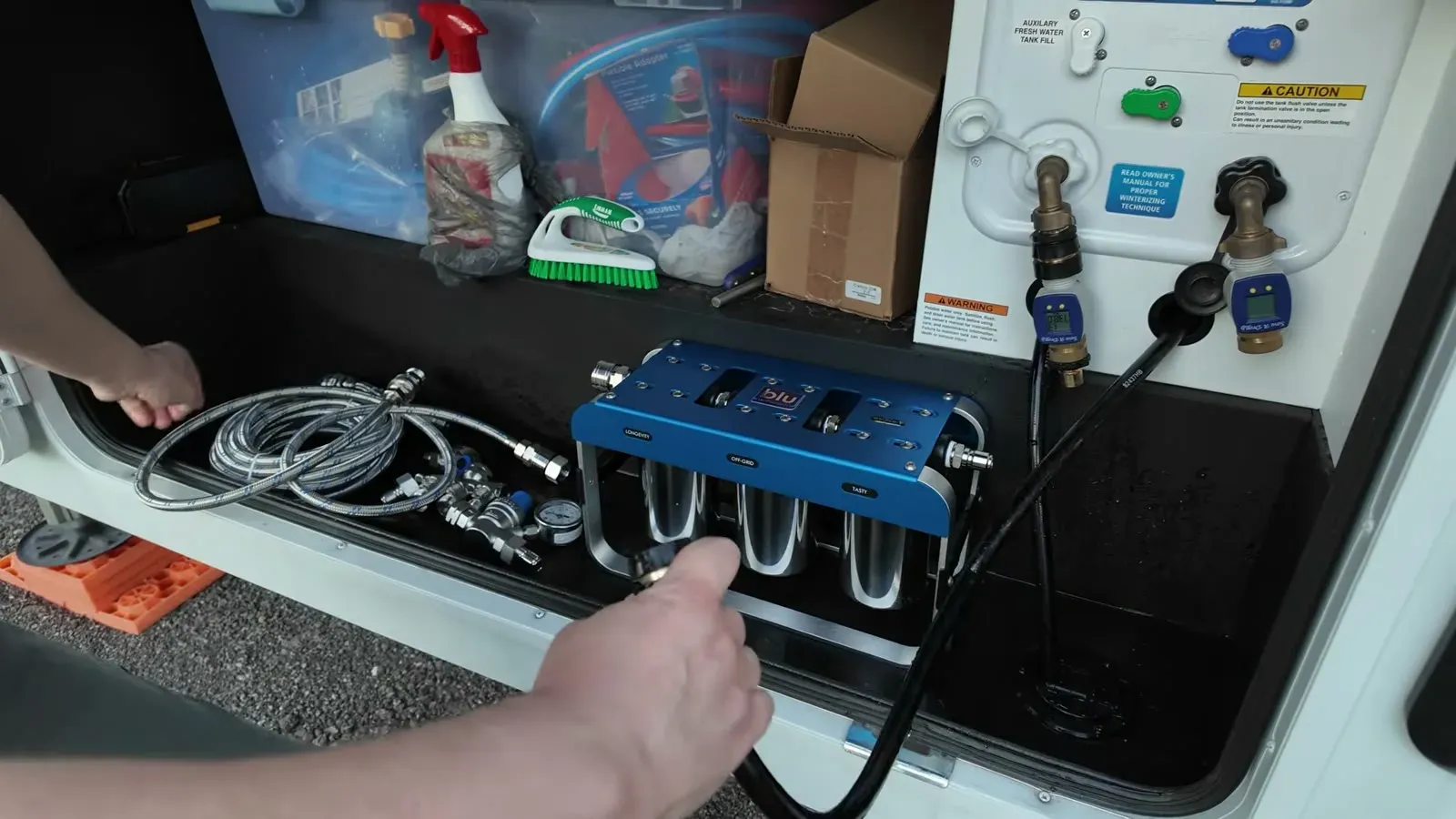
Blu Tech AR3 three-stage filtration system
This is the centerpiece of our water setup and the fix for that lead-in-the-water scare. The AR3 is a three-stage canister system made in Kalamazoo, Michigan, with NSF certified filters and 0.2 micron filtration, which matters when you're pulling from questionable campground or boondocking sources. We met the Blu Tech team at a content creator convention in Tampa, they sent us the AR3 Essential Bundle to review honestly, and we filmed the whole unboxing and install on our Brinkley. You can read that story, including the flooded-basement disaster that opens the video, in our Blu Tech AR3 install and review post.
A week after the install we did a check-in, and the two things that stood out were water pressure and taste. Pressure was noticeably better than before, and the water genuinely tastes good, which we did not expect to care about as much as we do. The whole unit is 7.75 pounds, so it's easy to move between the wet bay and storage on travel days, and the stainless steel quick connects make hooking up fast. You can get 7% off through our Blu Tech link, or go straight to the AR3 Essential Bundle, which is the exact package we run.
Camco Tastepure inline water filter
Before you commit to a full canister system, this is the filter almost every RVer starts with. It's a simple inline cartridge that screws between the spigot and your fresh water hose, with GAC and KDF filtration to knock down sediment, chlorine taste, and odor. It costs a fraction of a multi-stage system and it's far better than nothing.
We keep one around as a backup and for jobs where we don't want to break out the full Blu Tech setup, like a quick fill at a water station. If your budget says start small, start here. You can find it on Amazon.
Protecting the plumbing
Stanbroil water pressure regulator valve
Campground water pressure is all over the place. Some parks trickle, others will happily blow out an RV fitting. A pressure regulator on the spigot is cheap insurance for every water line in the rig, and RV plumbing is not built to shrug off city pressure spikes.
We hooked ours up when we were first setting up the Brinkley, and you can see it in our full-time fifth wheel tour along with the other early plumbing projects. It has an adjustable valve with a gauge, so you can dial in the pressure instead of guessing. It's on Amazon here.
Govee WiFi water leak detectors
One night a small toilet paper mishap turned into a toilet overflow that flooded our basement, and we spent the hours after midnight pulling everything out to dry. The lesson stuck. Water damage in an RV happens fast and usually somewhere you can't see.
Now we keep these little sensors near the toilet and in the spots where a leak would start. They sound a loud alarm and push an alert to your phone over WiFi, so you find out about water on the floor in seconds instead of whenever you happen to open the basement door. For what they cost, there's no reason not to have a few scattered around the rig. Grab a pack on Amazon.
Hauling and storing water off-grid
AQUATANK2 water storage bladder
We'll be honest: we bought this bladder, then hauled it around unopened for over a year before we finally used it. When we did, at a farm stay in Florida where the only spigot was a truck ride away from our site, it worked better than we expected. We drove the truck to the spigot, filled the bladder, drove back, and siphoned about 24 gallons into the fresh tank on the first fill.
That run changed how we plan boondocking stays, because fresh water is almost always the first thing we run out of. The bladder is food-grade, folds down to nothing when empty, and turns the truck into a water hauler whenever there's a fill station within driving distance. We covered the whole first-use experiment in our water bladder test post. It's on Amazon in several sizes; ours is the 60 gallon.
Collapsible 10L buckets, 2-pack
These sound like an afterthought until you're off-grid and need to move water in small amounts. During our 15-day boondocking challenge we used them to figure out how much water was actually left when the fresh tank gauge said empty, and to siphon water back into the tank. Spoiler from that experiment: the gauge lies, and you'll want a few buckets to prove it. The full story is in our 15 days boondocking post.
They collapse flat, so they take up almost no storage space, and they end up doing double duty for everything from gray water juggling to washing muddy gear outside. The 2-pack we carry is on Amazon. They're also on our small-space living gear list, with the rest of the things we own that fold flat.
The whole water setup in one place
Most of the Amazon items above live on our RV Must Haves idea list, and the off-grid water gear is on our Boondocking list. Everything else we use on the road is on our Amazon storefront.
If you're building out the rest of your rig, we've written up the RV gear we actually use full-time, our full boondocking setup for the power and waste side of off-grid life, and our sewer and tank gear for the less glamorous end of the water cycle.
And if you want to follow along as we break things and figure them out, our weekly newsletter is the best way: sign up here.