
Every RV gains weight the longer you live in it, and the numbers on the brochure are not the numbers in your driveway. We put off weighing our Brinkley Model Z 3515 for months, and when we finally did it (in July 2025, after two months parked on full hookups), the process itself turned out to be easy. Everything around it was where the day got interesting. Here is the right way to do it, based on CAT Scale's own instructions, plus honest notes on where our first attempt went sideways.
Step 1: Find a CAT scale and load like you travel
CAT scales live at truck stops and travel centers, and the locator on the CAT Scale website shows every location. Any of them will work, but for an RV you want two things: a scale you can approach without tight turns, and somewhere nearby with enough room to unhitch, because you are going to cross the scale twice. Before you go, load the rig the way you actually travel: fuel full, gear aboard, and water at your normal travel level. We picked a travel center that was already on our route, which meant no extra miles and diesel while we were there.
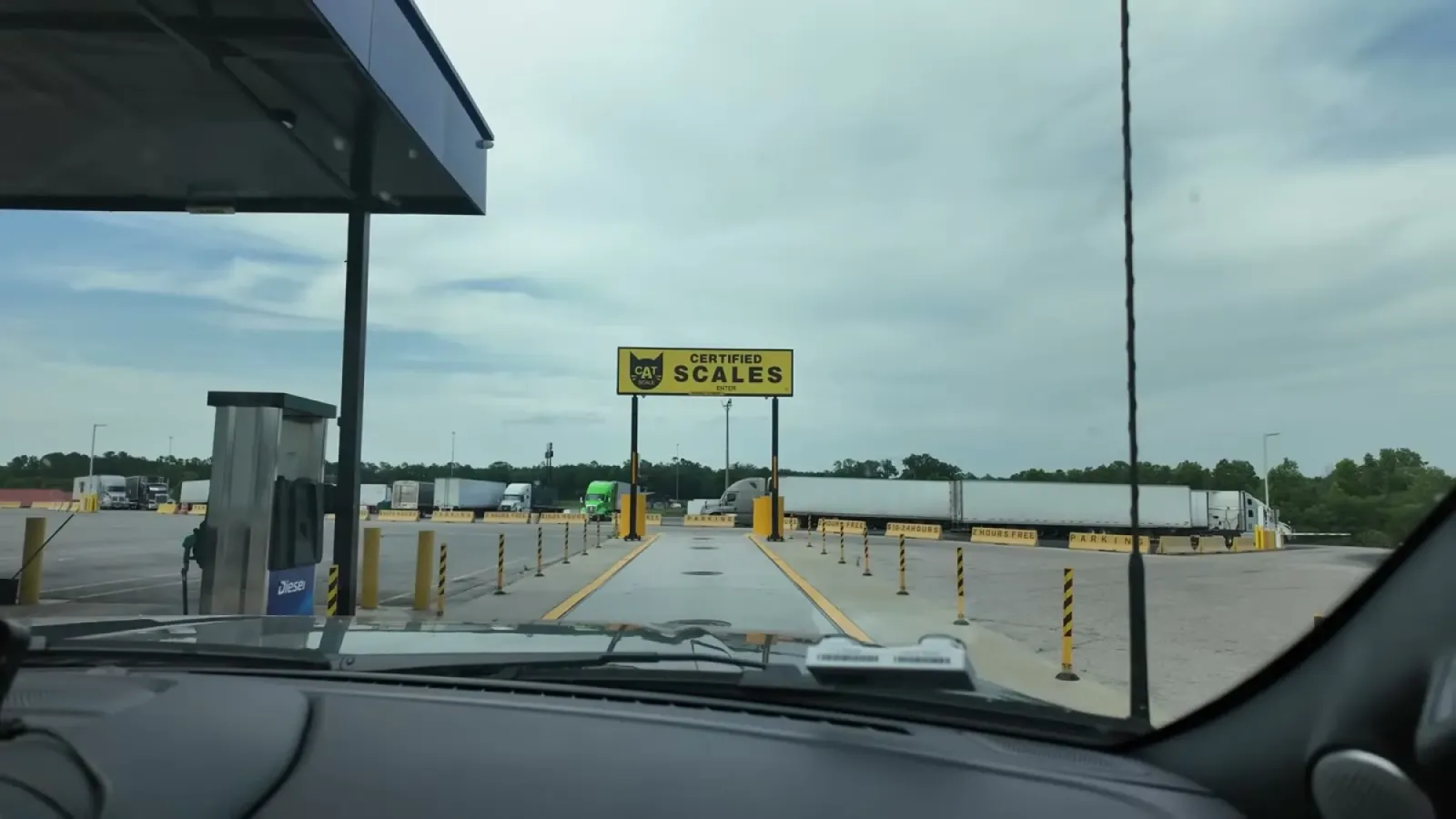
Step 2: Position your axles on the platforms
A CAT scale is three platforms in a row, each weighing whatever sits on it, and CAT's instructions for a truck and trailer are specific: steer axle on platform 1, drive axle on platform 2, trailer axles on platform 3. Yellow lines mark the platform edges. Pull forward slowly, keep the rig straight, and creep up until each axle group is on its own platform. You get axle weights and a gross total; the scale cannot weigh individual corners. Nobody behind you expects speed here. Truckers do this every day and would rather you take an extra thirty seconds than get a useless ticket.

Step 3: Check in by intercom or the app
Once you are parked on the platforms, there are two ways to run the weigh. The traditional way is the intercom pole by the driver's window: push the button, give the cashier your information (say it is a first weigh and give a name for the ticket), then pull off, park, and collect the printed ticket at the fuel desk inside. The newer way is the Weigh My Truck app, which handles payment from the cab and sends the results straight to your phone. We used the app, and the axle weights showed up before we had even pulled off the scale. Either way, wait for the go-ahead before you move.
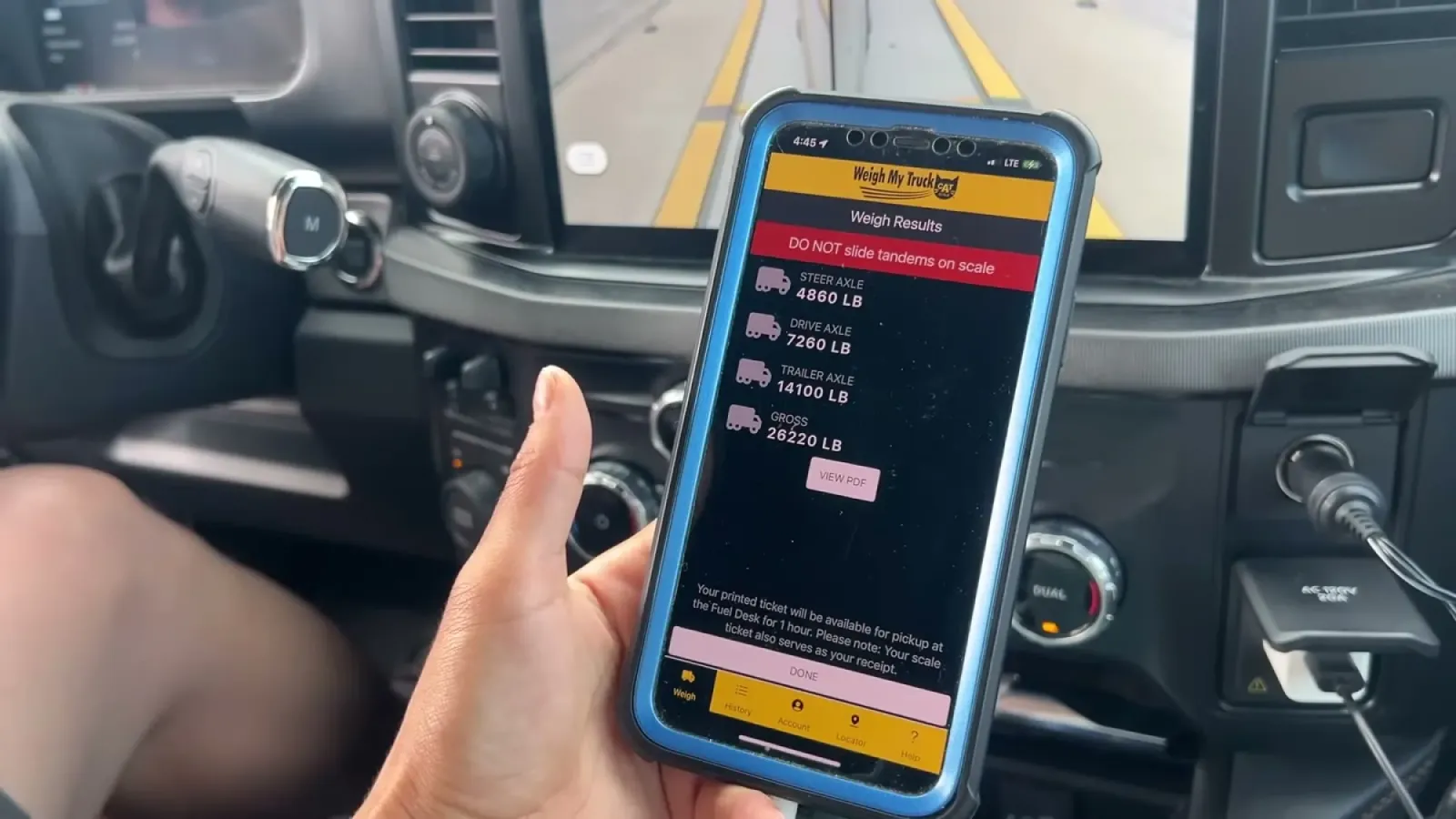
Step 4: Unhitch and weigh the truck alone
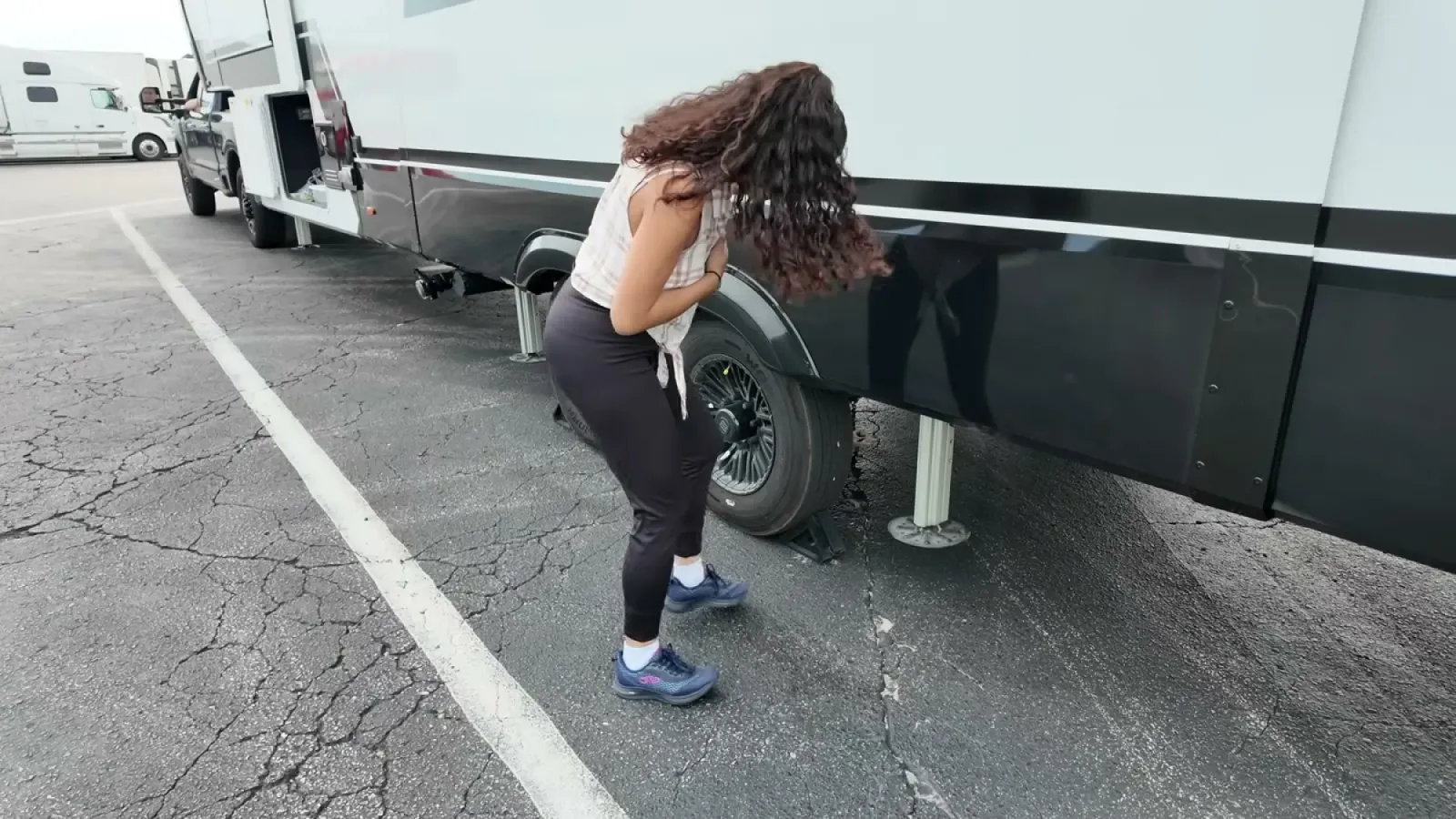
One pass tells you your total weight, but the numbers that matter most come from comparing two passes. So after the first weigh, we found a spot in the lot, unhitched the trailer, and ran the truck across the scale by itself. CAT's reweigh discount applies within 24 hours at the same scale, with your first ticket in hand: as we write this, a first weigh is $15.25 and a reweigh is $5.25. The fine print says a reweigh is for the same vehicle, and a truck without its trailer is technically a changed setup, so tell the attendant what you are doing and let them ring it up the right way. Fair warning: unhitching a fifth wheel in a travel center parking lot with trucks rolling past adds some pressure to a job you probably practice in calmer places. Take your time and run your normal checklist anyway.

Step 5: Do the math the ticket does not do for you
Each ticket shows three numbers: steer axle, drive axle, and trailer axle weight, plus a gross total. That is all. It does not print your trailer weight and it does not print your pin weight, which are the two numbers most RV owners came for. Both of those you work out yourself, by subtracting one ticket from the other, so plan on sitting down somewhere with both tickets and a calculator. We did ours over dinner at a Cracker Barrel.
- Gross combined weight: the total from the hitched pass. Compare it to your truck's GCWR.
- Trailer weight: the hitched gross minus the truck-alone total. That difference is the trailer, all of it, including the part sitting on your hitch.
- Pin weight: add the steer and drive axles from the hitched pass, then subtract the truck-alone total. The difference is what the trailer presses down on your hitch.
- Payload: the truck-alone total minus the truck's listed curb weight, plus that pin weight, is what your truck is really carrying. Compare it to the payload sticker in the door jamb.
- Trailer axles: check the third-platform number against your trailer's axle and tire ratings.
From our own tickets that day: 26,220 pounds gross on the hitched pass, 8,520 for the truck alone, which put the trailer at 17,700 pounds with 3,600 of it riding on the truck as pin weight. That is right at 20 percent of trailer weight and inside the healthy fifth wheel range, which is the reassuring way to read it. The other way to read it is against our truck's 3,884 pound pin weight limit, where 3,600 leaves under 300 pounds of margin. Same number, and the second reading is the one that matters when you are deciding whether the truck is the right truck.
How to read your CAT scale ticket
Here are our real numbers from that day, both passes side by side, as the Weigh My Truck app showed them. A paper ticket from the fuel desk lists the same axle groups, so you read it the same way.
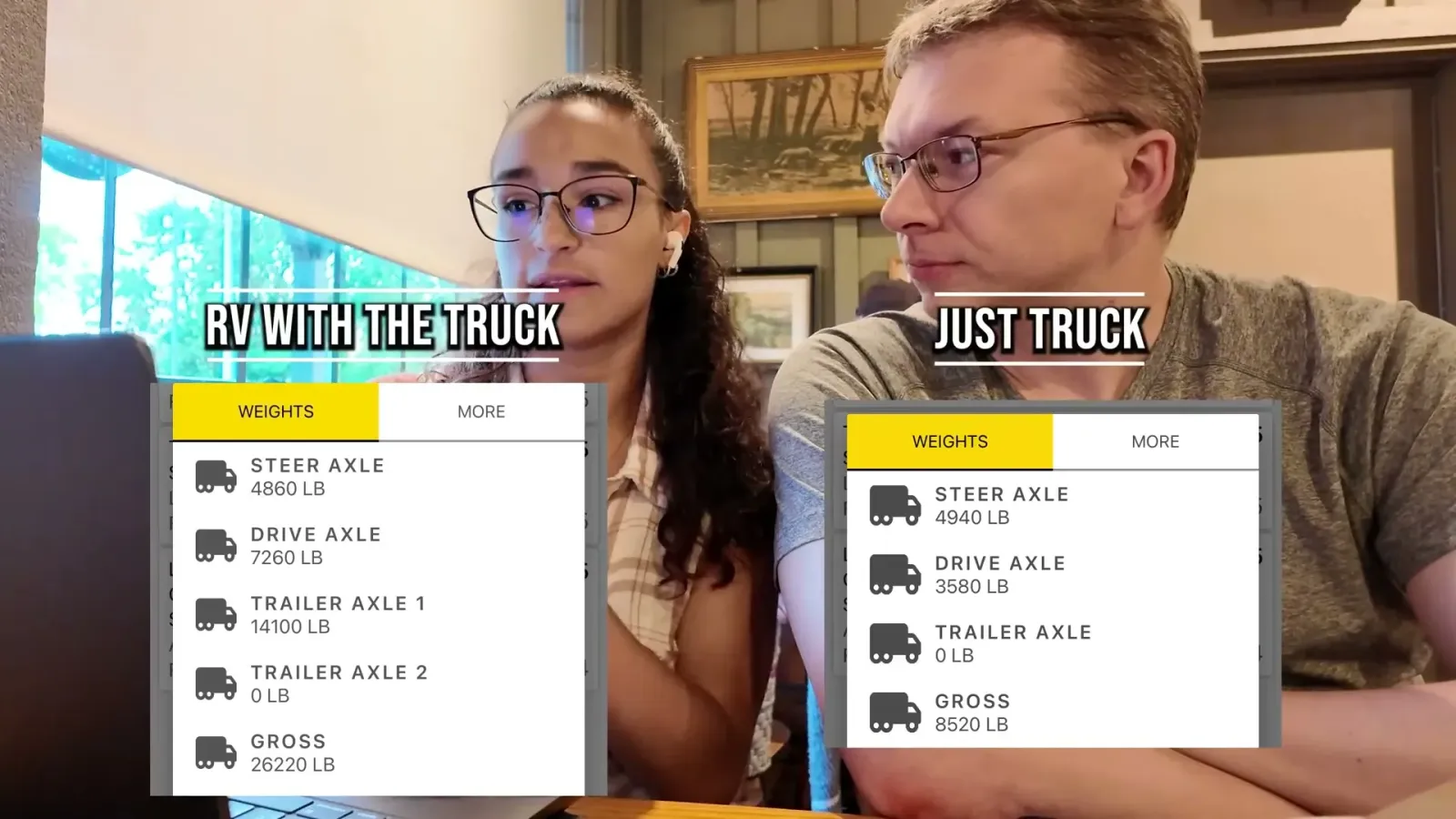
Each line is one platform. Go through them in order:
- Steer axle: the truck's front axle, on platform 1. Ours read 4,860 pounds hitched and 4,940 with the truck alone, so hooking up the trailer took 80 pounds off the front wheels. That is a small change, but keep an eye on it, because the front axle does the steering and a good share of the braking.
- Drive axle: the truck's rear axle, on platform 2. It went from 3,580 pounds alone to 7,260 hitched, a jump of 3,680. Most of the weight the trailer puts on the truck lands here.
- Trailer axle: everything on platform 3. Both of our trailer axles sat on that platform, and the app put the whole 14,100 pounds on the "trailer axle 1" line with 0 on "trailer axle 2". On the truck-alone pass the trailer line reads 0, because nothing was on platform 3.
- Gross: all the platforms added together. 26,220 pounds hitched, 8,520 for the truck alone.
Getting pin weight from a weigh and reweigh
Pin weight is how much the truck's two axles gained between the passes. Add steer and drive from the hitched pass (4,860 + 7,260 = 12,120), then subtract the truck-alone total of 8,520. That leaves 3,600 pounds pressing down on the hitch. You get the same answer from the axle changes directly: the drive axle gained 3,680 and the steer axle lost 80, which nets out to 3,600.
Trailer weight is that pin weight plus whatever the trailer axles carried: 3,600 + 14,100 = 17,700 pounds. Subtracting the grosses (26,220 minus 8,520) gives the same 17,700, and working it out both ways is a quick check that you copied the numbers right.
Then hold each number up against its sticker. Our trailer's sticker lists a GVWR of 17,495 pounds and 8,000 pounds per axle. The 14,100 on the trailer axles was well under the 16,000 our two axles are rated for, and the trailer as a whole came in right around its GVWR. We had roughly 50 gallons of fresh water aboard that day, which by our math at the dinner table is around 417 pounds, so the plan is to weigh again with an empty tank. On the truck side, compare the hitched steer and drive numbers to the axle ratings on the door jamb sticker, and the pin weight to your hitch and truck limits.
Towing a bumper pull? The same subtraction tells you how much the trailer puts on the truck at the ball. If you run a weight distribution hitch, the bars move some of that load to the steer axle and the trailer axles, so the steer line matters even more. We tow a fifth wheel and have not weighed a bumper pull ourselves.
What we got wrong
Plenty, and it is all on camera. First, we let our hitching skills sit idle for two months, so the chocks were stubborn, the muscle memory was gone, and the morning took far longer than it should have. Second, we ignored the load-like-you-travel rule and crossed the scale carrying much more fresh water than we normally haul. Water weighs about 8.3 pounds per gallon, so on top of the subtraction every RV owner has to do anyway, we had extra arithmetic to back that water out and estimate our real travel weight. Third, we did not look at the slope of the lot before committing to it. The lot turned out to be one long subtle grade, and when we ran auto level, the system lifted the trailer wheels right off the ground, which is a special kind of panic in a 17,700 pound home (that is what the ticket said the trailer weighed that day, extra water and all). None of that is the scale's fault, but it is all part of weigh day when you are new at it.
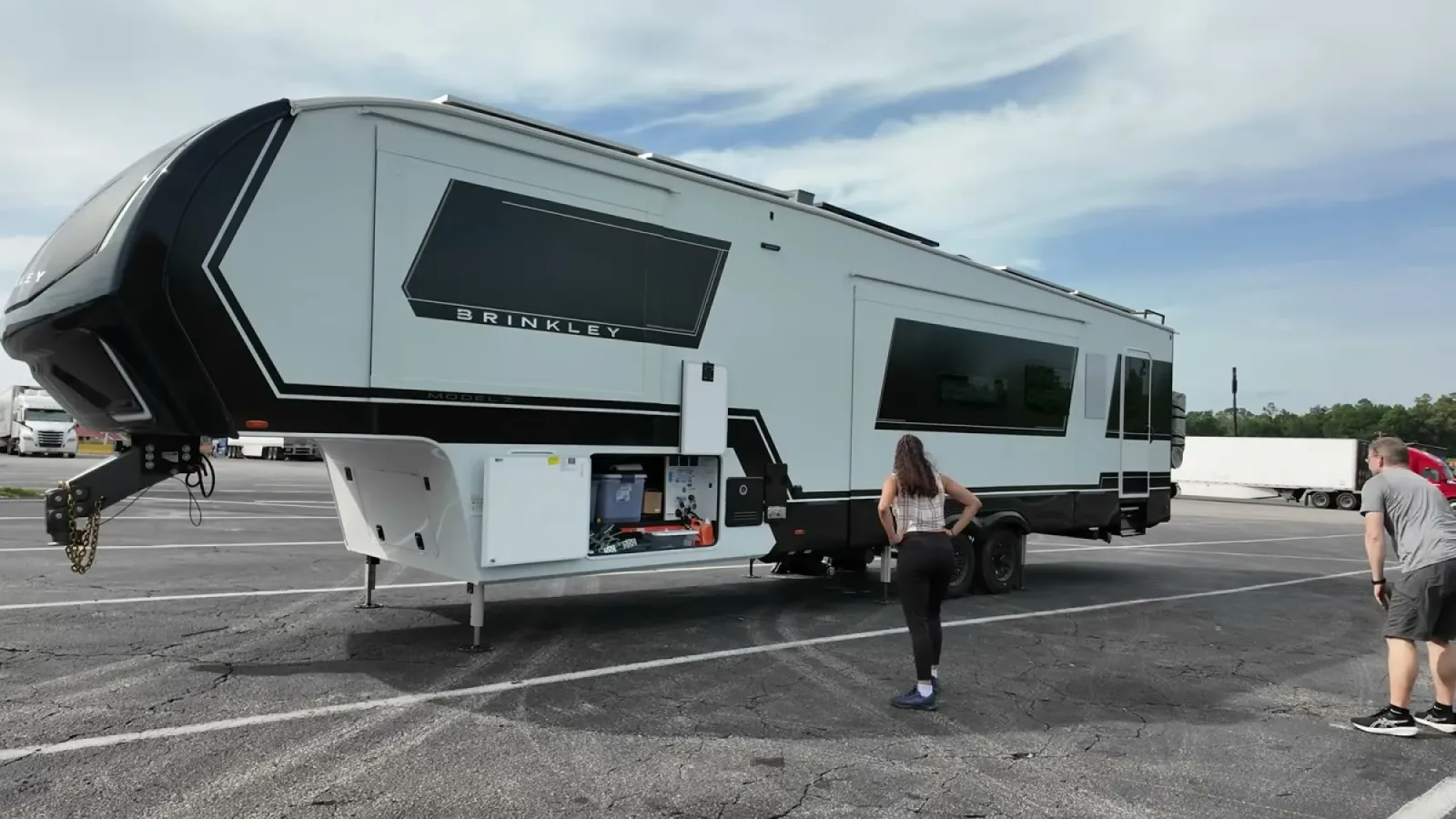
You can watch our first weigh, panic included, in the travel day video post, and see us work through the actual numbers in the results video post. What those numbers meant for the truck, and why we are now looking at a dually, is in how to tow a fifth wheel. For the official word, CAT Scale publishes its own positioning instructions and a FAQ with current pricing and reweigh rules.
This guide describes how we did it on our own rig. We are not RV technicians, and this post may contain mistakes or steps that don't apply to your setup. Proceed at your own risk, and double-check anything safety-critical with a professional.