
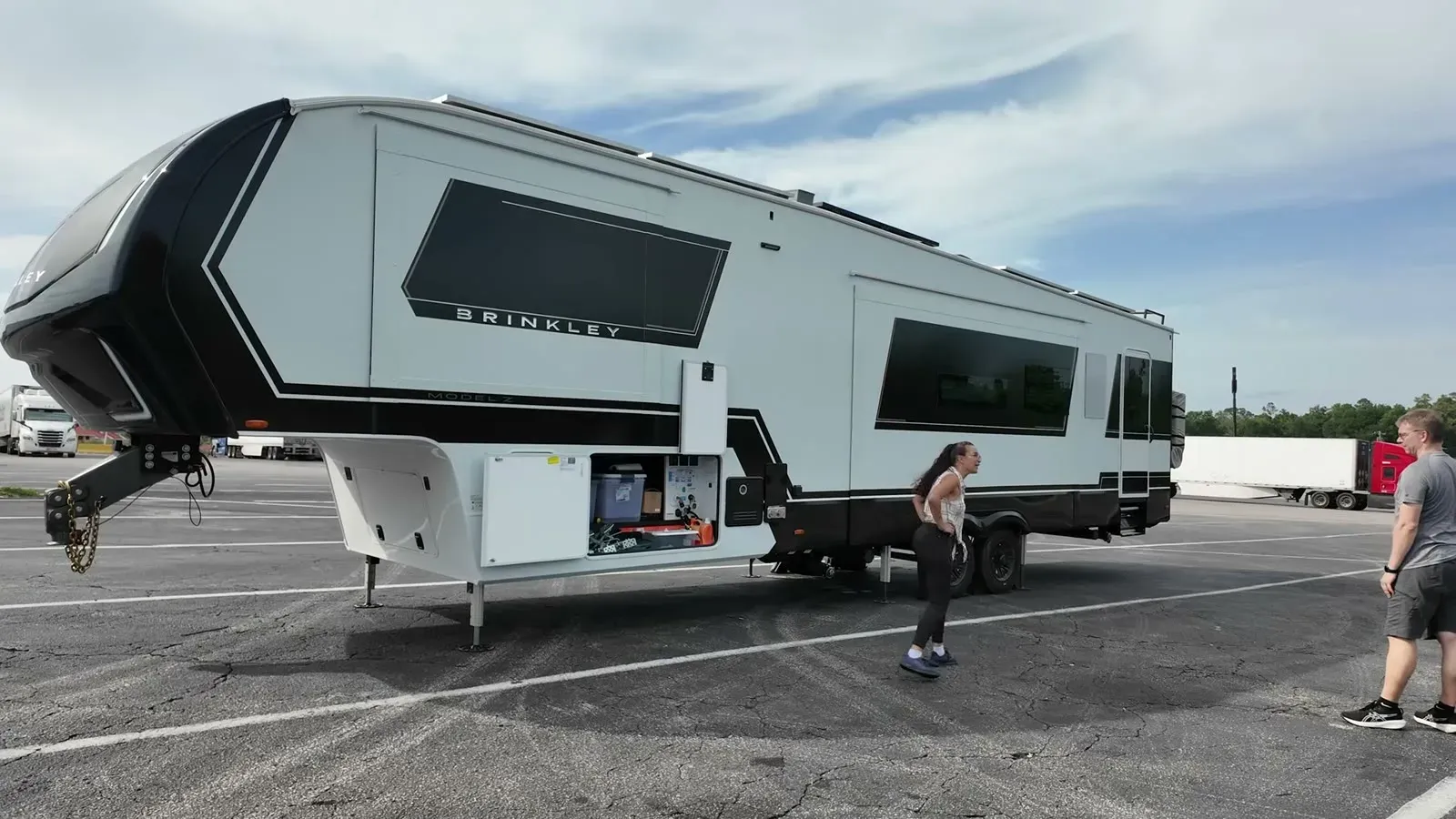
After a couple of months sitting on full hookups, we finally hitched up the Brinkley Model Z 3515 and got moving again. The mission was simple: drive to a travel center, run the truck and trailer across a CAT scale, and find out how much our home actually weighs. Simple missions are where RV life likes to get creative.
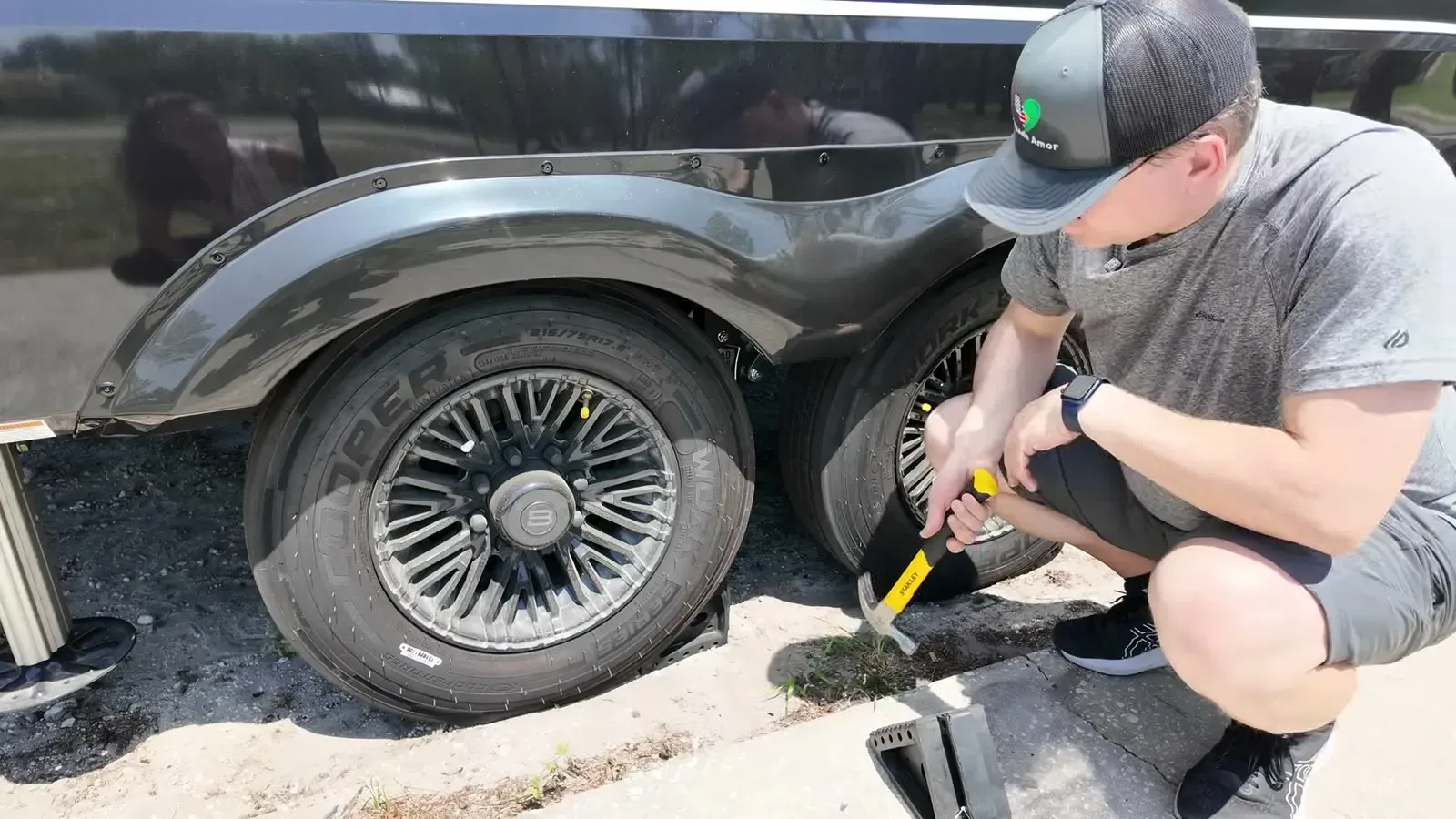
Rusty after two months parked
The first fight of the day was with our own wheel chocks. After two months in one spot, they did not want to come out, and neither did our hitching muscle memory. Everything took longer than it should have: the tailgate dance, the pin height, the double checks. That's the hidden cost of sitting still for a while. The gear settles in, and so do you. If you've ever felt clumsy on your first travel day after a long stay, we have video proof you're not alone.
A stop at General RV
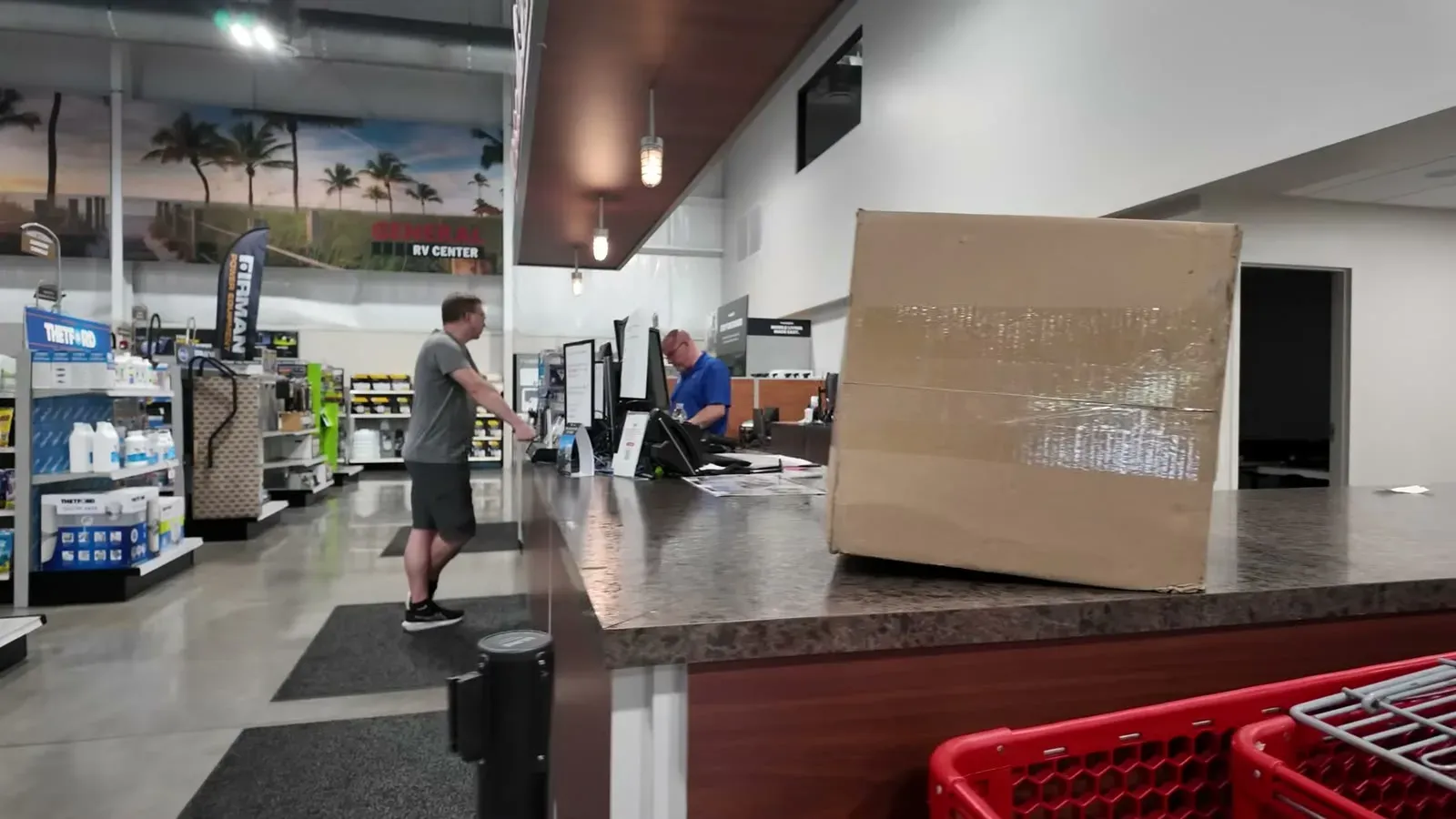
On the way we swung into General RV to pick up a dresser desk insert for the rig, one of those small quality-of-life upgrades that turns a bedroom dresser into a usable workspace. When you work full-time from the RV, every flat surface eventually becomes a desk, so we might as well make one of them official.
The CAT scale, twice
Then came the main event. We pulled the whole rig onto the CAT scale for a combined weight, then found a place to unhitch, and ran the truck across alone. Weighing both ways is the trick: the difference tells you your pin weight, and the solo truck numbers tell you how much payload the trailer is eating. Unhitching in a travel center parking lot with trucks rolling past adds a little pressure to the process, but the numbers are worth it. We break down the actual results, and what they mean for how we load the rig, in the follow-up video.

The hill that lifted our wheels
The real drama waited until the end of the day. The lot we picked for the night turned out to be one long subtle slope, the kind you don't notice until your level app does. We chocked carefully and tested everything, then hit auto level. The system did its best with the slope, and its best involved lifting our wheels right off the ground. Watching your 16,000-pound home balance on its jacks while the tires spin free is a special kind of panic. We got it back down, re-thought the setup, and slept slightly less soundly than usual.
What we learned
Three things. First, don't let hitching skills sit idle for two months without expecting rust. Second, weigh your rig both hitched and unhitched, because the pin weight math is the part that matters. Third, look at a parking lot's slope before you commit to it, because auto leveling will happily attempt things it should not. Every one of these lessons cost us an hour and some heart rate, and now they're yours for free.
Watch everything go wrong in real time on YouTube. We also send a short weekly newsletter about where we are and what broke this week. The signup form is on our newsletter page.