
An RV is a box parked on the ground, and to the local insects it looks like free real estate. We learned this the week a trail of ants found a way into our Brinkley Model Z 3515 and Fabiola declared total war. That same week we put bug screens over the furnace vents, because wasps love nesting in RV appliance openings almost as much as ants love a crumb under the dinette. This guide is the system we ended up with: block the openings, break the paths in, and bait whatever still makes it inside.
Step 1: Figure out how they're getting in
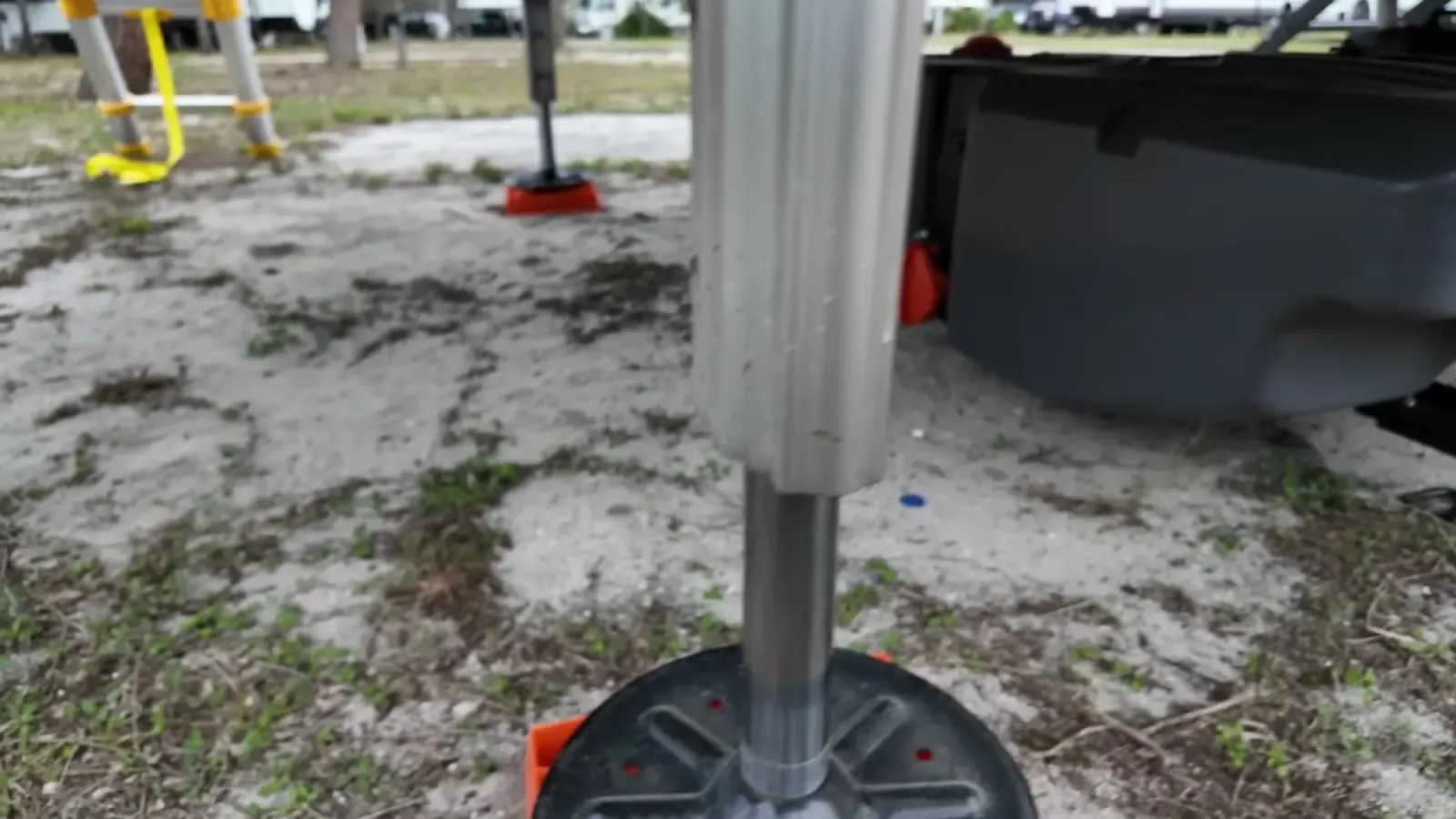
Before you spray or bait anything, spend ten minutes watching. Ants walk in lines, and those lines point straight at the entry point. When we traced ours, the routes were exactly what you'd guess: anything connecting the rig to the ground. Leveling jacks, the power cord, the water hose, the entry steps, tires. Ants treat every one of those as a highway. Inside, follow the trail back to where it disappears into a wall or floor seam, because that gap is where your bait goes later.
While you're at it, walk the outside of the rig and look at every appliance vent. Furnace intake and exhaust, water heater, fridge vent. Most are open holes from the factory, and a mud dauber nest inside a furnace tube is an expensive repair.
Step 2: Screen the furnace and water heater vents
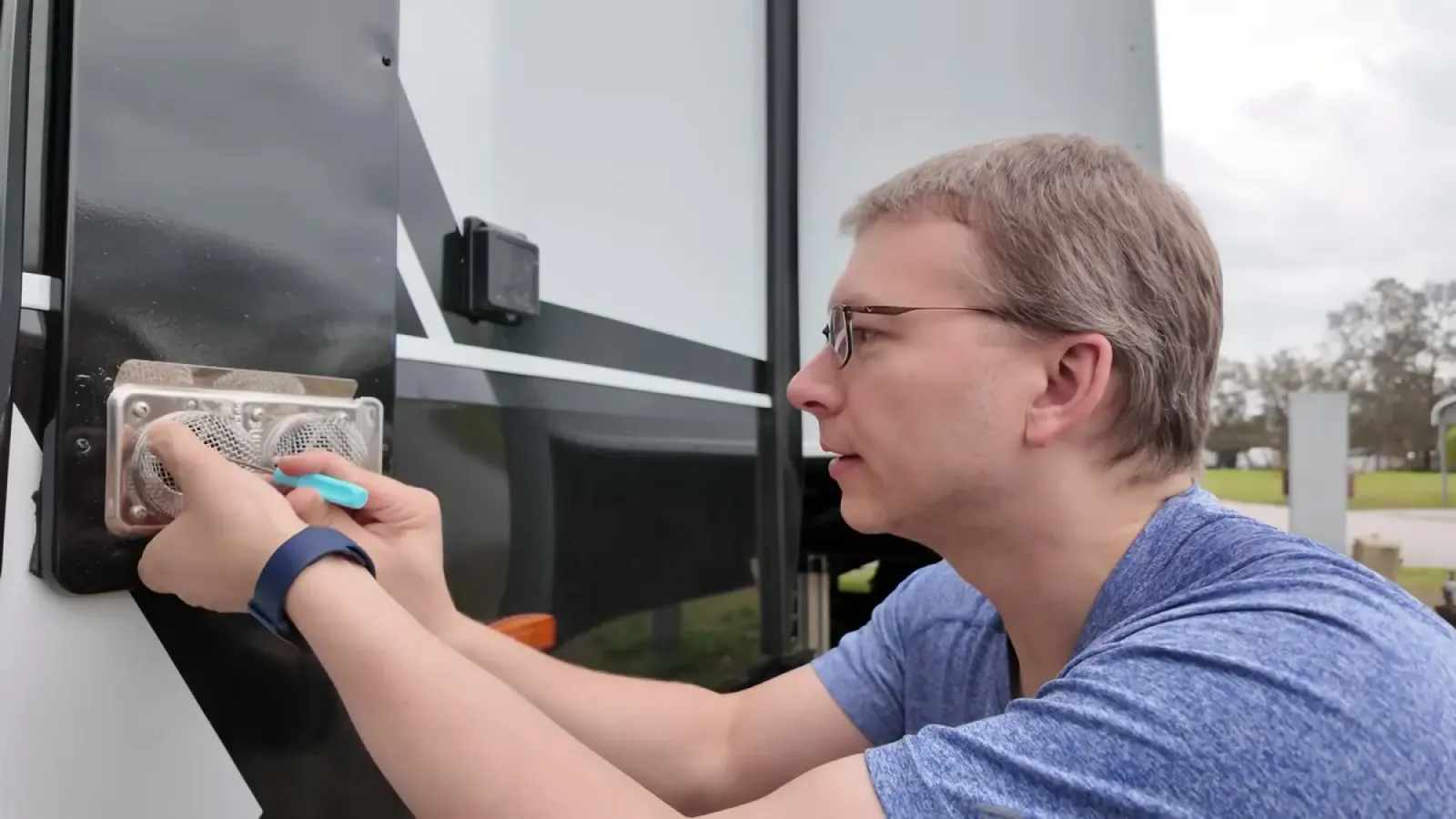
We installed screens over our furnace vents in this same episode, and it's one of the fastest jobs on an RV. The screens are stainless mesh domes sized for specific vent models, and they install with a spring that hooks the inside of the vent cover. A little tool comes in the package to pull the spring through. No drilling, no sealant, a few minutes per vent.
Two things matter here. First, buy the screen made for your exact appliance vent (Suburban, Atwood, and Dometic vents are all different sizes), because a screen that's stuffed in rather than fitted can block airflow, and these appliances need to breathe. Purpose-made screens use a coarse mesh precisely so combustion air still flows. Second, know that some appliance manufacturers don't endorse aftermarket screens at all for that airflow reason. We weighed that against the cost of a wasp nest in the furnace and put the screens on anyway, but check your appliance manual and make your own call. Either way, check behind the mesh now and then, since trapped debris is its own airflow problem.
Step 3: Spray a barrier around everything touching the ground
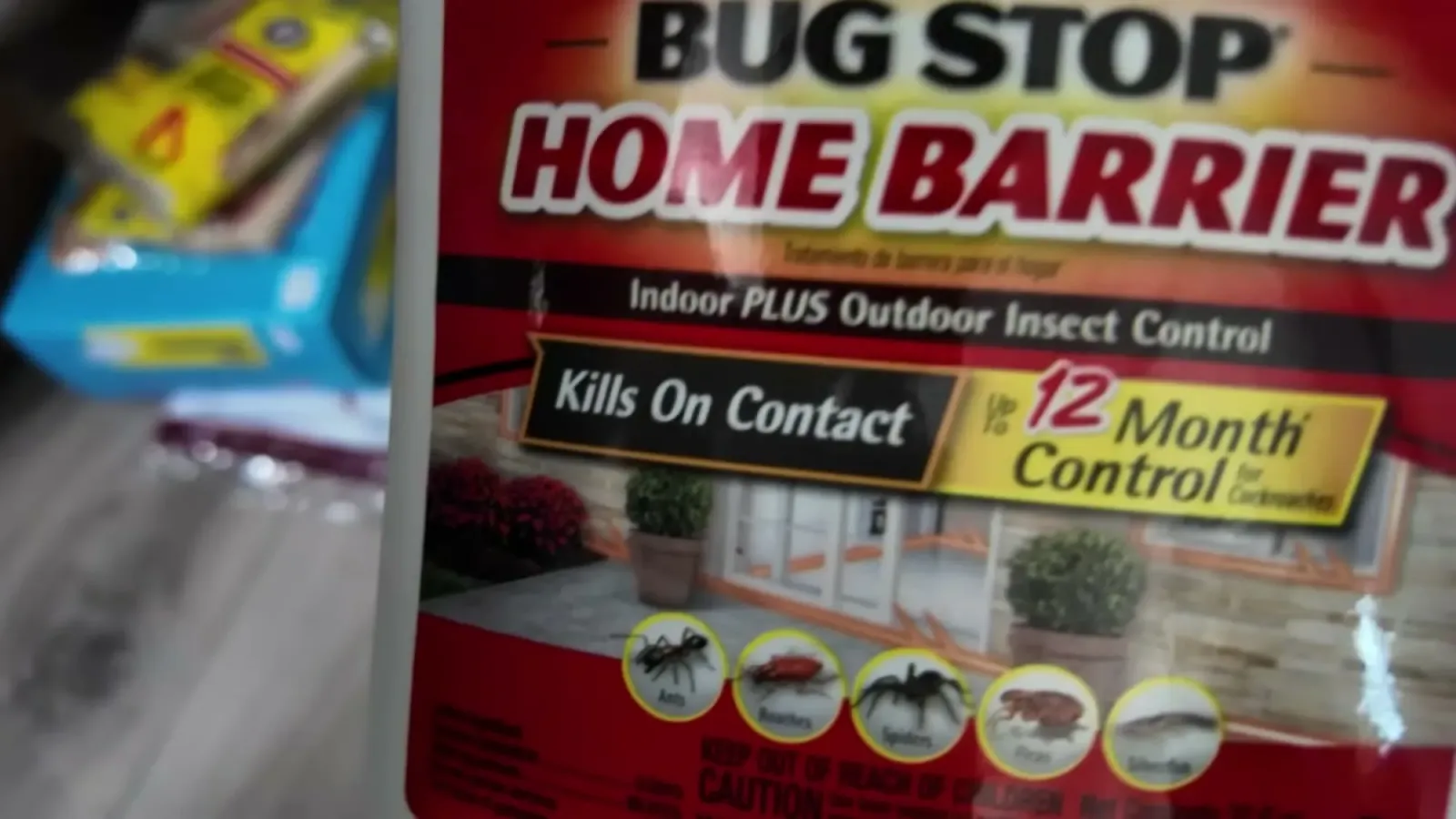
Next, break the highways. We put down a barrier spray around every point where the rig meets the ground: each leveling jack, the tires, the steps, and along the hoses and cords. Perimeter treatment guides like BioAdvanced's recommend a continuous band with no skips, since ants will find a gap, and spraying where utilities enter the structure. On an RV, "where utilities enter" means your power cord, water hose, and sewer hose, so give the first few feet of each a pass too.
Follow the label on whatever product you buy. Residuals vary a lot (some last a month, some claim a season), and rain washes most of them down, so plan to refresh it after storms and every time you move to a new site. We used a bug stop home barrier spray, and we kept off the treated areas until everything dried.
Some campgrounds are worse than others. Moss Park in Orlando has a lot of ants, and a colony moved into our RV while we stayed there. At a park like that, spraying your jacks when you set up might keep them from moving in.
Step 4: Bait the ones already inside with borax
Spraying the ants you can see feels productive, but the colony is outside and the queen keeps making more. Bait fixes that: workers carry it home, share it, and the colony collapses over days.
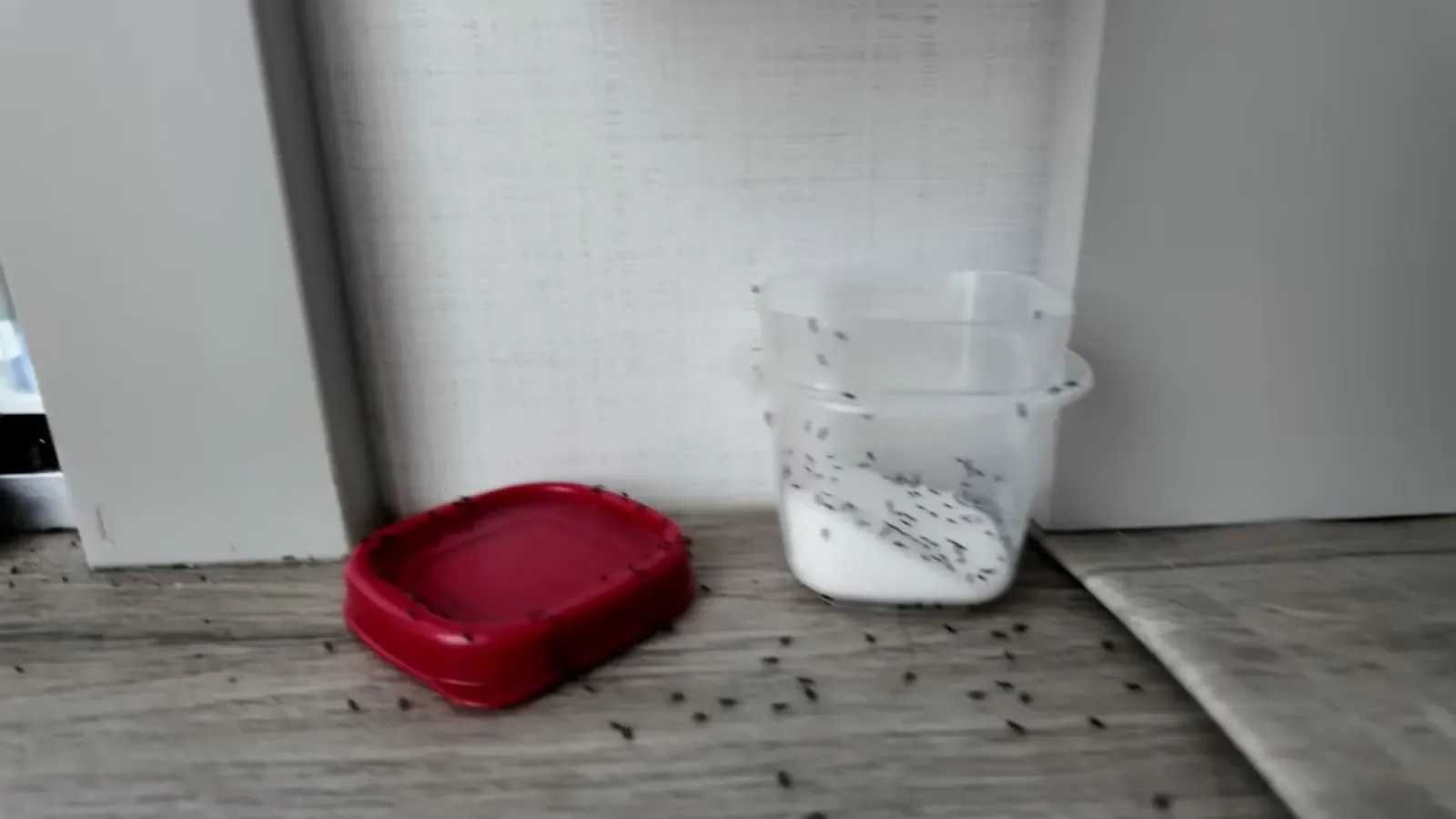
The classic homemade version is borax mixed into something sweet. What we mixed on camera was half a cup of sugar and 1.5 tablespoons of borax dissolved in 1.5 cups of warm water, plus a dry option of three tablespoons of powdered sugar to one tablespoon of borax. That lines up with the guidance we found later: Today's Homeowner cites an optimal borate concentration of roughly 0.5 to 1 percent in a sugar-water solution, and warns that a mix that's too strong kills the workers at the bait instead of letting them walk it back to the nest. More poison actually works worse. Set the bait in shallow lids or caps along the trail you traced in Step 1, then leave the trail alone. Watching ants swarm the bait feels wrong, but that traffic is the plan working. Expect days, not hours.
One big caution: borax is toxic to dogs and cats in quantity. Terro's own guidance is to keep borax and borax baits where pets and kids can't reach them, and enclosed bait stations are safer than the open lids we used if animals share your rig. We don't travel with pets, so open containers behind a cabinet corner were an acceptable risk for us. They might not be for you. If a pet does get into it, the Pet Poison Helpline is (855) 764-7661.
What we got wrong
An honest list from our own footage and the weeks after. We started by spraying the ants we could see inside, which did nothing except make us feel busy while the colony kept sending more; the bait is what actually ended it. We also put our bait out in open lids on the floor, which worked fine for us but is not what you should copy if kids or pets share your rig; enclosed stations are the safer call. And we treated the ant problem as a one-time battle when it's really maintenance: the barrier spray needs refreshing at new sites and after rain, and we skipped that more than once early on. The vent screens are the exception. Those went on in ten minutes and have needed nothing since.
The good news is the system works. We traced, screened, sprayed, and baited, and the invasion ended. If you want to see the whole battle (and the security cameras we installed the same week), it's in the full video post.
This guide describes how we did it on our own rig. We are not RV technicians, and this post may contain mistakes or steps that don't apply to your setup. Proceed at your own risk, and double-check anything safety-critical with a professional.