
We have overnighted at Walmarts, Cracker Barrels and a casino or two. They are free, and you get what you pay for: a parking lot, some road noise, and no hookups. On a travel day that is often exactly the right trade.
The part that goes wrong is not the sleeping. It is everything before it. Here is how we do it with a 40-foot fifth wheel behind a one-ton pickup.
Does Walmart allow overnight parking?
Some stores do and some do not, and there is no company-wide policy that settles it. Walmart leaves the decision to each store, and plenty of locations are overruled by city or county ordinances that ban overnight parking regardless of what the manager thinks.
So the only reliable answer comes from the specific store you are heading to. Call it, ask for a manager, and ask directly. A store that allowed it last year may not now, and the apps and crowd-sourced lists go stale faster than you would like.
The short version: usually yes at rural and highway-adjacent stores, frequently no in cities and tourist areas, and always worth a phone call.
Call ahead. Every time.
This is the whole game, and it is the step people skip.
Walmart overnight parking is not a policy. It is a per-store decision, and it changes. Some locations allow it, some are barred by city ordinance, and some allowed it last year and do not now. The store manager is the only person who can tell you, and the answer is worth a two-minute phone call.
We learned this the expensive way. Pulling out of South Carolina for a two-day run to Louisville, we had picked a Walmart and it never answered the phone. So we left with no confirmed place to sleep, and Fabiola spent a chunk of the drive calling around from the passenger seat looking for anywhere that would take a rig our size. We landed a last-minute Walmart in Indiana. It worked, it was free, we slept fine, and the whole afternoon was more stressful than it needed to be.
Two things came out of that. Call before you count on it. And if you travel without reservations, internet in the truck is what makes the scramble survivable, which is one of the less obvious arguments for a roof-mounted Starlink.
Ask where, not just whether
When you call, get two answers: are we allowed, and where do you want us.
Most stores that permit it have a preferred corner, usually the far edge away from the entrance, often near where the semis sit. Parking where they asked is most of what keeps these stops available for everyone. Parking across nine spaces in front of the garden center is how a store becomes a no.
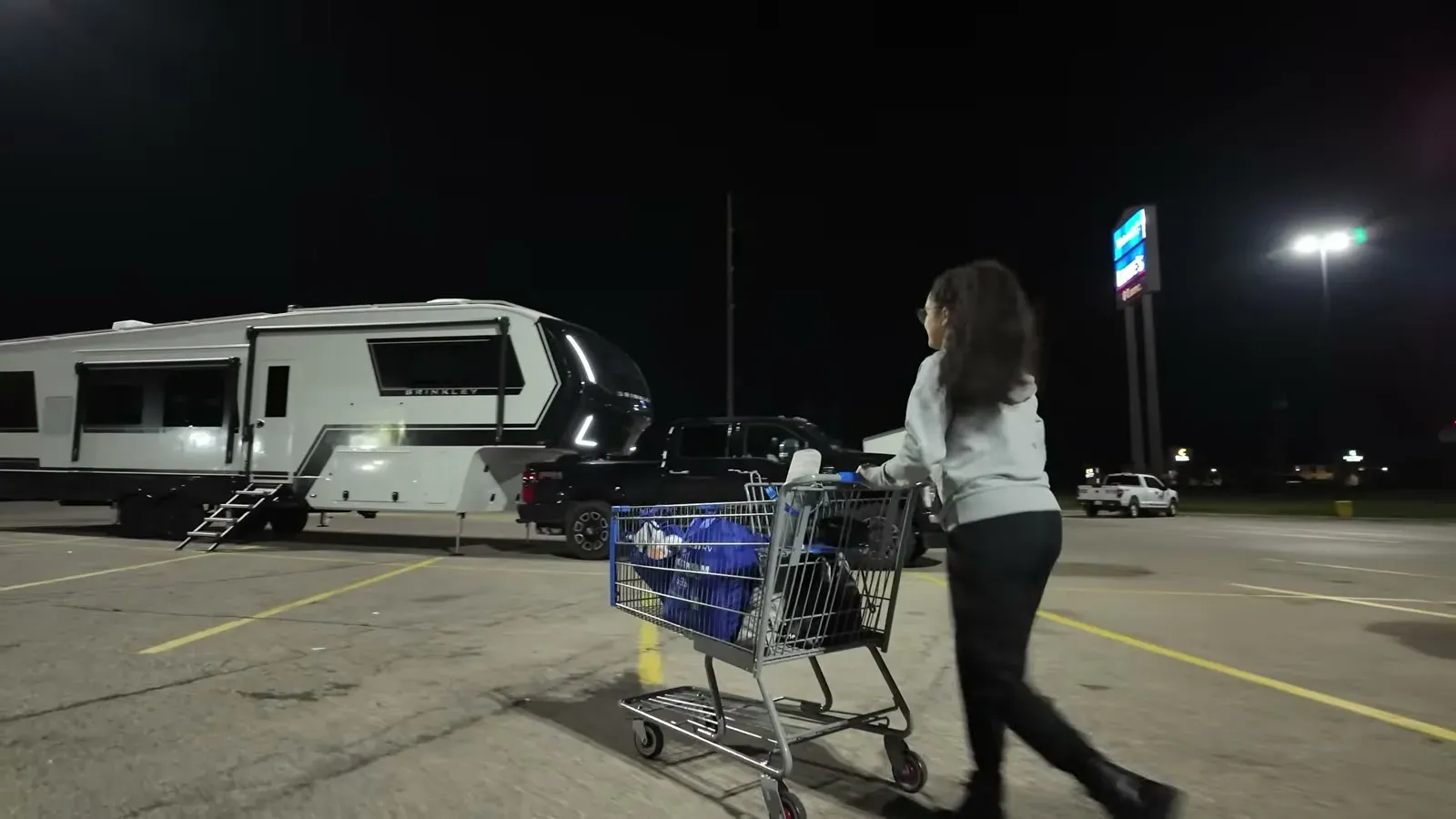
Parking a big rig in a lot built for sedans
A 40-foot fifth wheel in a Walmart lot is a genuine maneuver, and it is worth thinking about before you are doing it at the end of a long day. Our version of this is on camera in the travel day where the parking tested our marriage, and the honest summary is that this is where two tired people find out how well they communicate.
What helps:
Scout the lot on satellite before you arrive. You are looking for a way in, a way out, and a run of empty spaces you can take lengthwise without blocking a lane.
Arrive with daylight. We do not back into unfamiliar spots after dark anymore, and a strange parking lot counts.
Take pull-through spaces over anything requiring a back-in. In a big lot you can usually line up across several empty rows and never reverse at all.
Agree on hand signals before either of you gets out. Shouting through a closed window has ruined more evenings than tight turns have.
What you set up, and what you do not
The rule we use for any one-night stop is whether we can stay hitched and still get the slides out. If we can, setup is minutes instead of the full unhitch-and-level routine. That decision comes down to how level the spot is, and the actual test we run is in how to stay hitched overnight.
In a parking lot specifically:
Drop the rear stabilizers lightly, purely to cut the wobble when you walk around inside. This is not leveling, it is comfort.
Keep the slides in if the lot is busy or the spot is tight. You are a guest, and a slide over a traffic lane is asking for trouble.
No chairs, no grill, no awning, no leveling blocks fanned out across the asphalt. Nothing that says camping. This is parking, and the difference is what keeps stores saying yes.
Live on your own tanks and battery. There are no hookups, which is a non-event if your rig can run a night unplugged and a real problem if it cannot.
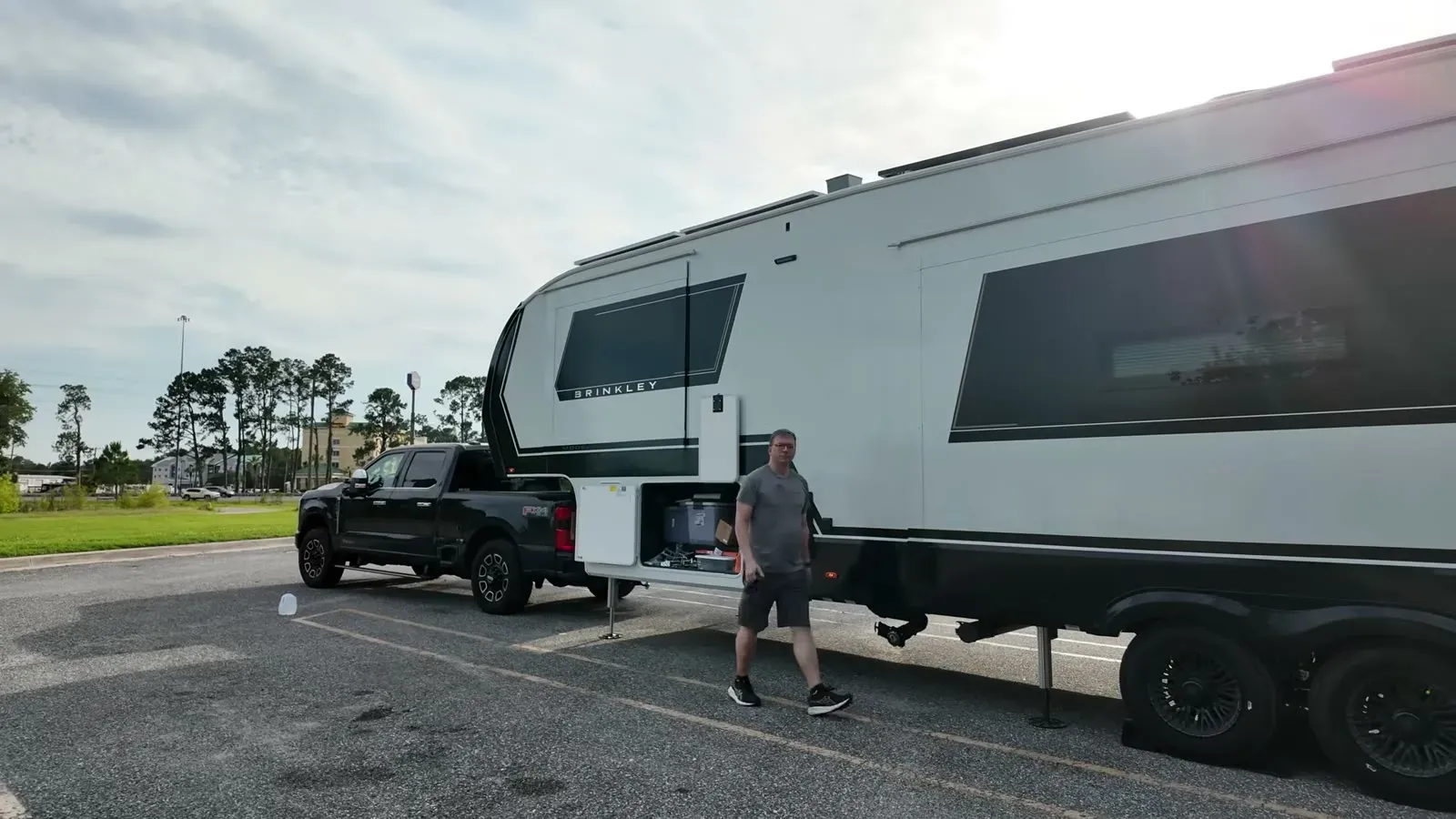
Buy something
You are getting a free, secure, well-lit place to sleep. Go inside and spend money. Groceries, fuel, the thing you have been meaning to replace since Tuesday. It costs you nothing you were not going to spend anyway and it is the entire reason this arrangement still exists.
Safety and sleep quality, honestly
Lots are well lit and busy, which cuts both ways. We have never had a problem, and we would tell you if we had. What we have had is noise: street sweepers at 3am, semis idling, delivery trucks before dawn. It is not campground quiet and it is not supposed to be.
Trust your read on a place. If a lot feels wrong when you pull in, leave. It is a parking lot, not a reservation, and there is no sunk cost.
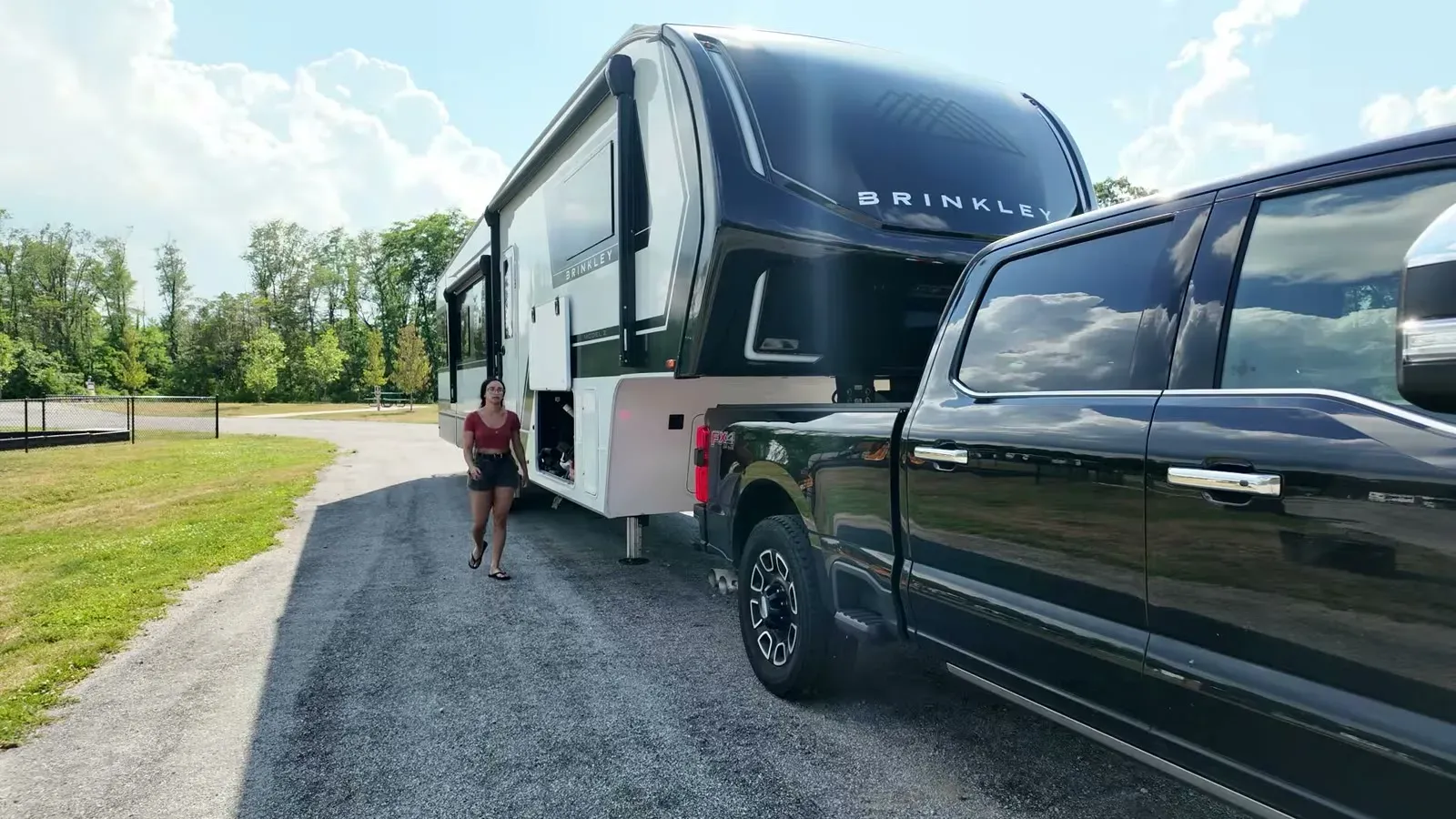
What other stores allow overnight parking
Cracker Barrel is the best of them, and often better than Walmart. Many locations have marked RV spaces, which removes most of the parking problem before you arrive. Same rule applies: it is a per-location decision, so call. Eating there is the obvious way to pay your way, and it is a nicer way to spend the money than a cart of things you did not need.
Casinos are frequently RV-friendly, sometimes with genuinely designated areas, and tend to be quieter than a retail lot because the parking is spread out and nobody is receiving deliveries at 5am.
Home Depot and Lowe's come up a lot and the answer is softer. There is no policy either way, it varies store by store even more than Walmart does, and the lots are generally smaller and more awkward for a big rig. We treat them as a backup rather than a plan.
Bass Pro and Cabela's are often the friendliest of the retail options, with some locations actively courting RV travelers.
Truck stops work, but you are sharing space with drivers who need it for legally mandated rest. Take the RV spots if they exist and leave the truck spots alone. That is not etiquette, it is somebody's job.
The pattern across all of them is the same: it is never a chain policy, it is always the individual store plus whatever the local ordinance says. Anyone who tells you a chain "allows" it is describing a tendency, not a rule.
Love's RV Stops are a different category entirely: numbered sites, full hookups, its own entrance away from the truck parking. Ours ran about $74, which is more than plenty of campgrounds charge. Whether that is worth it depends on the night, and we went through it in detail in our Love's review.
Harvest Hosts is the paid-membership version of the same idea, at wineries and farms rather than asphalt, covered in our Harvest Hosts post.
When we skip the free option
We pay for a site when we are arriving after dark, when we need to dump or fill, when weather is coming, or when we have a workday the next morning and need to be plugged in and settled rather than moving at 7am.
A free lot saves money on a night when all you need is somewhere legal and flat to sleep. It costs you more than it saves on a night when you actually need a campground. Knowing which night you are having is the whole skill.
This describes how we do it in our own rig. Store policies vary by location and change, city ordinances differ, and the only answer that counts is the one from the manager of the specific store you are calling.