
Harvest Hosts is a membership that opens up a different kind of overnight stop. Instead of a parking lot or a campground, you park for the night at a winery, farm, brewery, distillery, museum, or golf course that welcomes self-contained RVs. We started using it for overnights between longer stops, and it has quickly become one of our favorite ways to break up a travel day. Our very first stay was behind an actual Western saloon, and it's in this travel day video.
This review covers how Harvest Hosts actually works, what the Classic and All Access plans get you, the etiquette that comes with being a guest at someone's business, and what our own stays have been like so far, including the one that didn't go to plan.
Some links on this page are affiliate links. We only recommend services we actually use ourselves.
Our verdict: is Harvest Hosts worth it?
For us, yes. We've done four stays so far, we're on the All Access plan, and we plan to renew it. We move a lot, we're fully self-contained, and we'd rather spend a travel-day night at a winery than in a parking lot. But it isn't for everyone, and the membership only pays off if your travel style matches how it works.
It's worth it if you
- Travel more than you stay put, with lots of one-night stops between destinations
- Have a self-contained rig with its own toilet and holding tanks
- Are happy with a night of no hookups
- Would buy a bottle of wine, a growler, or some farm eggs anyway
Skip it if you
- Need hookups or a dump station every night
- Like to settle in somewhere for several nights
- Camp in a tent or a rig without an onboard toilet (these aren't allowed)
- Would rather not spend money at each stop, since supporting the host is the whole deal
How does Harvest Hosts work?
Harvest Hosts is a yearly membership rather than a per-night fee. Once you are a member, you browse host locations along your route, request a stay through the app, and park for the night once the host confirms. Stays are typically one night, the sites usually do not have hookups, so you need to be self-contained, and there is no set nightly charge. The understanding is simple and part of what makes it work: you support the host by buying something, a bottle of wine, a growler, farm eggs, a round of golf, which more than covers what a campground would have cost.
The membership
You pay once a year, and the membership renews on the date you joined. It covers unlimited stays for that year, but only for one RV. Harvest Hosts says its network covers 49 US states and 10 Canadian provinces. How many of those places you can book depends on which plan you buy, which we break down below.
Who the hosts are
The core of the network is small businesses: farms, wineries, breweries, distilleries, and attractions like museums. Harvest Hosts lists more than 5,900 of those. Depending on your plan you can also get Boondockers Welcome locations (stays on private property) and golf courses. Every plan also includes discounts at partner campgrounds and dump station information on the map.
Booking a stay
You find a host on the map in the app or on harvesthosts.com, check its calendar, and send a request. The host has to approve it. Harvest Hosts says most hosts open their calendars 90 to 180 days out and more than half accept same-day requests, but the popular ones fill up in peak season. When you request, tell the host how long your rig is. Each host has its own parking area and they know what fits.
The one-night norm
A standard stay is one night, and it's free. Harvest Hosts says some hosts let you stay up to four extra nights for a fee, but treat that as a bonus you check in the host's listing, not something to count on. This is a place to sleep between destinations, not a place to set up camp for the week.
Harvest Hosts Classic vs All Access
There are three plans. Here is what each one includes, according to Harvest Hosts' own plans page. Prices are the regular annual prices as listed in October 2026. They change, and Harvest Hosts was also running a first-year discount when we checked, so check the current price when you sign up.
| Classic | + Boondockers Welcome | All Access | |
|---|---|---|---|
| Regular price (Oct 2026) | $99/year | $169/year | $179/year |
| Farms, wineries, breweries, distilleries, attractions (5,900+) | Yes | Yes | Yes |
| Partner campground discounts (1,100+) | Yes | Yes | Yes |
| Boondockers Welcome locations (3,300+) | No | Yes | Yes |
| Golf courses (300+) | No | No | Yes |
| Escapees RV Club membership | No | No | Yes |
| Dump station info and map layers | Yes | Yes | Yes |
Which plan makes sense
Classic is the one to start with if you mostly want the wineries, farms, and breweries. That's the heart of Harvest Hosts, and it's the cheapest way to find out whether one-night stays suit you.
All Access is worth a look if you'd use what it adds. Boondockers Welcome adds more than 3,300 places to stop, which matters most in areas where small-business hosts are thin on the ground. Golf courses are only on All Access. That's the plan we have, and it's why our golf course stay on the way to Yellowstone was an option for us. The Escapees RV Club membership is a nice extra if you're full-time. We already use Escapees for our mail, which they receive in Texas and forward wherever we are.
The gap between the Boondockers Welcome plan and All Access was only $10 a year at regular prices when we checked, so if you're going past Classic, All Access is usually the one to pick.
What our stays have actually been like
We've done four Harvest Hosts stays so far, so this is a running account rather than a final word. When we first started using it, our early take over dinner one night in Wisconsin was simple: we like the idea a lot, and wineries and farms beat parking lots.
Here are the stays we've completed, all in 2026 and all one night:
| Host | Type | Location | When | Nights |
|---|---|---|---|---|
| Rays Boneyard Saloon | Saloon | Lena, Wisconsin | June 2026 | 1 |
| Hubbleton Brewing Company | Brewery | Watertown, Wisconsin | July 2026 | 1 |
| Eaglerock Golf Course | Golf course | Billings, Montana | August 2026 | 1 |
| Wrench Cross Stables | Horse stables | Willard, Utah | August 2026 | 1 |
A Western saloon
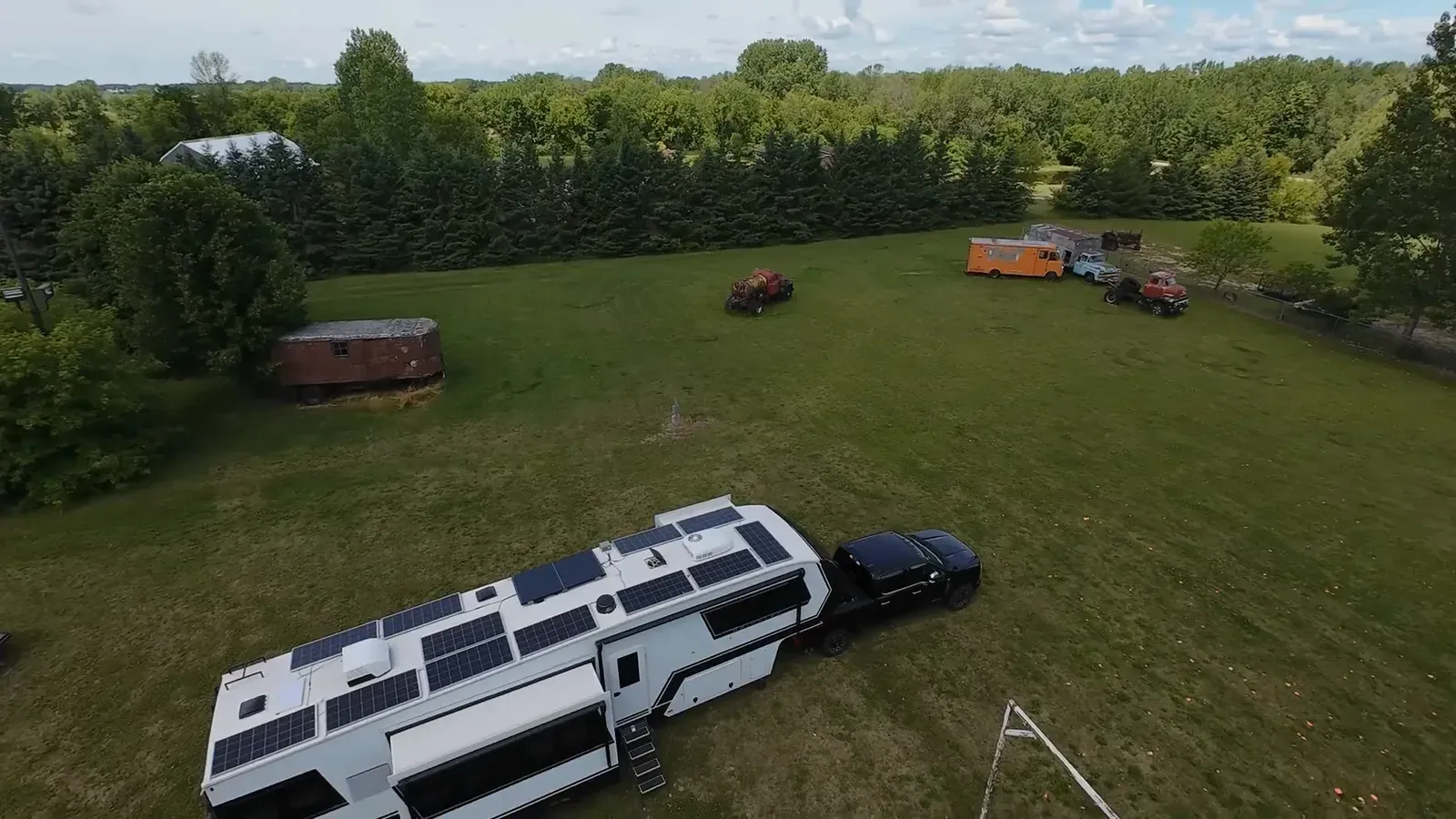
Our first stay wasn't at a farm or a winery. It was at an actual Western saloon, Rays Boneyard Saloon in Lena, Wisconsin. We parked on the grass, found the most level patch, and used the auto-leveling to raise the front without unhitching, so the next morning was just slides in and go. Spending money with the host is the polite deal, and at a saloon that isn't exactly a hardship.
A golf course on the way to Yellowstone
Our first golf course host was Eaglerock Golf Course in Billings, Montana, on a long double travel day toward Yellowstone, and it went sideways in small ways. We went to the bar to spend our money with the host, but the kitchen had closed at 5. Fabiola ordered a Blue Moon and found out afterward they'd poured her the non-alcoholic one. Nobody working there knew the Wi-Fi password. Then the truck alarm went off in the middle of the night, which had never happened to us before. Nothing was taken and nobody went outside, but nobody slept much either. That one's in our Yellowstone post.
The one we skipped
Once, we had a Harvest Hosts stop planned and changed our minds on the road. A casino along the route had a big pull-through lot and no tight maneuvering at the end of a tiring day, so we took the easy option. That's part of the honest picture too: Harvest Hosts is one of several kinds of overnight stops we use, alongside free lots like overnighting at Walmart, free public land we find on Campendium, and the occasional casino. The casino night is in this video.
Why it fits how we travel
We run fully off-grid with no generator, so a night without hookups is no obstacle for us. That makes Harvest Hosts a natural fit: we can roll into a farm or a winery, level out, and run everything off our solar and battery setup just like we would boondocking anywhere else. The difference is that dinner comes with a view of the vineyard and a host who is glad we stopped. It breaks up the long haul days far better than another night in a parking lot, and we almost always come away having found something local we would have driven right past otherwise.
Harvest Hosts etiquette: what to know before you join
A few honest notes. You do need a fully self-contained rig with your own bathroom and water, since most hosts have no facilities. Popular locations book up, especially in peak season, so it pays to request a stay a few days ahead rather than same-day. And the spirit of the program really does matter: show up, support the host, be a good guest, and it stays good for everyone.
Harvest Hosts' own code of conduct and how-it-works page add a few specifics worth knowing:
- Arrive during the host's business hours, and introduce yourself when you get there.
- Buy something. There's no set amount, but the stay is free because you're a customer.
- Keep a low profile. You're parked at someone's business, not a campground.
- Use jack pads if you're putting leveling jacks down on asphalt.
- Generators are allowed at many hosts but not all. Check the listing first and keep it neighborly.
- Pets are welcome at most hosts. Check the leash rules and clean up after them.
- If your plans change, cancel at least 24 hours ahead. Repeated late cancellations or no-shows can cost you your membership.
We don't run a generator, and our boondocking setup means a host's rules on generators never limit us.
Harvest Hosts FAQ
Is Harvest Hosts worth it?
If you take lots of one-night stops and your rig is self-contained, usually yes. Four stays in, we're on All Access and plan to renew. Harvest Hosts pitches the yearly price as roughly what two to four campground nights would cost. It's a poor fit if you need hookups every night or like to stay in one place for a week.
How does Harvest Hosts work?
You buy a yearly membership, find a host in the app or on harvesthosts.com, and request a date. Once the host approves, you arrive during business hours, park for one night with no camping fee, and buy something from the host as a thank you.
How much does Harvest Hosts cost?
When we checked in October 2026, the regular annual prices were $99 for Classic, $169 for Harvest Hosts + Boondockers Welcome, and $179 for All Access. Prices change and first-year promotions come and go, so check the current price when you sign up.
What is the difference between Harvest Hosts Classic and All Access?
Classic covers the farms, wineries, breweries, distilleries, and attractions, plus partner campground discounts. All Access adds Boondockers Welcome locations, golf courses, and an Escapees RV Club membership.
Is Harvest Hosts the same as boondocking?
Close to it. Most stays have no hookups, so you're dry camping on your own water, power, and tanks, just at a business that invited you rather than on public land. Boondockers Welcome, which comes with the higher plans, is the version where you stay on private property rather than at a business.
How many nights can you stay at a Harvest Host?
One night is the standard, and it's free. Harvest Hosts says some hosts allow up to four extra nights for a fee. The host's listing says whether that's an option.
Do you have to buy something at a Harvest Hosts location?
There's no required amount, but Harvest Hosts asks members to buy something from the host as a thank you. Wine, beer, produce, and gifts from the shop are the usual buys.
Can you use Harvest Hosts with a big RV?
Yes, any self-contained RV is welcome, from camper vans to big fifth wheels. Parking space varies by host, so tell the host your length when you request a stay. We tow a 40-foot fifth wheel, and at our first stay we parked on the host's grass.
Can you run a generator at a Harvest Hosts stay?
At many hosts, yes, but not all of them. Check the host's listing before you go, and keep the noise down if other RVs are parked nearby.
Is there a free trial or a refund?
We didn't see a free trial. Harvest Hosts does offer a Happy Camper Guarantee: a refund on a new membership within 90 days if you've completed two or fewer stays. The full conditions are on their site.
Join Harvest Hosts
You can join Harvest Hosts through our referral link, which gets you a discount on the membership when you sign up. The rest of how we stay off-grid is in our boondocking setup.