The plan was two caves in one day. Wind Cave in the morning, Jewel Cave in the afternoon, and the Crazy Horse Memorial if there was daylight left over.
We had not booked anything. That detail matters more than we thought it did.
Two days running on batteries without noticing
We had just come off boondocking in the Badlands and rolled into Rapid City on full hookups, which should have been the easy part.
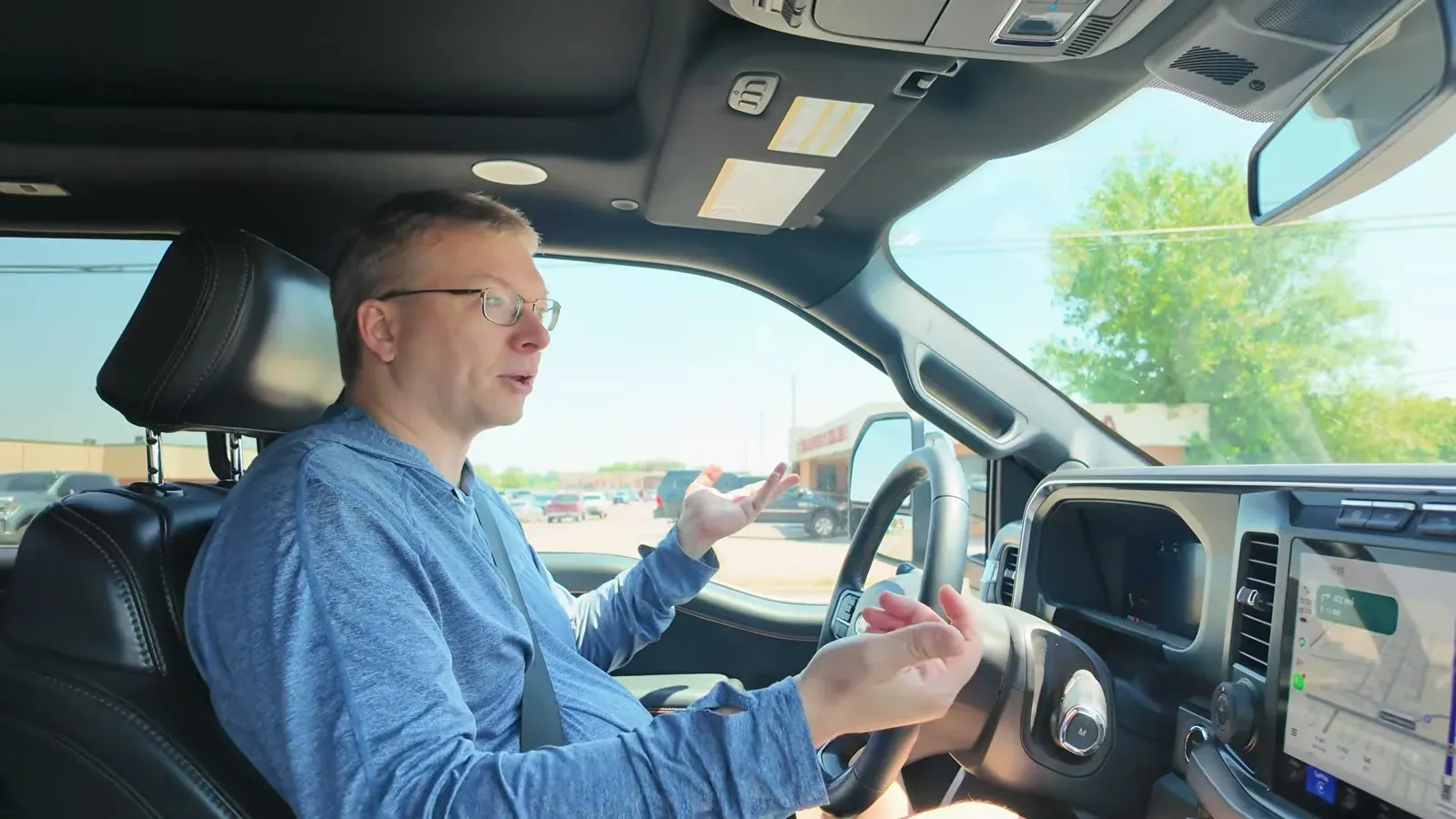
Except Nathan hooked everything up and never actually turned the power on at the pedestal. We ran on the batteries for two days and neither of us noticed. The thing that finally gave it away was the fan cutting out at 2 in the morning, which is when he went outside and flipped the breaker.
That is either a good sign about the battery bank or a bad sign about our setup routine. Probably both.
Google Maps sent us down a dirt road
The route to the park started sensibly enough on the highway, then Google Maps told us to turn onto what was very clearly not a national park road.
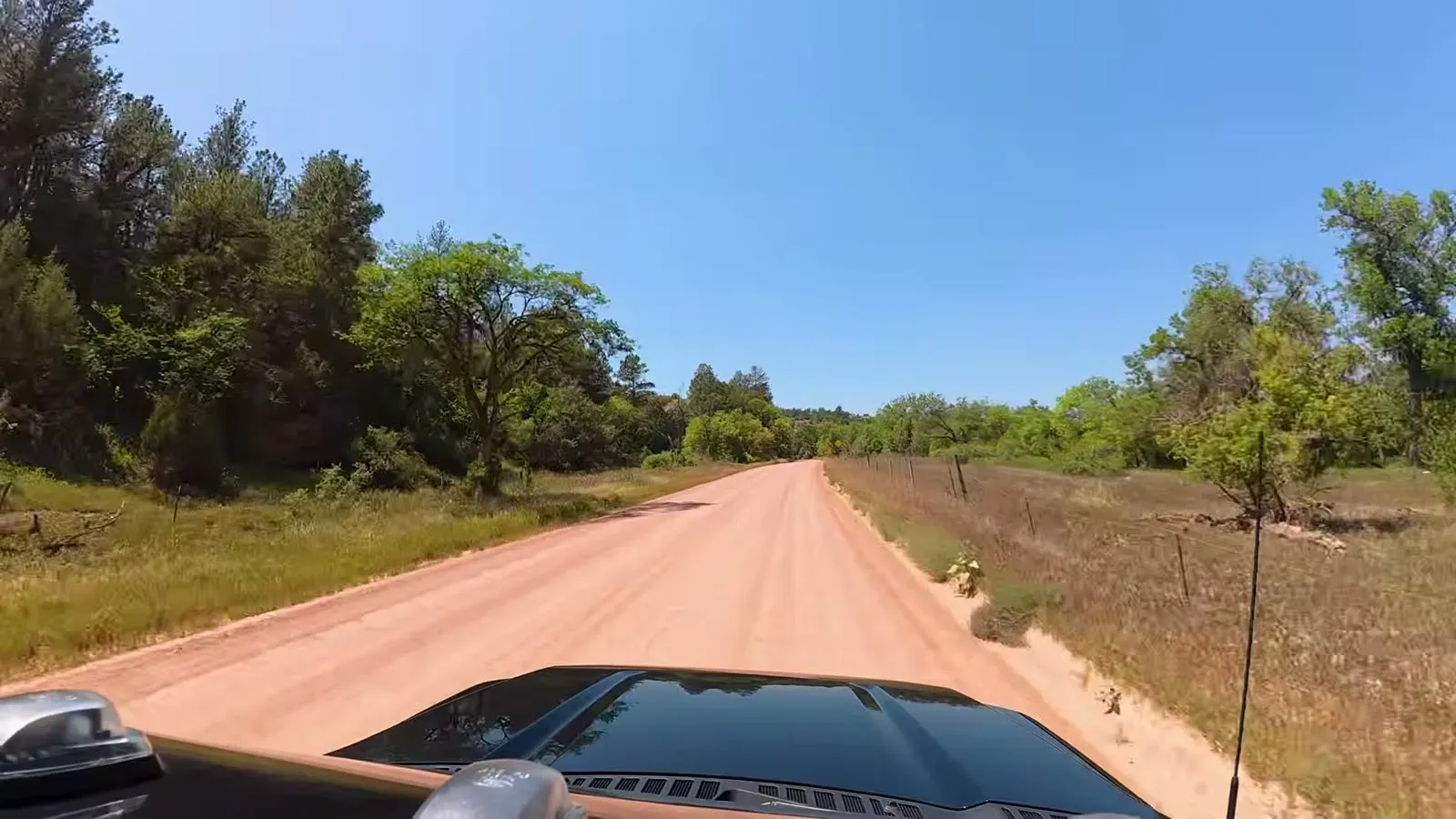
It was a back road. Dirt, empty, nobody else on it, which is the giveaway. It might have gotten us there eventually, and it was a genuinely nice drive, but the one minute it was supposedly saving us was not worth the doubt. If you are heading to Wind Cave, trust the park signs over the shortcut.
The first cave national park in the world
Wind Cave was established in January 1903, about 30 years after Yellowstone became the first national park, and it was the first national park anywhere created to protect a cave.
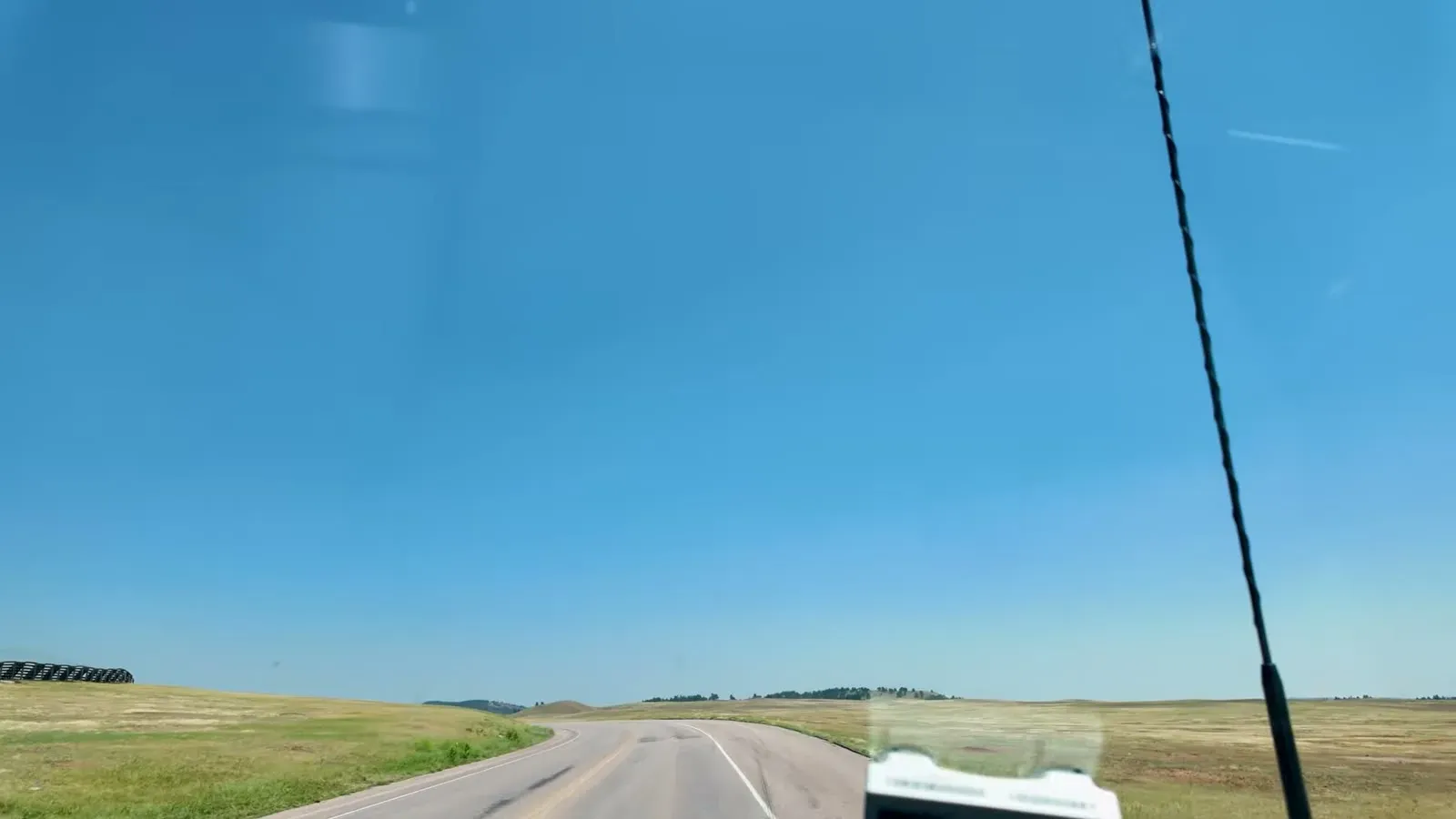
There are two parks here stacked on top of each other. Underground is one of the longest and most complicated cave systems in the world. Above it is open prairie with bison, elk, and prairie dogs on it. You can visit one and completely miss the other.
Sold out, and nobody there
We got to the visitor center and found a strange combination: several tours already sold out, and almost nobody in the building.
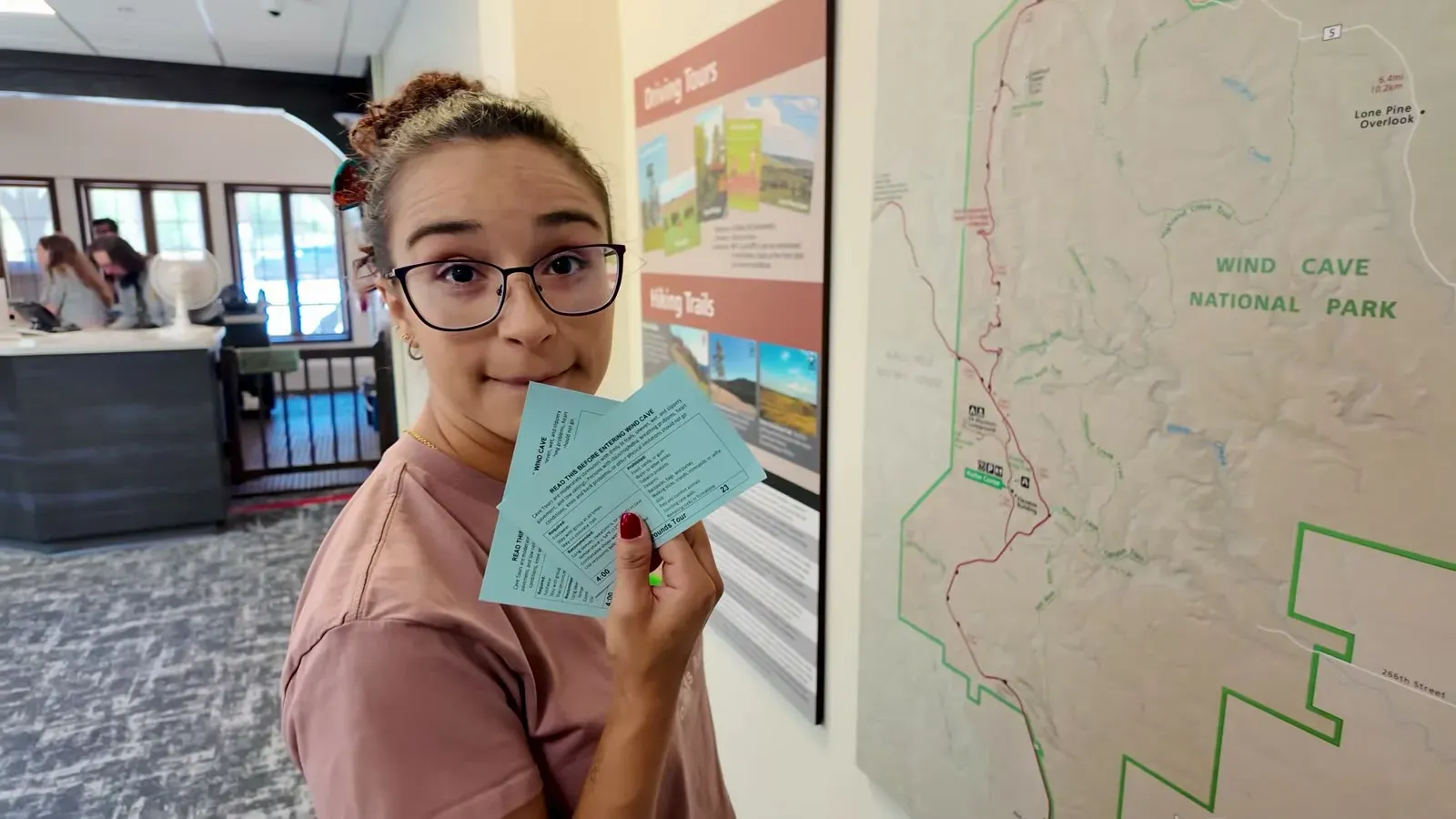
That is the walk-in trap. The tours are small and they fill in advance, so an empty lobby tells you nothing about what is available. We got the last useful slot, a 4 p.m. tour, at $16 each for a guided trip, which we thought was fair.
The 4 p.m. start also killed the plan. Jewel Cave closes around 5:30, so two caves in one day was over before it began. If you want both, book ahead. We are saying that as the people who did not.
While we were in there we added the stamp to our national parks book. A ranger at the Badlands had already taught us the trick for not stamping it upside down: put the flat side of the stamp facing you. Our next upgrade is carrying our own ink pad, because the ones at the desk are usually half dry.
Bison decide when you move
With time to spare we drove the park road, and the bison had other ideas.
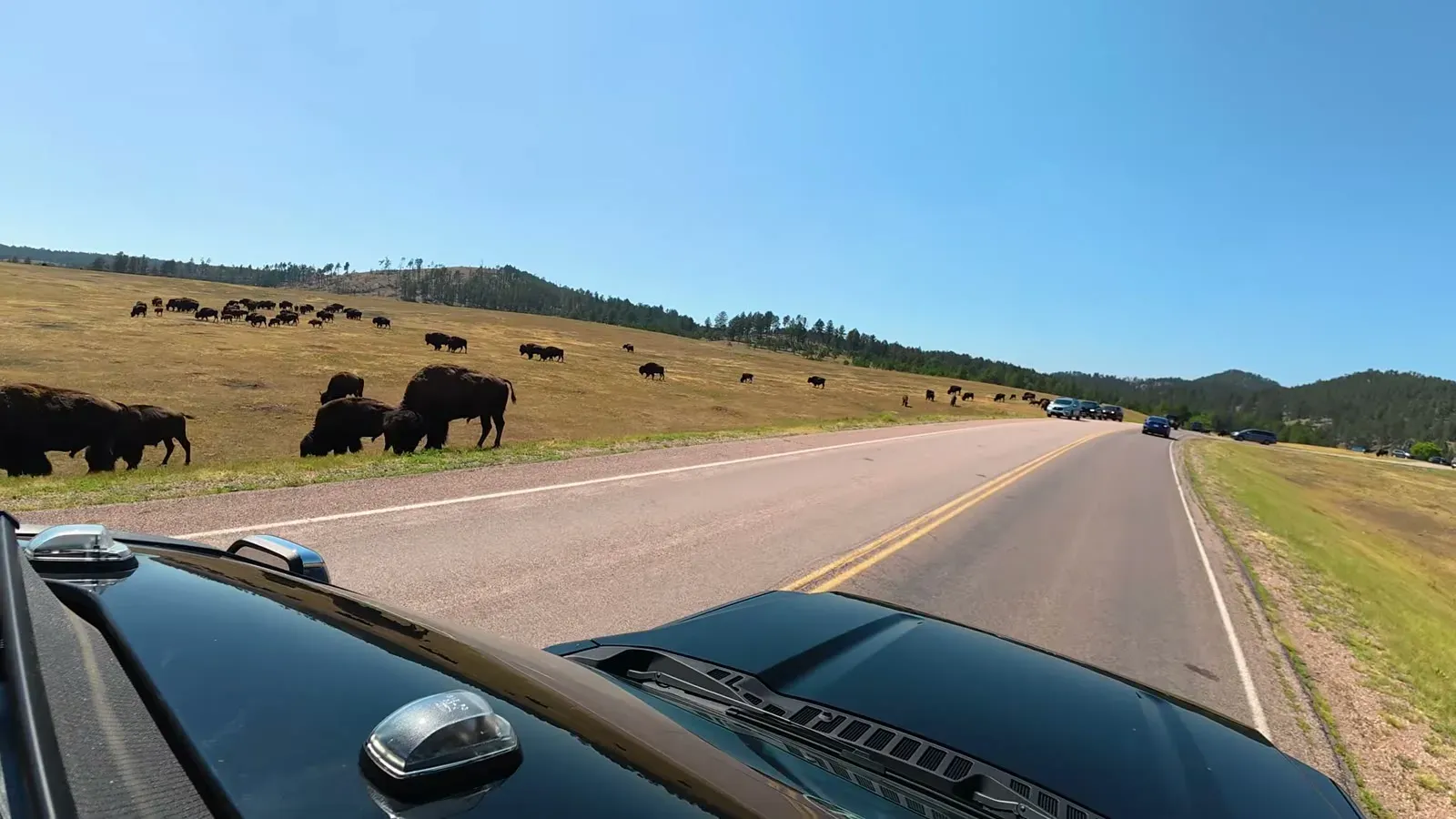
They were not near the road, they were on it, in numbers, with calves. There is no negotiating with that. You stop, you wait, and you move when the herd decides you can. Fabiola's rule for the whole trip after watching one too many tourist videos from Yellowstone: do not get close, do not get out, do not be the person in the next viral clip.
The hike we had to cancel
We had roughly 45 minutes and an idea about doing the Rankin Ridge Trail, a one mile loop that climbs through ponderosa pine to the fire lookout tower at the top.
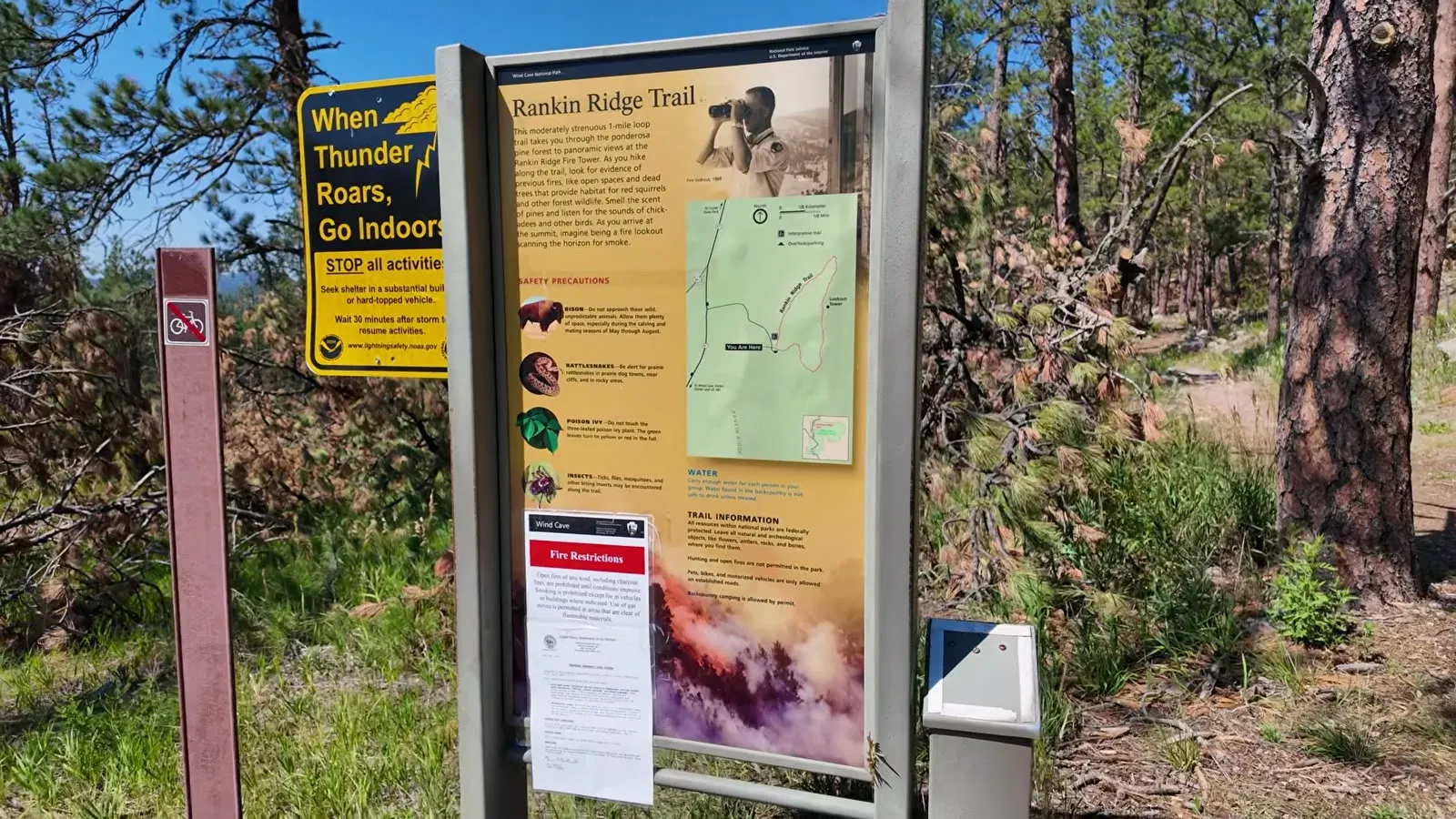
We got as far as reading the trailhead sign, which describes the trail as moderately strenuous and lists bison, rattlesnakes, poison ivy, and ticks under safety precautions. Then we did the math on how far we were from the visitor center and how zigzagged the road back was. The ranger had told us to be there 15 minutes early, and the cave tour we had tickets for was the most strenuous one they run.
So we cancelled it. Two minutes of hiking, total. Saving the legs for underground turned out to be the right call.
Worth knowing before you go down: no backpacks, no water bottles, no food. Just you. It is 54 degrees down there year round, so if you are in shorts and a sun shirt like Nathan was, you will notice.
Boxwork, and why this cave is strange
The reason people talk about Wind Cave is a formation called boxwork.
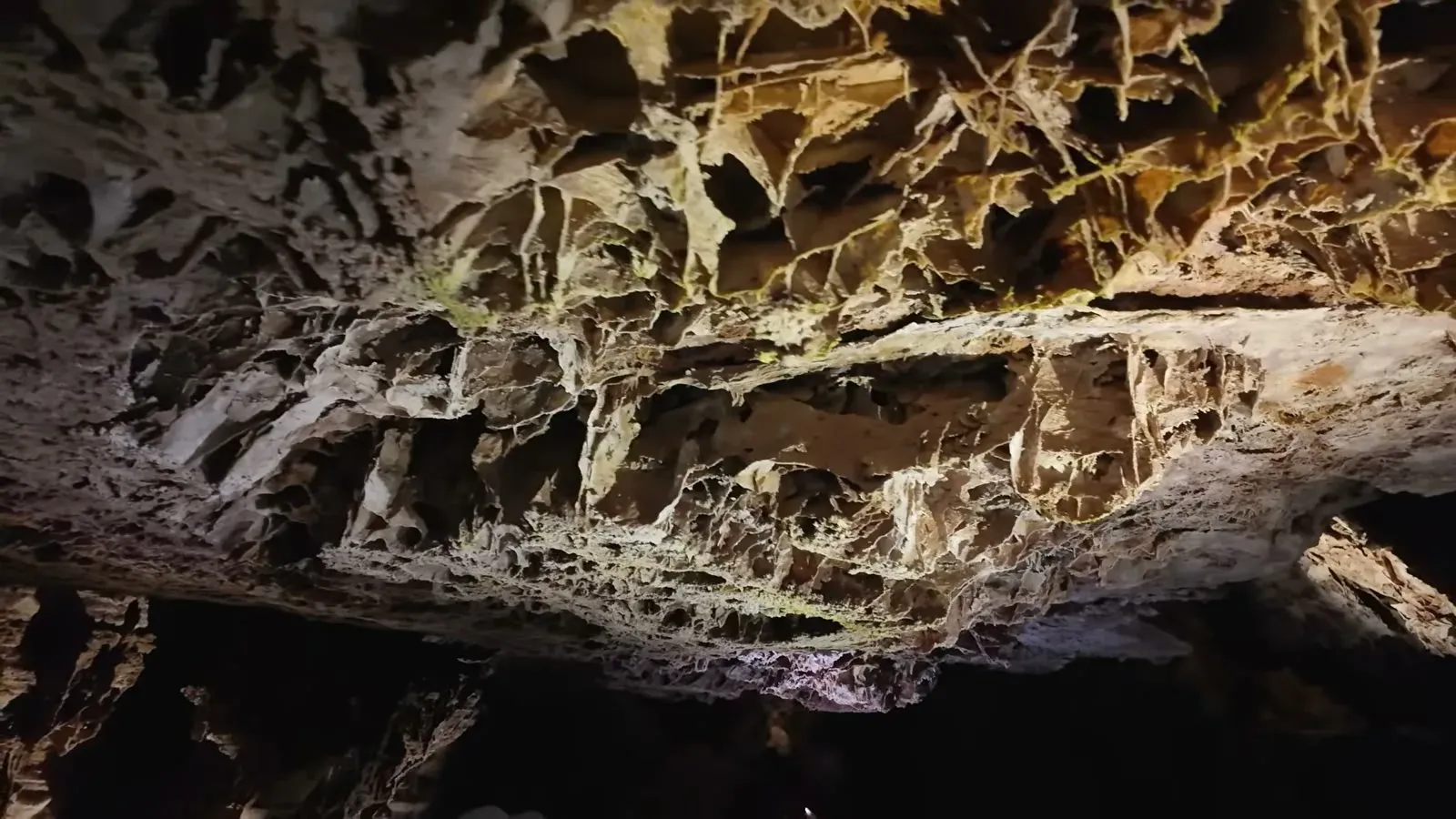
It hangs from the ceiling looking like a honeycomb, or a spiderweb, or a wasp nest made of stone. It was named and described here in the 1880s and it has barely been found in any other cave since. Our guide's point about it was the one that stuck: the boxwork on the ceiling is older than the room you are standing in. The fins were there first, and the cave formed around them.
There were two other formations on the tour. Popcorn, which is the rounded cauliflower texture, also called cave coral, made of calcite carried in by water drops. And frostwork, which is smaller and more delicate and looks like feathers, made of aragonite. Neither is what its name suggests. Nothing down there is frozen.
Around 167 miles of passage have been mapped, which makes it one of the longest caves on earth, and the park's own estimate is that roughly 90 percent of it is still unexplored. There are not many national parks where that sentence is true.
The Lakota story of the first people
Our guide also told the Lakota story that belongs to this cave, and it is the part of the day we keep coming back to.
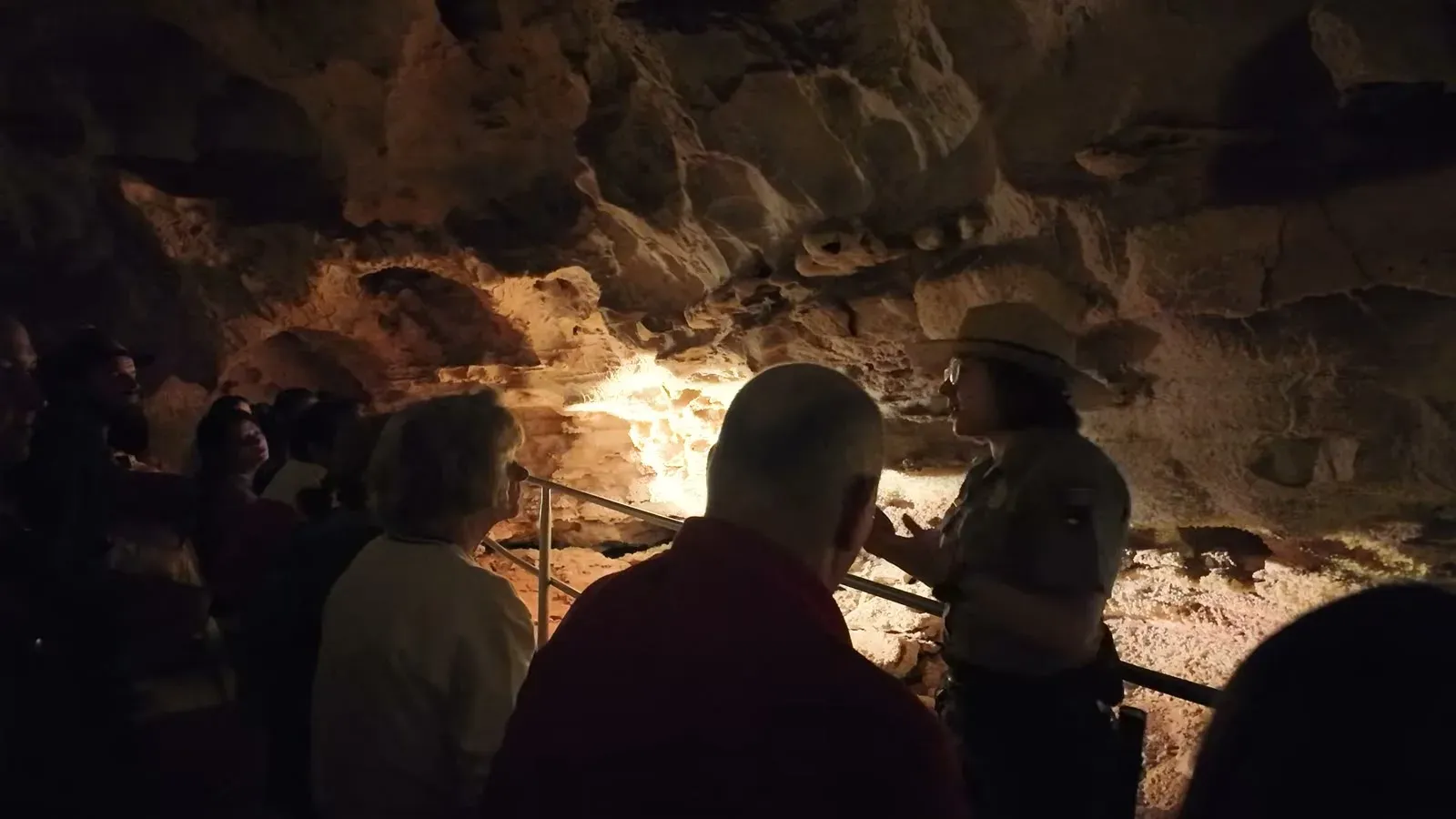
In the story, Wind Cave is where the first people came from. They lived underground in the spirit world, and somewhere deep in the passages there is a way through. The people were tricked into coming up early, before the earth was ready for them, lured out with dried meat, berries, and good clothing. They emerged on a warm summer day and thought the earth was the most beautiful thing they had ever seen. Then winter came and they were not prepared for it.
They ran back to the entrance and found it closed. Some versions say the creator transformed those first people, giving them horns, heavy coats, four hooves, and a much larger body. They became the buffalo. When the rest of the people were finally told to come up, the first thing they saw were buffalo tracks to follow, and everything they needed to survive.
For the Lakota, the buffalo are relatives, not wildlife.
The natural entrance to the cave is small now, and the wind moves in and out of it as the air pressure outside rises and falls. Scientists call it a barometric cave. The Lakota name for the place is Maka Oniye, which means breathing earth.
Crazy Horse, which is not finished on purpose
We drove to the Crazy Horse Memorial afterward and Fabiola's first reaction was confusion. There was construction everywhere. We came to see a monument and they are still building it.
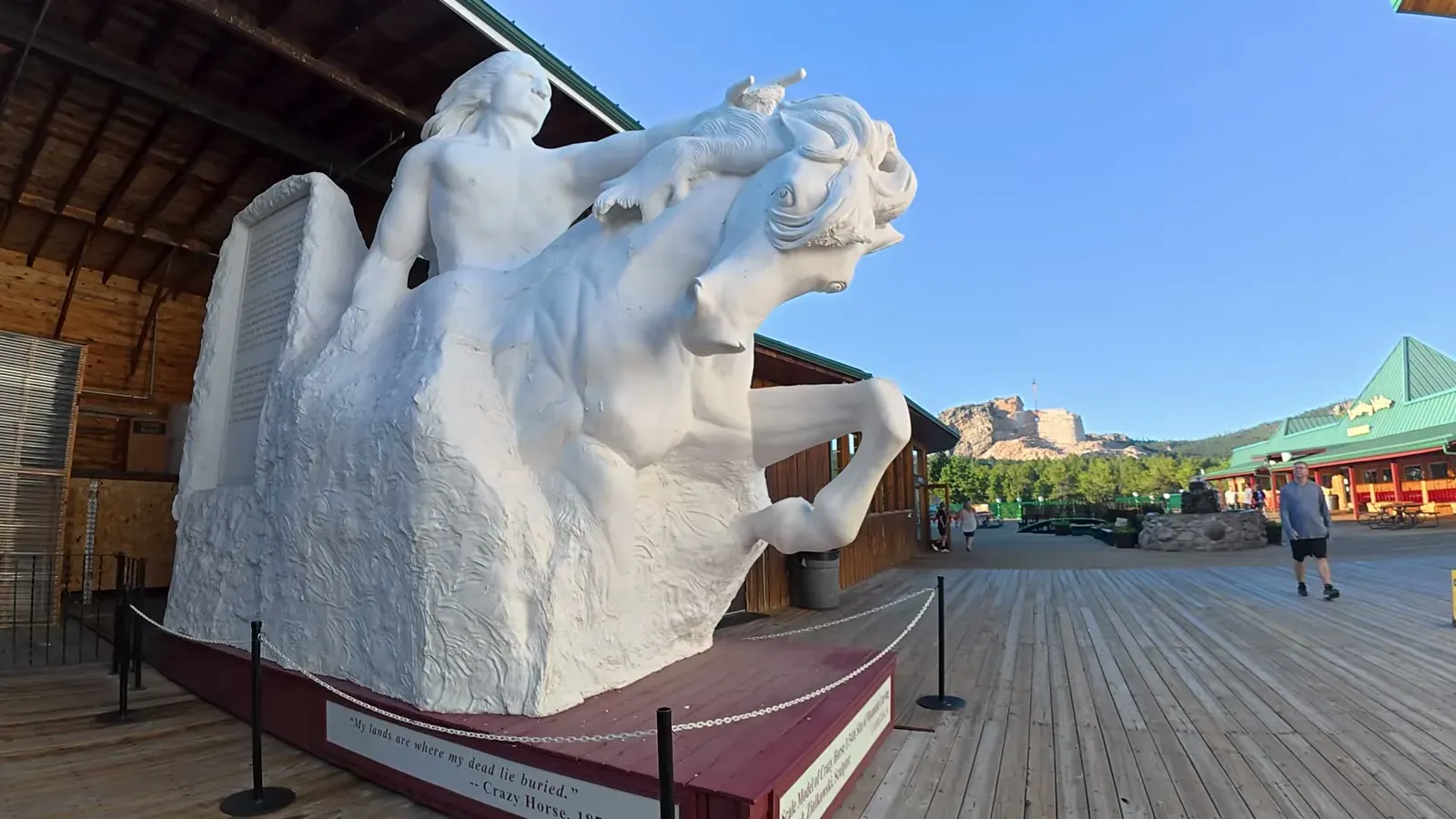
That is the point. Work started in 1948 and it is still going, funded by admissions and donations rather than by the government. They have been offered federal money, more than once, and turned it down so the project would stay theirs.
The sculptor was Korczak Ziolkowski, who had worked on Mount Rushmore before this. He moved here, raised his family on the mountain, and spent the rest of his life on it. His wife Ruth was as committed to it as he was, and between them they wrote down how the work should continue after they were gone. Their children kept it going. There is a university for Native American students on the site now.
Right now you can see the face and the arm, and the opening under the arm is starting to appear. The horse comes next. People who live in the Black Hills stop back every few years just to see what has changed.
We watched the film and both of us got a little teary at it. Crazy Horse was called Curly as a boy, for his hair, and earned his father's name in battle. The line that closed the film was about not giving up on your dreams, and the one Fabiola wrote down was the sculptor's: this might take a hundred years, but what is time anyway.
The restaurant closed at 4, an hour before Google said it would, so the tacos did not happen.
So, two caves in one day?
No.
It is doable, but only with reservations, and Jewel Cave in particular is hard to get into. Book both before you drive out, start earlier than we did, and give yourself the margin that bison on the road are going to eat.
One cave was still worth the whole day. If you are anywhere near Rapid City or the Black Hills, go. And if you want the leg that got us here, it starts with our 600 mile run to the Badlands. We also send a short newsletter every Saturday about where we are and what broke that week.