
We got our free spot on the edge of the Badlands, which we wrote about last time, and then the forecast did something unhelpful. Day one was a heat advisory with a high of 105.
That is a fine number if you are plugged in at a campground. It is a different number when your only power is what the sun gives you that day, and the thing you most want to run is the air conditioning.
So this turned into a test we did not sign up for. Can rooftop solar and a battery bank actually keep an RV cool through a heat wave, with no generator and no shore power?
Waking up to 85 at breakfast
Fabiola made coffee and checked the thermometer. It was already 85 in the morning, which told us most of what we needed to know about the rest of the day.
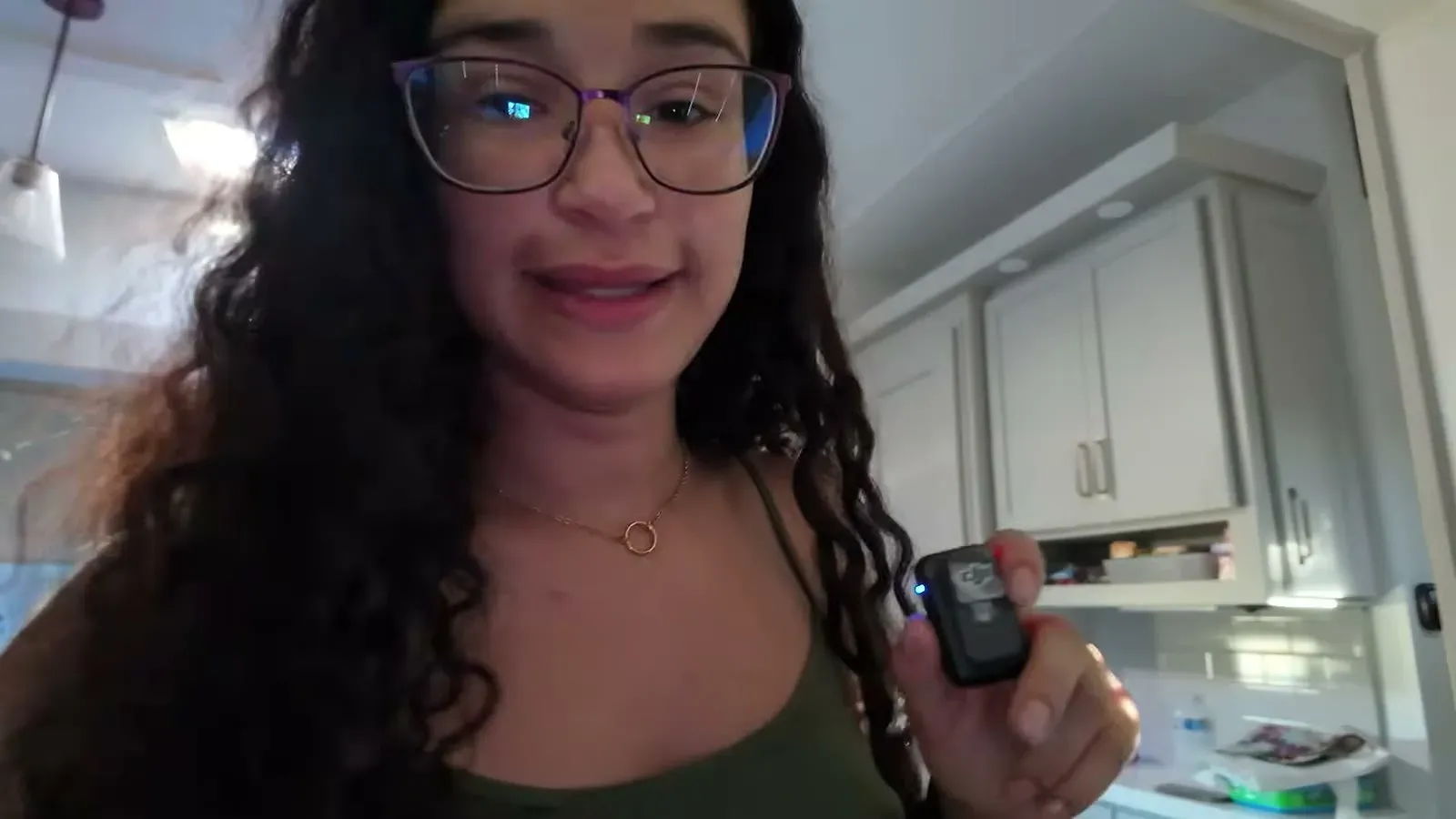
Solar was reading 59 percent when we got up. The plan, such as it was, went like this: leave the RV closed up and let the panels charge the batteries all day while we were out, then come home to a full bank and spend it on the air conditioning in the afternoon. Whether that math worked was the whole question.
Nathan does badly in heat, and so does Fabiola, so we agreed on one rule before we left. Drink water constantly, and if a hike starts to feel like a bad idea, it is a bad idea.
The black widow on our steps
The night before, Nathan went out to turn on the propane and found a black widow sitting on our entry steps in the dark.
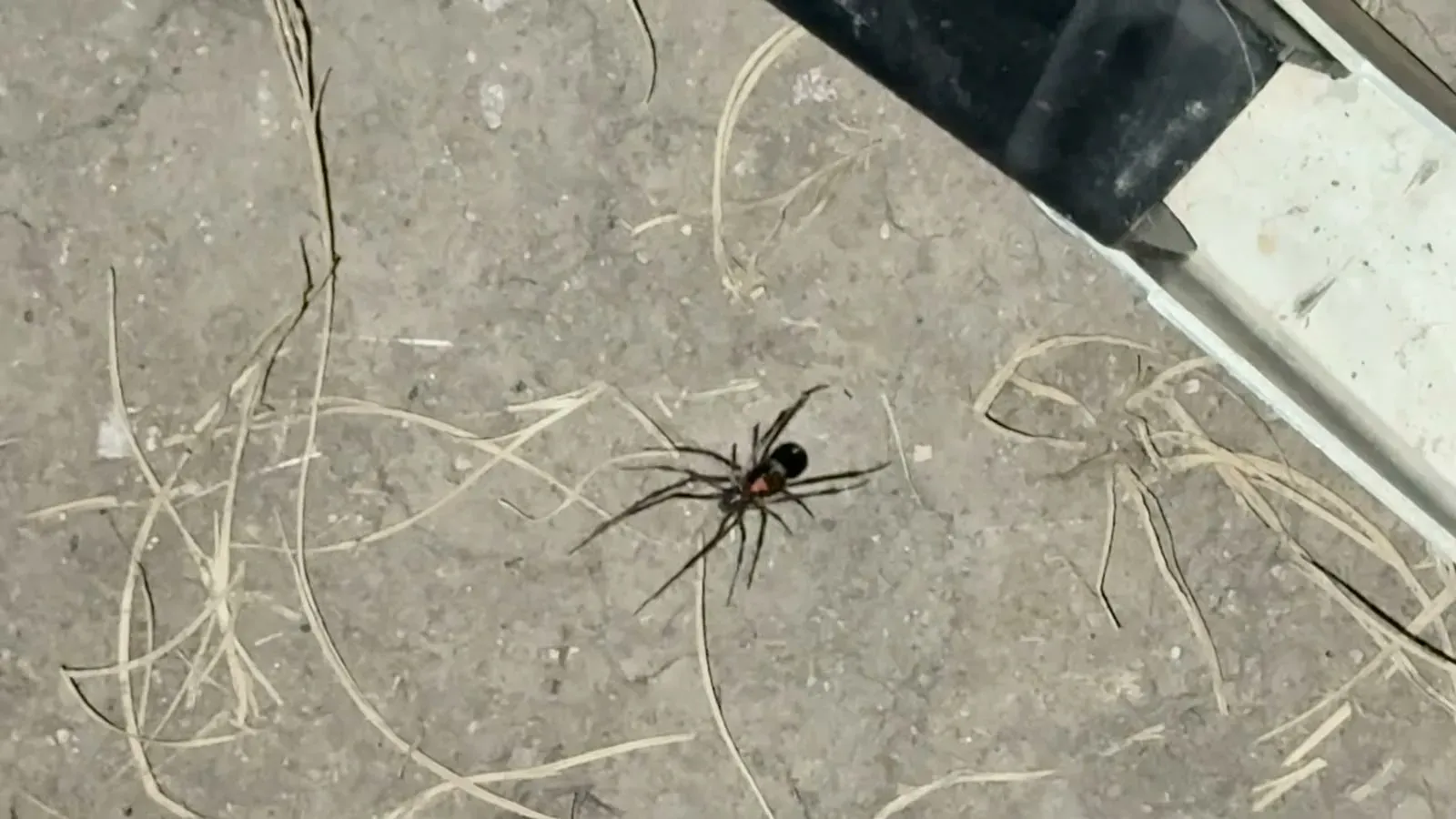
He dealt with it. But it is worth saying out loud, because free dispersed camping puts you directly on the ground in a way a campground site does not. Check your steps at night. Look before you put a hand somewhere. We were also seeing rattlesnake warning signs everywhere in the park, which changed how we walked around our own campsite.
The scenic drive, and where the name comes from
The park entrance was five minutes from our spot, which is a ridiculous thing to be able to say about a free campsite.
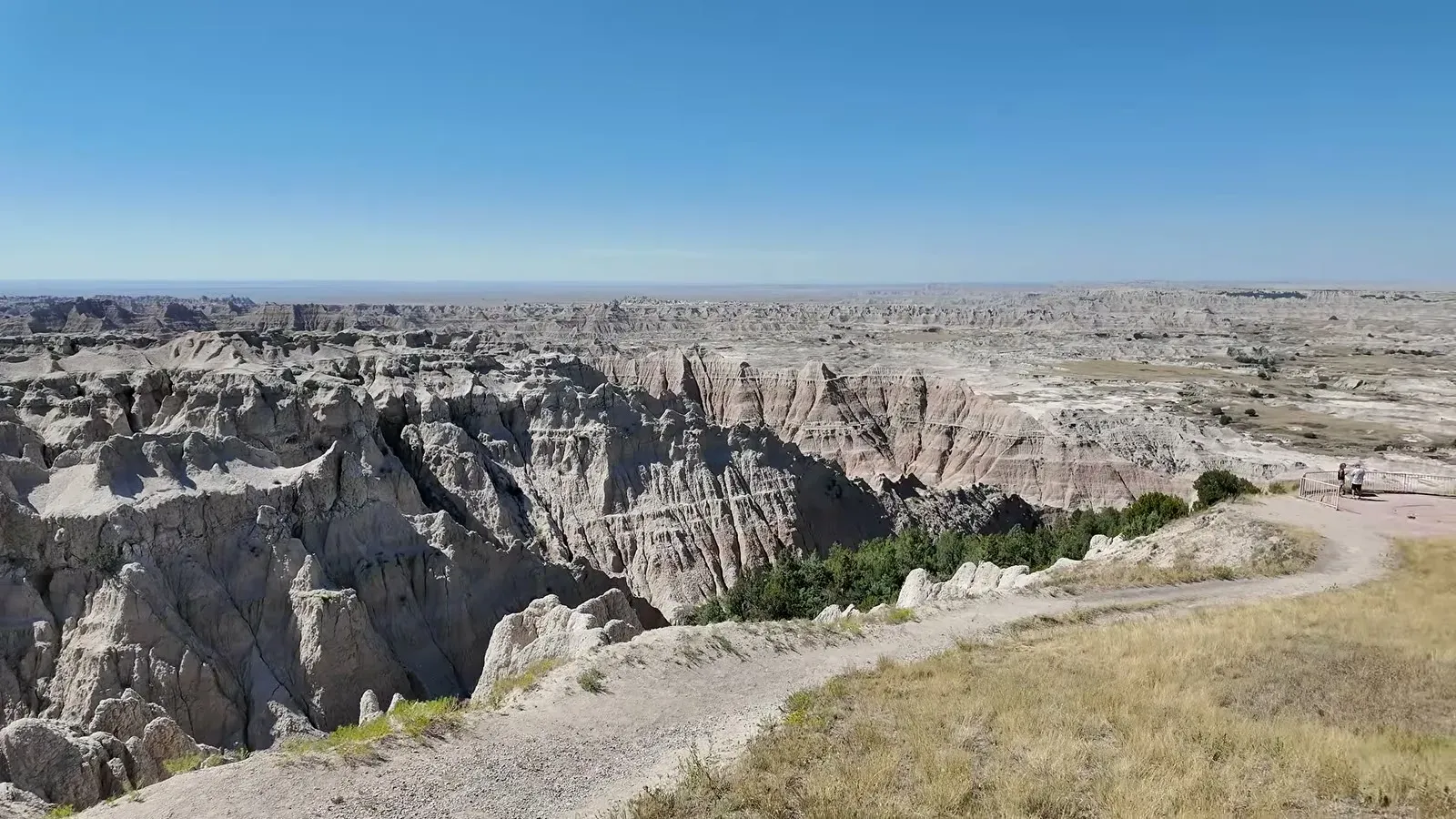
We drove the scenic route down toward the Ben Reifel Visitor Center. Without the fifth wheel behind us the roads were easy, and the truck has an off-road mode we had never really needed before. It puts a view of what is under you on the screen, which is genuinely useful on washboard gravel and mostly just fun everywhere else.
A few things we learned about the place while we drove:
The name is a translation. The Lakota called this area Mako Sica, which means bad land, and it was not a comment on how it looks. It was a comment on trying to cross it. When rain hits that clay it turns into a mess, and the terrain is hard to move through even dry.
Part of Starship Troopers was filmed here, standing in for an alien planet, which makes more sense the longer you look at the formations.
And underneath all of it is one of the richest fossil beds anywhere, with ancient horses and rhinos in the rock. The formations are still eroding, so the ridge line we were looking at is not the one someone will see in fifty years.
The visitor center itself was packed, but Fabiola got her stamp for her new national parks passport, which was the main objective.
Too hot to hike, so we ate a bison taco
By early afternoon the truck was reading 109. There was no version of a hike that made sense, and the flies out there bite your legs, which settled the argument.
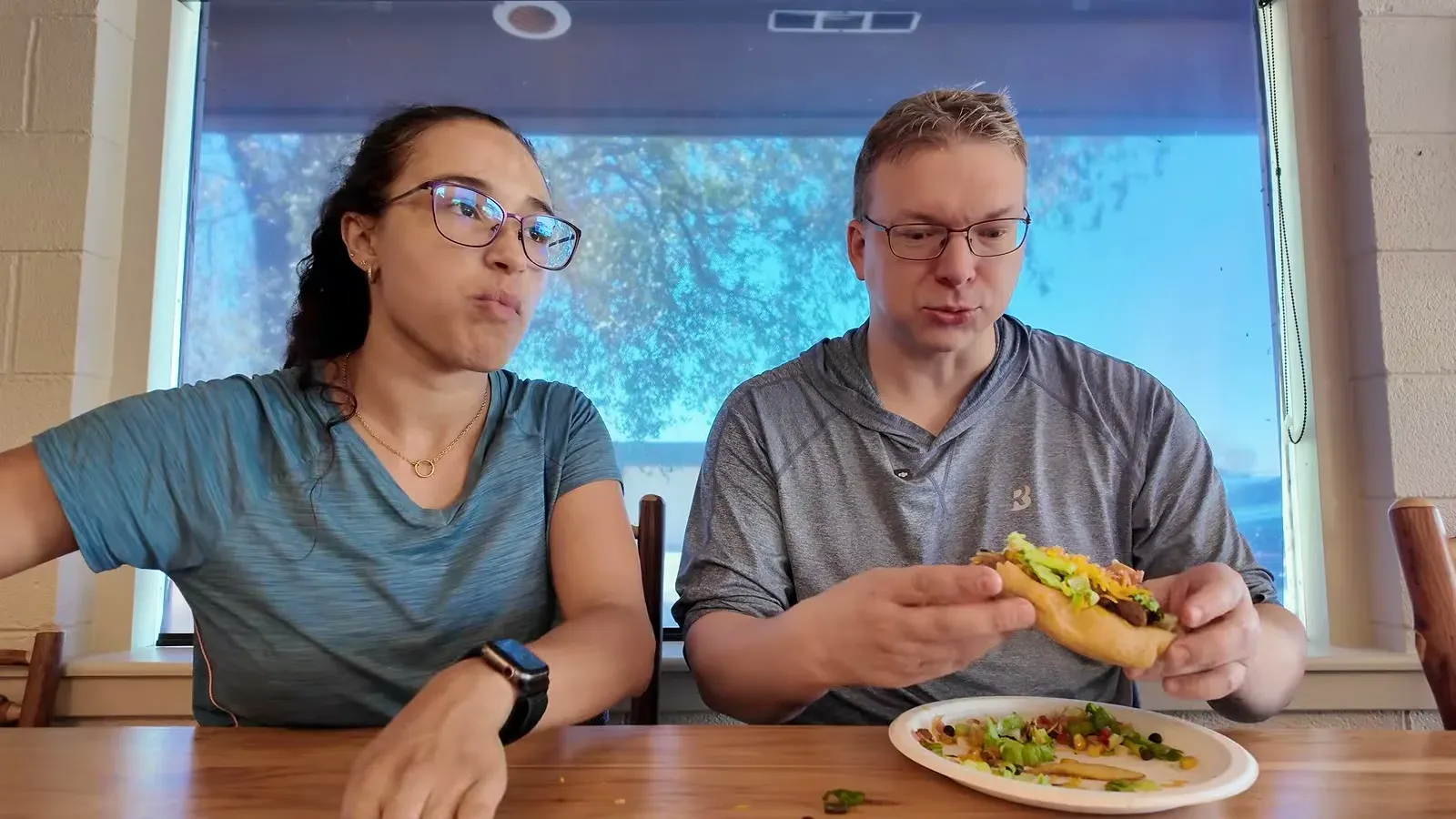
We stopped instead at the only restaurant inside the park, at the campground, and Fabiola tried bison for the first time in an Indian taco on fried bread. Her review was honest: the flavor is stronger than she likes, closer to lamb, and it reminded her a little of fish. She would try it again, but it is not her thing. Nathan finished it.
The batteries were at 82 percent when we checked from the parking lot, which was the first sign the plan might hold.
Wall Drug, and the free ice water
If you have driven I-90 through South Dakota you have seen the signs. There are at least a hundred of them, advertising five cent coffee and free ice water, for something like 150 miles before you arrive.
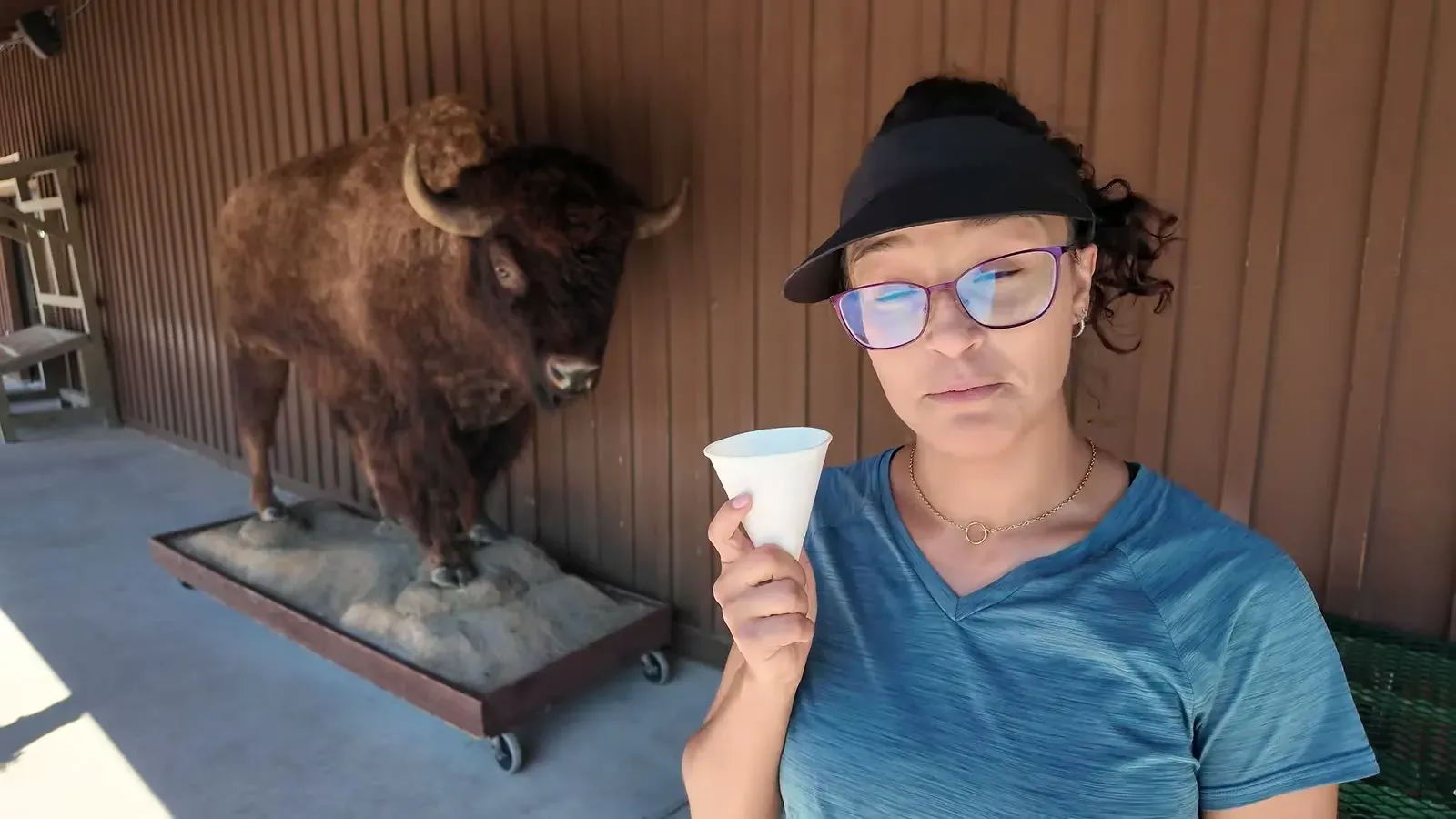
We fell for it completely, which is the point.
Wall Drug is bigger than we expected, essentially its own block of small shops, a backyard, boots in every direction, and a machine that will tell your fortune for a nickel. Fabiola's told her she was fair-minded but easily thrown into confusion, which she rejected on the spot.
The coffee really is five cents. There is a box, you put a nickel in.
The free ice water is the part worth knowing. When the store opened, the town had a few hundred people in it, which is not enough people to build a business on. Nothing was working. The owners had given themselves five years. What eventually turned it around was the wife noticing the obvious thing nobody had acted on: thousands of cars were driving past on a highway, in the heat, and every one of them was thirsty. So she made signs offering free ice water and put them out along the road.
People stopped. They filled their jugs, then bought ice cream while they were there, and the store ran out of ice that same day. They have been giving water away ever since.
It is a marketing story, but the useful part is that she did not invent a demand. She noticed one that already existed and removed the reason not to stop.
The part we actually came to test
On the drive home Nathan went quiet, then got a headache, and Fabiola offered to drive. That is a heat reaction, and it is the first time the US has done that to him.
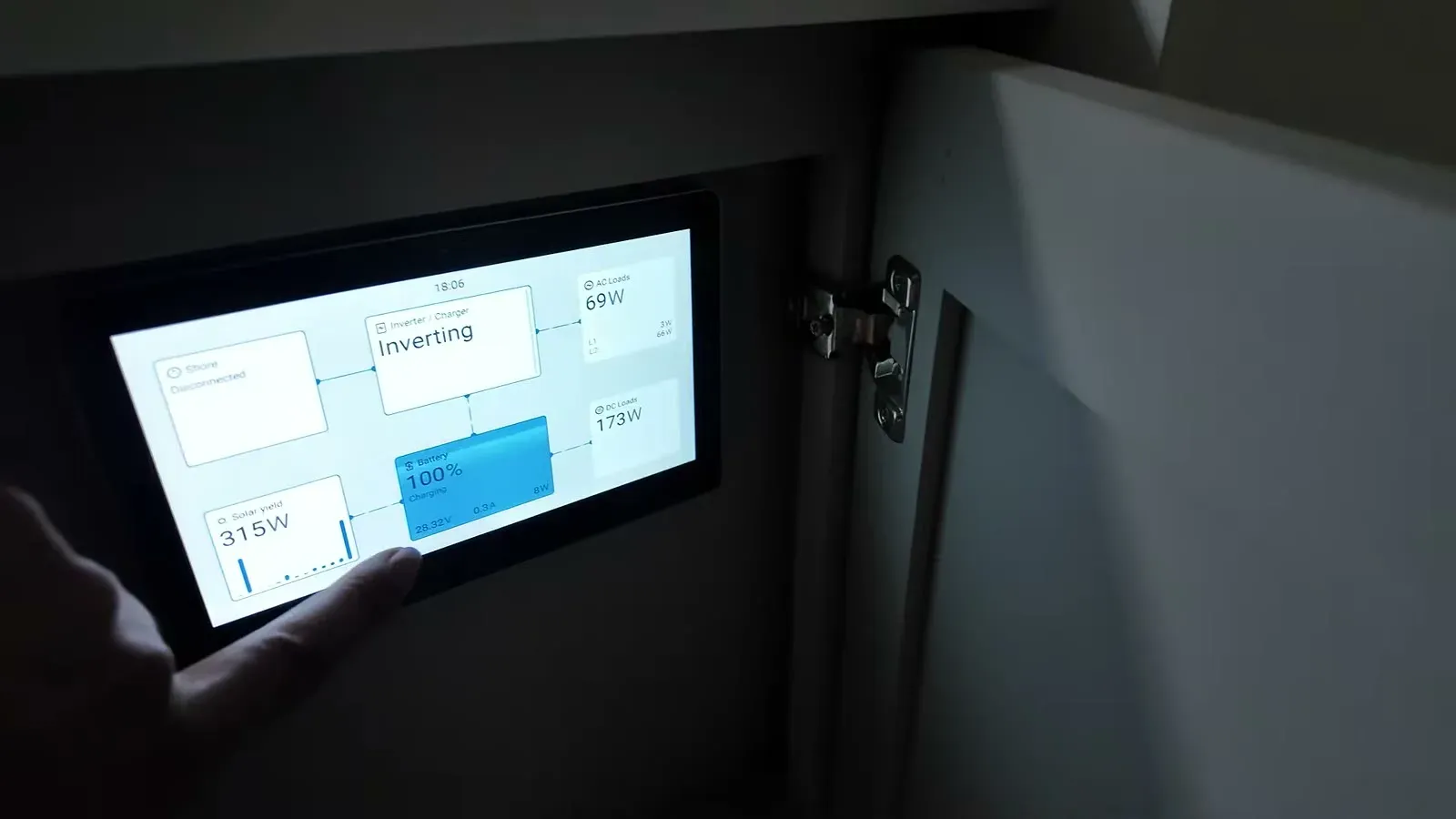
We got back to an RV that was 96 degrees inside. Solar was at 100 percent, fully charged, exactly as hoped.
So we turned the air conditioning on and ran it off the batteries.
It worked. Not "took the edge off" worked, actually cooled the place down worked. Keeping every window and shade closed all day mattered more than we expected, because the sun reflects off rather than cooking the inside while you are gone. Once the sun dropped and the panels stopped producing we shut the air conditioning off again and opened the place up to the evening air.
For anyone weighing whether solar is worth it for hot weather boondocking, that was our answer. It is not unlimited, and the sequencing matters. Charge all day with the rig sealed, spend it in the afternoon, hand off to the night air. But it held through a 105 degree day, and we never touched a generator.
The storm, the roof check, and a stabilizer
Overnight it rained hard and the wind picked up, and something in the bedroom started vibrating loudly enough to be worrying.
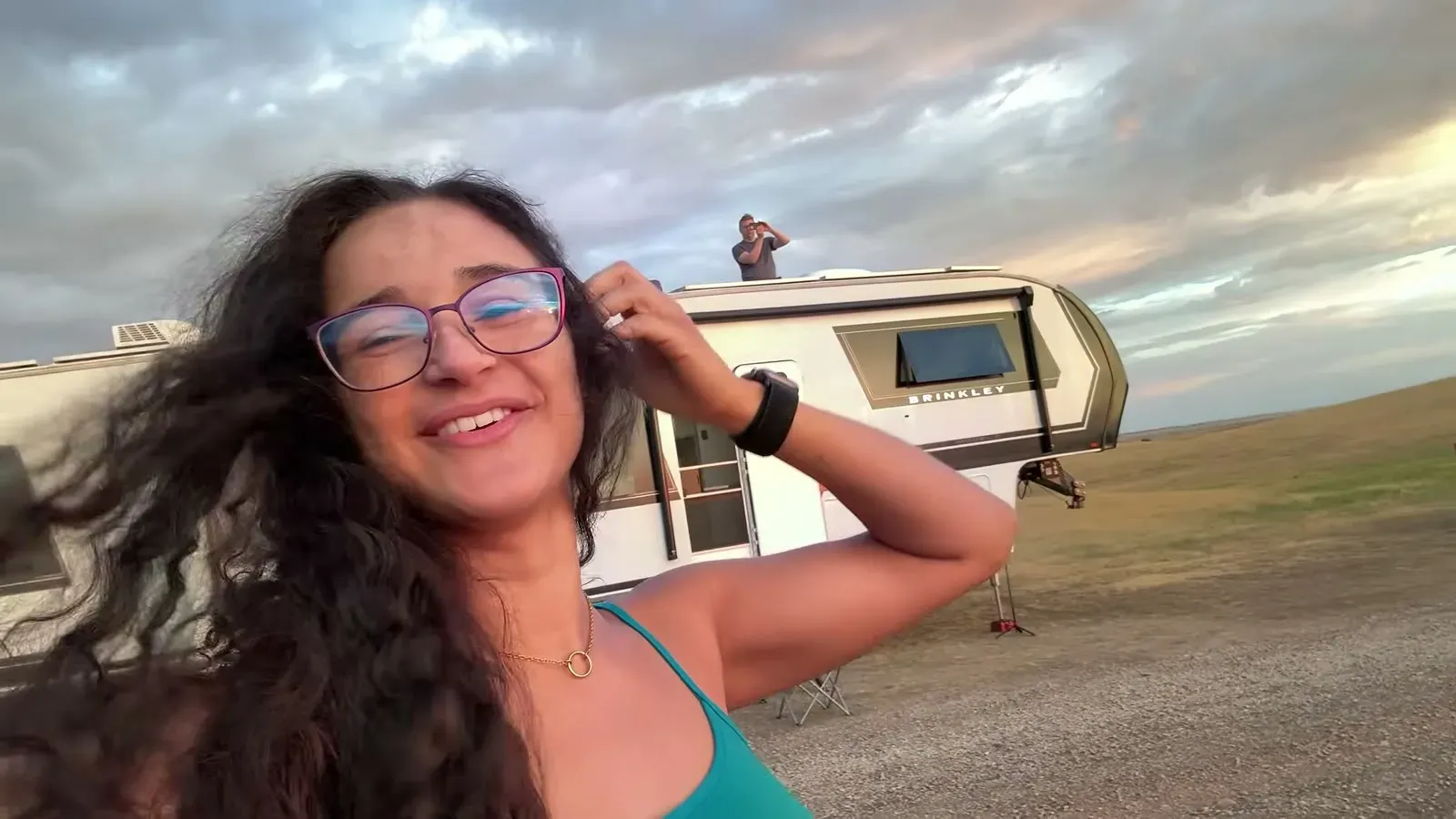
At 5:30 in the morning Nathan went up on the roof to find it. Every solar panel and cover was solid, nothing loose anywhere. Best guess is wind driving into the air conditioning unit and rattling something inside the shroud, which would need tools to get at. The sunrise from up there was worth the trip regardless.
That evening another storm came through and shook everything, so we installed a hitch mount stabilizer for the first time. Ours sits taller than the instructions really picture, but it made a real difference in how much the front of the RV moved in the wind.
Our favorite spot so far
By the end of the day we skipped the park hike entirely and just walked out from our own campsite instead, up the ridge behind the rig, being extremely careful about where we put our feet.
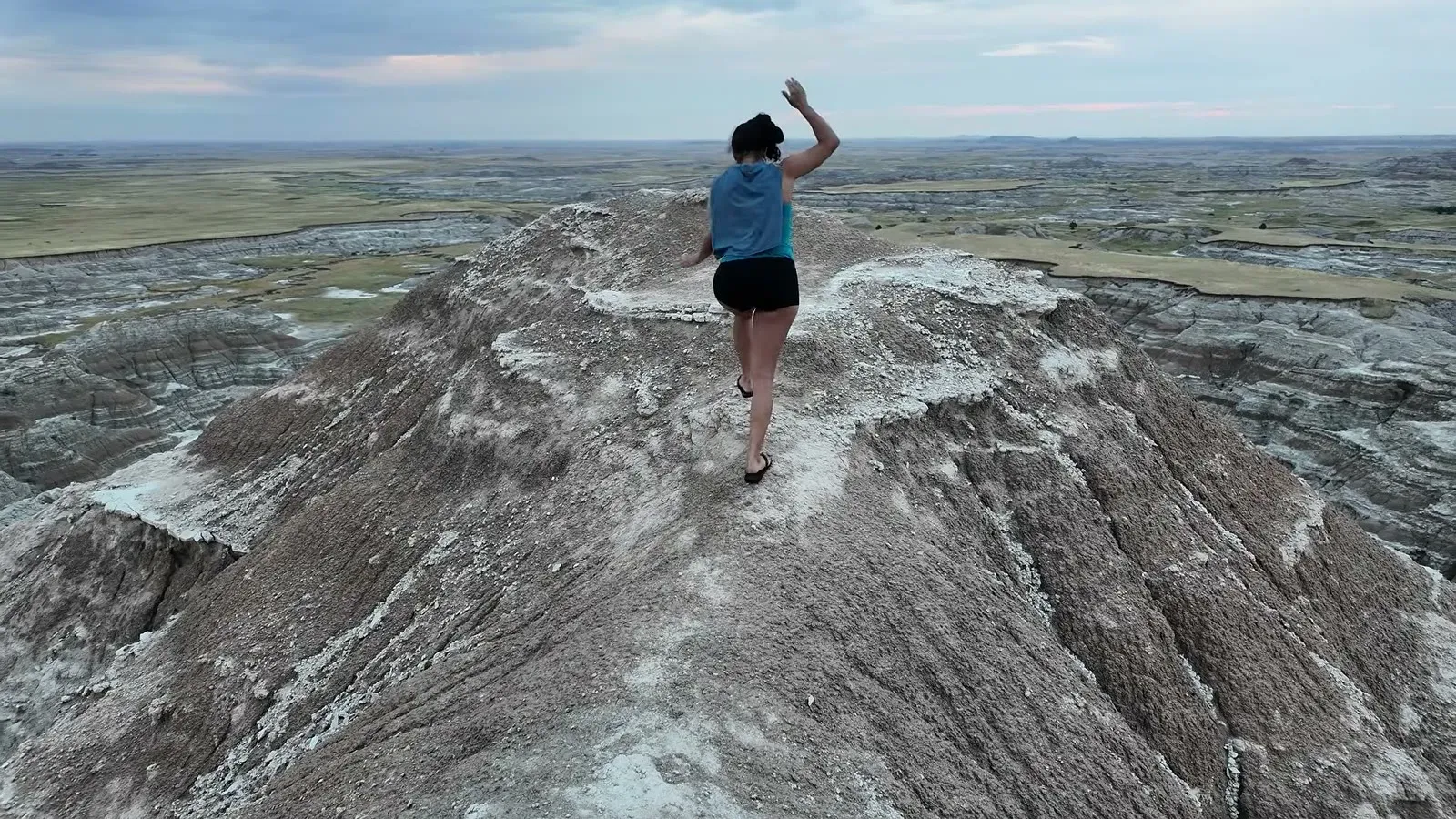
Standing up there, Nathan said it plainly: this is his favorite boondocking spot he has ever done. Not close.
People would pay real money for this view. There is a version of this ridge with a hotel on it charging $300 a night. We were parked on it for free, in our own house, with our own bed and our own kitchen, running the air conditioning off the sun.
We came for two nights. We are not leaving in two nights. Part three is the one with the ladder, and a storm we did not see coming. We also send a short weekly newsletter about where we are and what broke this week, and the signup form is on our newsletter page.