
Inside Yellowstone there is a road called the Grand Loop. It runs 142 miles around the park and connects most of the places people come to see. Our first two videos covered the west and south sides. This one finishes the loop: up and over the mountains from the Grand Canyon of the Yellowstone, out to Lamar Valley, north to the Roosevelt Arch, and back around to Mammoth Hot Springs.
It sounded like the perfect Yellowstone road trip. Then a tourist made a bad decision.
This is the third and final part of our Yellowstone trip.
Up the mountain, and no egg smell
We left the canyon area on a cold morning and headed up a mountain road with big, dramatic views on both sides.
We pulled over at an overlook to take it in. The sun was lighting up one mountain, then another behind it, then another. Every part of Yellowstone looks different, and we still did not feel like we had seen enough of it.
There was one more thing we noticed up there. After two days of geyser basins, there was no rotten egg smell. So if you need a break from the sulfur, go up into the mountains.
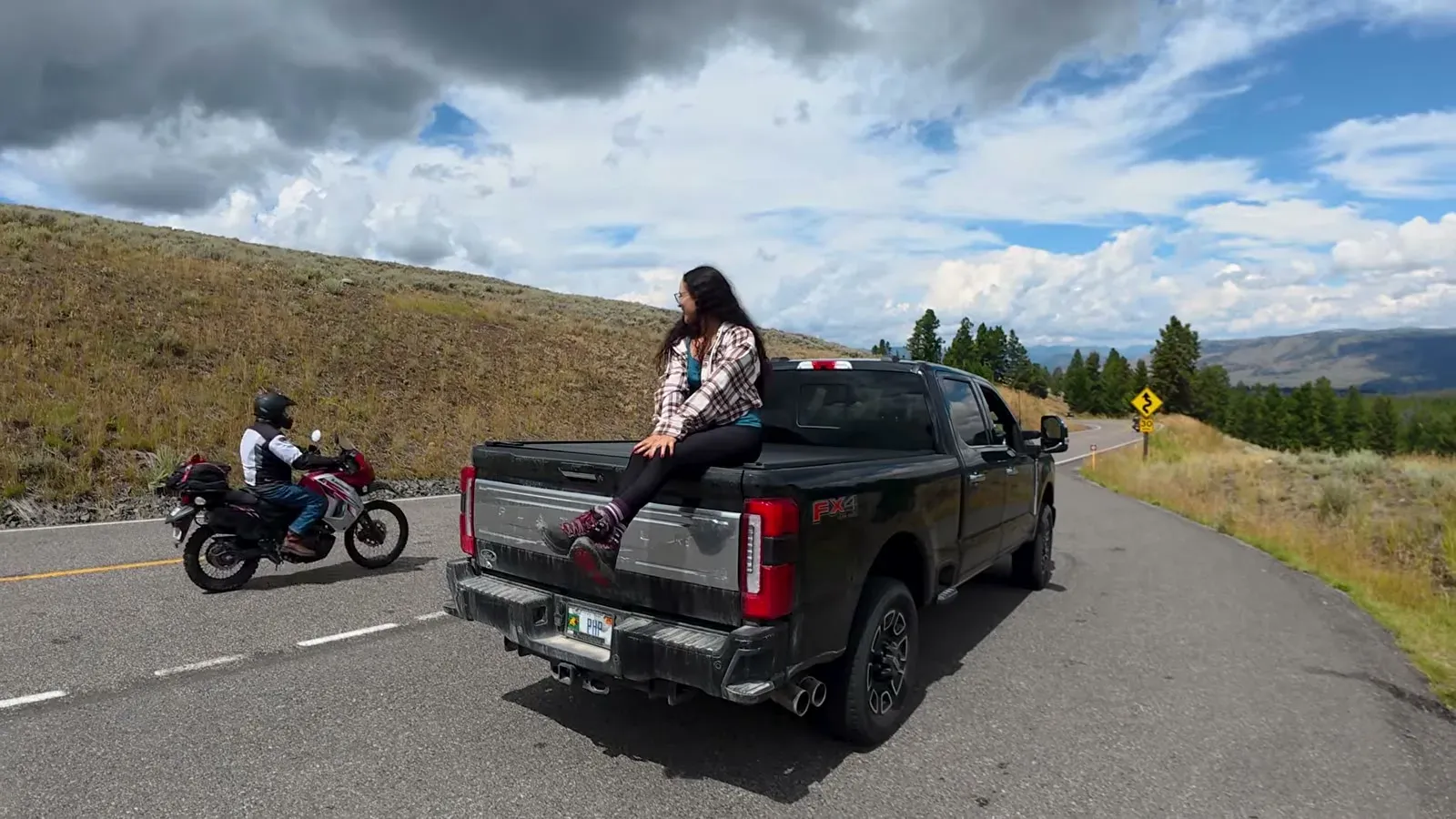
On the way up we passed a lot of lodgepole pines. Their cones are sealed shut with resin and only fire opens them. The 1988 fires burned 36% of the park, and you can still see where.
Tower Fall
Tower Fall is an easy stop. It is about a five minute walk from the parking area to the overlook, and you can hike a bit farther down toward the river if you want more.
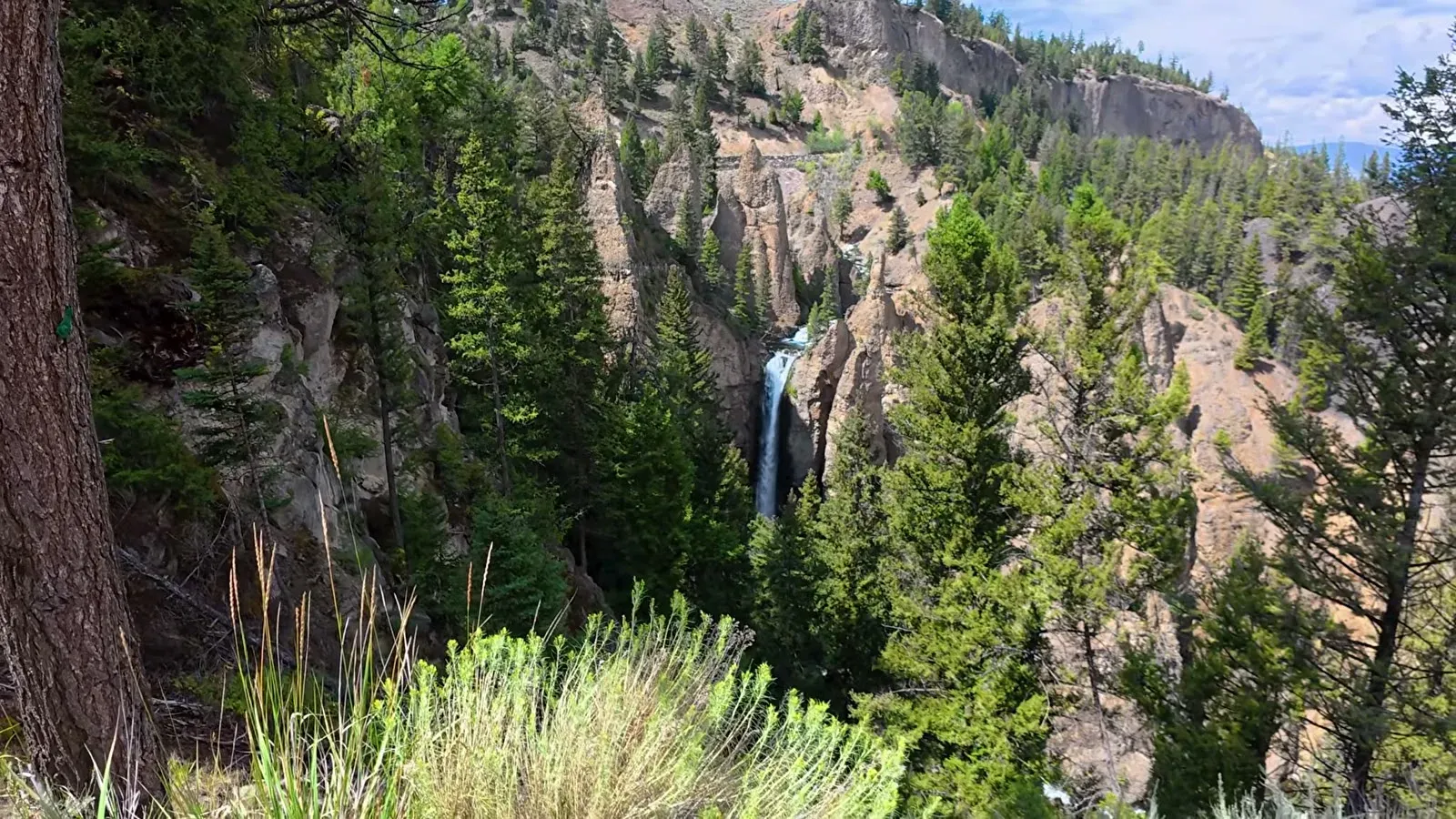
For more than 100 years a boulder sat right on the lip of the falls. It finally dropped in June 1986.
Lunch, and the great hot dog debate
We were hungry by then, so we went looking for food near Tower Fall and took a look in the general store and the gift shop. We had not bought a single souvenir yet.
Lunch was hot dogs, one of them a chili dog, and that started an argument. Brazil takes hot dogs seriously. A Brazilian hot dog can carry mashed potato, corn, peas, potato sticks and a quail egg.
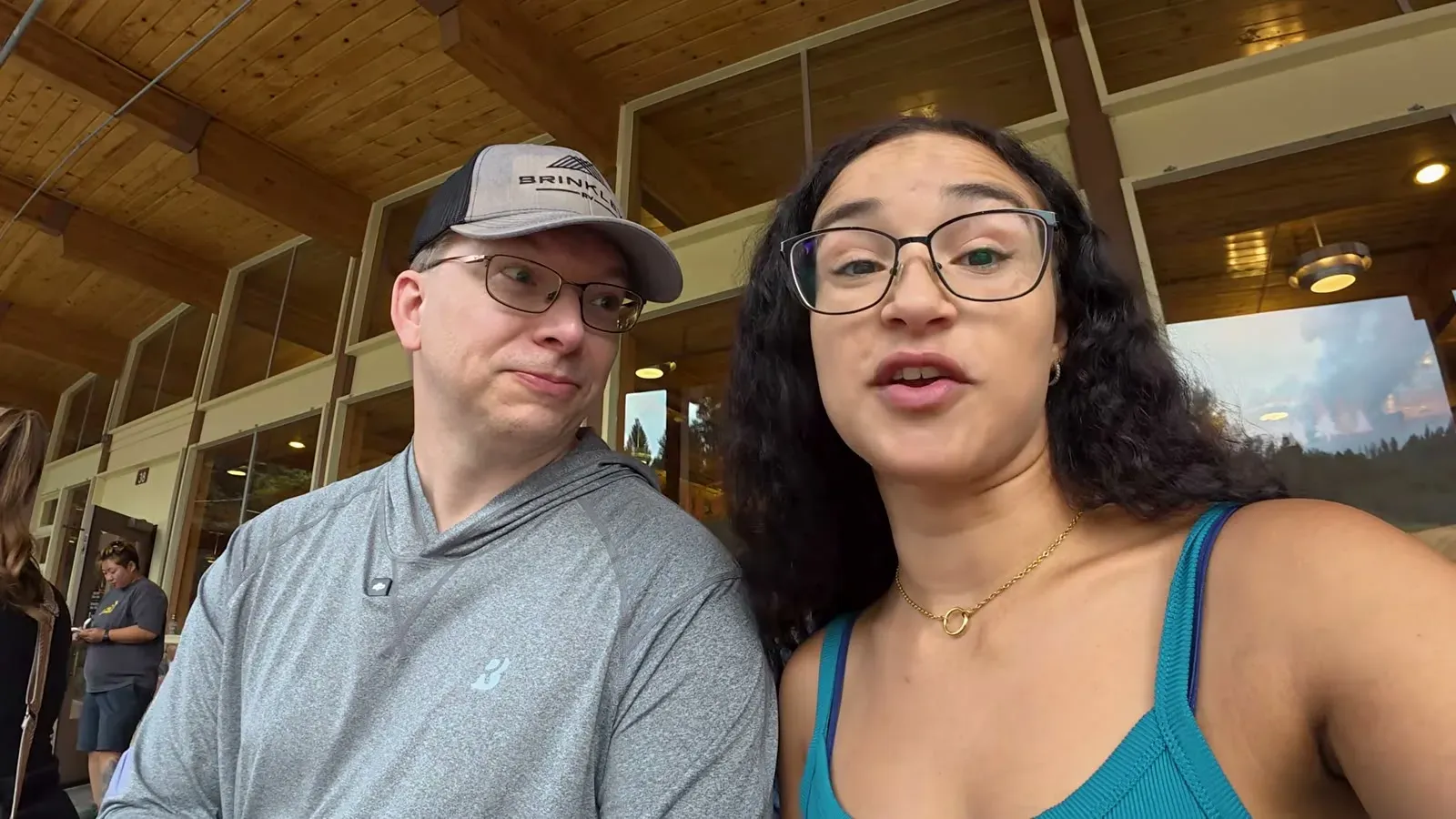
The question was the sauce. In Brazil, especially at birthday parties, people make hot dogs with a lot of thin sauce, and the whole thing ends up soggy and hard to eat. One side of the table said that if it goes on with a ladle, it is soup. The other side said sauce is sauce and soup is soup. We did not settle it. Tell us in the comments who is right.
Into Lamar Valley
The road toward Lamar Valley runs under tall rock walls, then opens up over the river. Lamar Valley is where a lot of the park's animals are supposed to hang out, and it is long. Much longer than we expected.
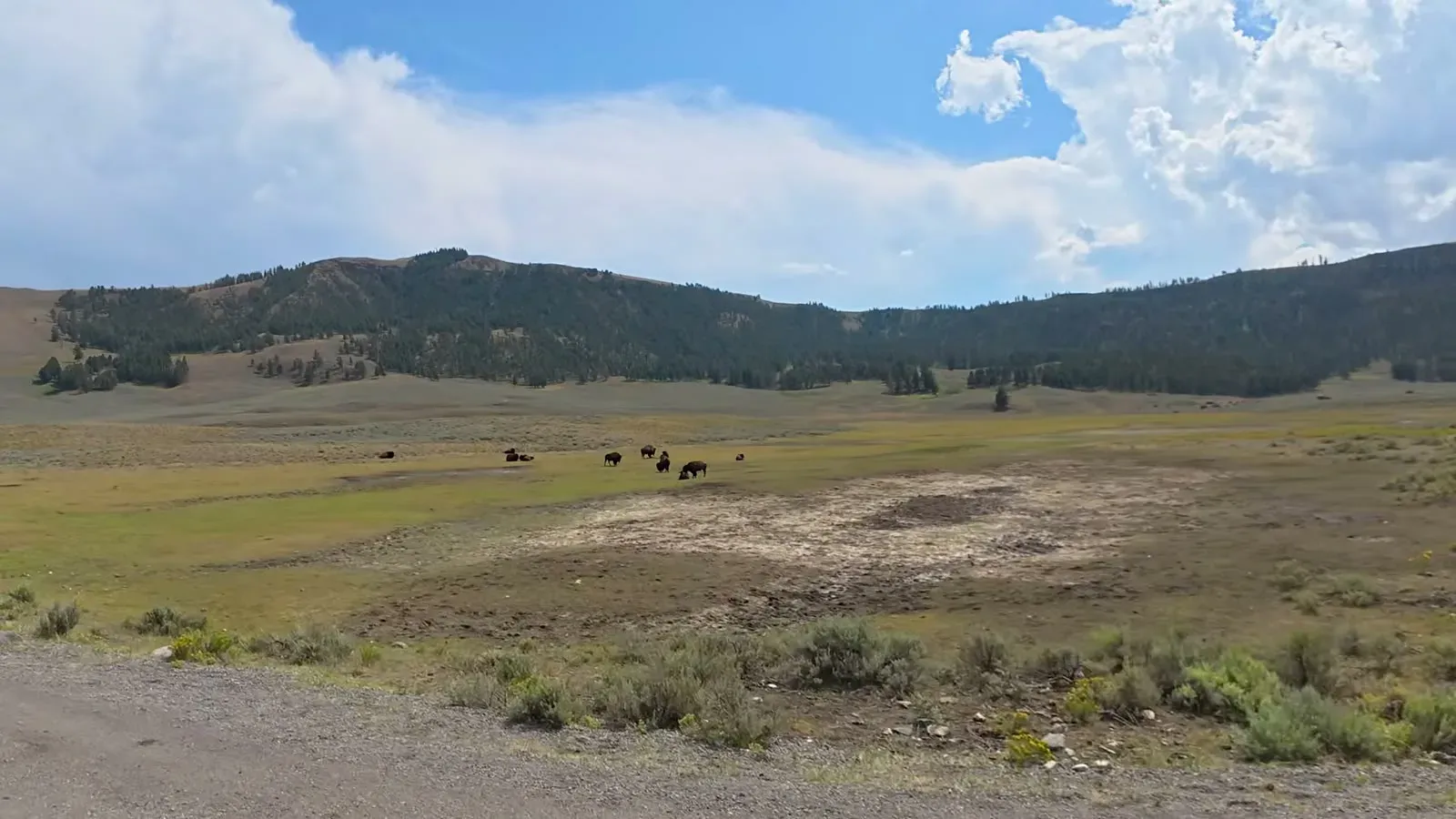
We saw herds of bison and a few small, light-colored animals we could not identify. They looked a little like deer. If this were The Lion King we would have called them gazelles.
We did not drive all the way to the end. Sunrise and dusk are supposed to be the best times for wildlife here, and we were there in the middle of the day, so we turned back toward Mammoth while we still had time. We also did not feel the need to get close to the bison. We had already been very close to them at Wind Cave.
A bison jam, and a tourist's bad decision
We had just turned the camera off when traffic stopped. A bison was walking down the middle of the road, right onto a bridge.
We stopped and waited. The bridge was a no-passing zone. The driver behind us did not wait. She pulled out and zipped past us, and came very close to hitting the bison. We do not think she even saw it. She was probably angry at us for stopping.
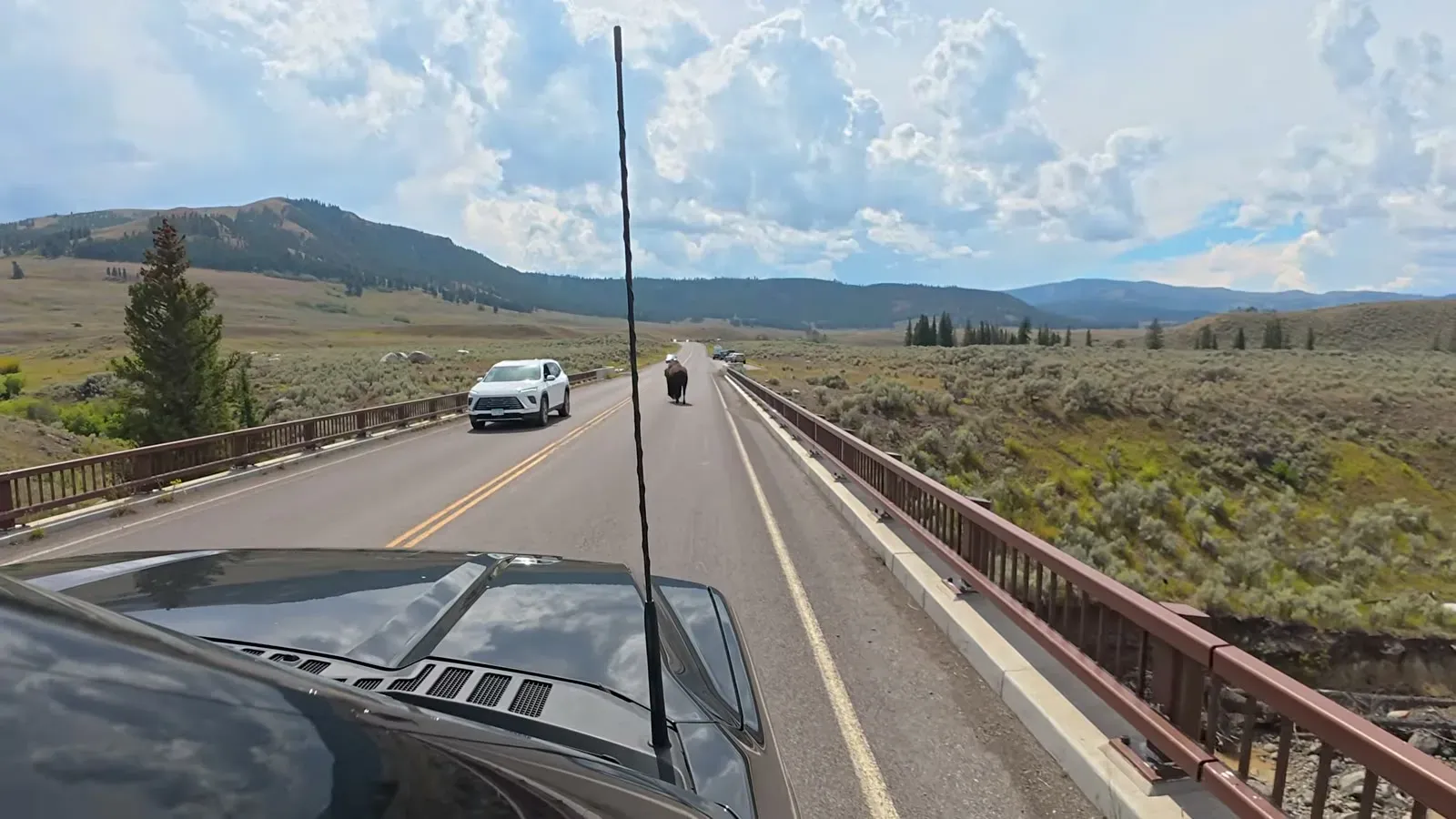
We were both a little shocked. People come to a national park and act wild, when the animals are supposed to be the wild ones. Bison injure more visitors in Yellowstone than any other animal, and they can run 35 miles an hour. Nobody outruns one.
So we let him do his thing. A bison close to the truck could take out a tire, and he was in no hurry. Once he was far enough over, we went past slowly. Further on, the herd was rolling around in the dirt with their babies, which was a much better note to leave the valley on.
Over the mountains to the Roosevelt Arch
From the valley we headed northwest. The road climbed over the mountains under a storm that kept getting darker, and then came down a long set of switchbacks. A sign later put the elevation at 6,239 feet, compared with about 8,000 back at the canyon.
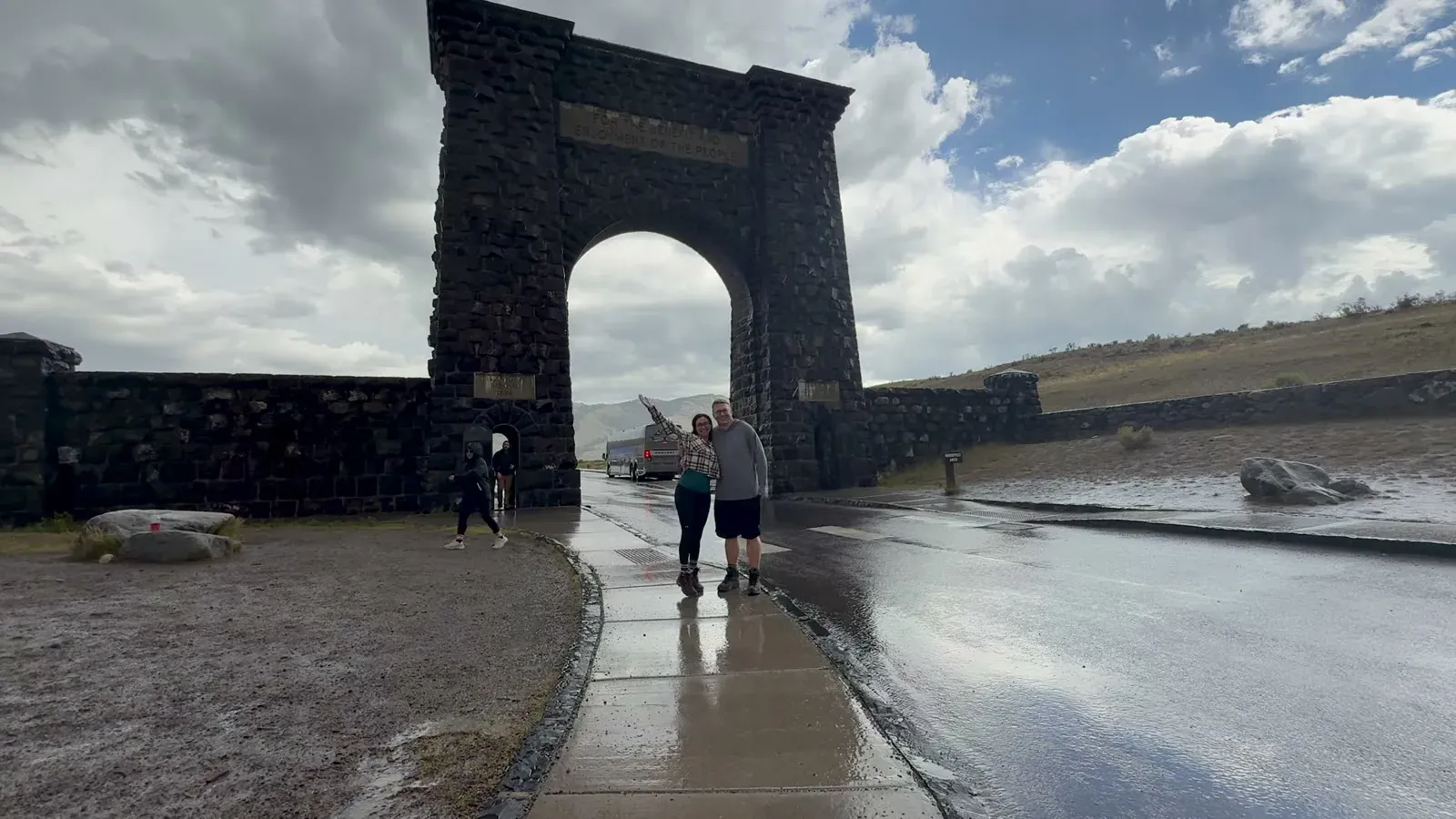
We made it to the Roosevelt Arch at the north entrance in the rain. Teddy Roosevelt laid its cornerstone in 1903 and never came back to see the arch finished. We took our photo by the Yellowstone sign anyway, rain and all. There was a farmers market going on nearby with people huddled under tents.
On the way back, Nathan said we were heading to Mammoth Caves. Mammoth Cave is in Kentucky, about 1,600 road miles away. We were going to Mammoth Hot Springs.
Somewhere along this stretch one of our microphones also slid under a seat, and the other one ran out of battery, so for a while only one of us could talk until we got them charged again.
Mammoth Hot Springs
We stopped at the visitor center first for a national parks passport stamp. Inside are displays of elk, a mountain lion and other park animals, and outside there is a big map of the terraces that helps you plan the walk.
Then we walked the lower terraces. Mammoth looks nothing like the geyser basins. It is white and orange stone stepping down the hillside, with water running over some parts while other parts have dried out and gone gray. These springs lay down about two tons of new rock every day.
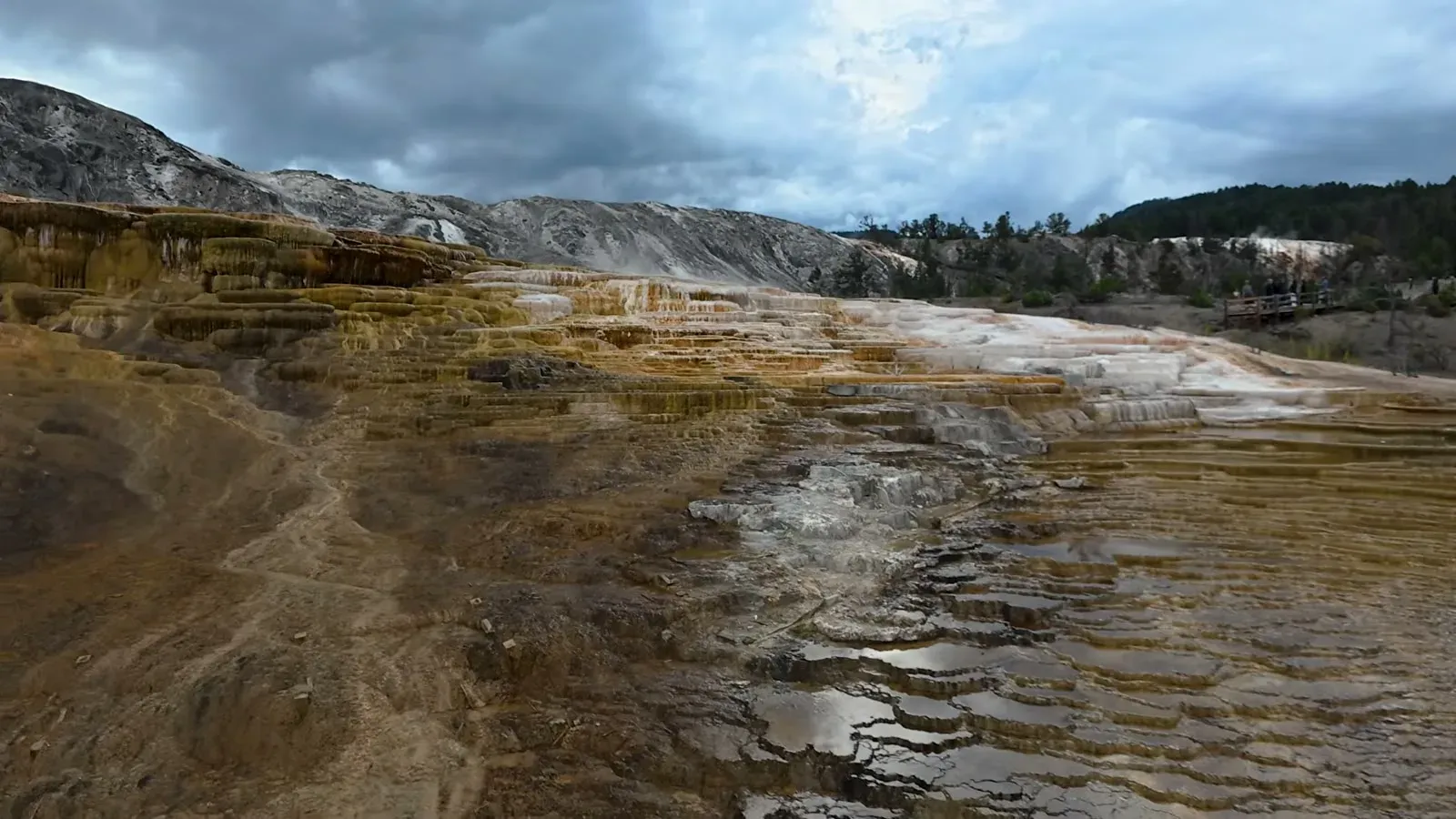
There is a rock formation called the Devil's Thumb near the bottom, and a lot of stairs on the boardwalk. We found out partway up that there is a parking lot at the top, so you can see a lot of it with a short walk.
That is one thing we liked about Yellowstone in general. Many of the big sights are reachable without a hard hike, and a lot of the boardwalks are accessible. We saw someone in a motorized wheelchair at the canyon taking in the same views we were. If you want to see the things most people do not, you will need a longer hike. We did not do those this time. Maybe next time.
Meeting a viewer, and a camping lesson
At Mammoth, someone recognized us from the YouTube channel and stopped to say hello. That was very exciting for us. Thank you for coming over.
She was camping inside Yellowstone at Fishing Bridge with a Brinkley Model Z 3100, and told us she made the reservation a year ago to get a spot. Our rig is 40 feet, a little longer than hers.
So that is our camping lesson. If you want to camp inside the park, book about a year ahead. Our situation is different. We are full-timers and still working, so we can usually only move the RV on weekends. If you can travel midweek, it gets easier to find spots.
Fabiola's advice: if you camp in the park, stay at least five days. That gives you time to actually enjoy your campground, see the visitor centers and the exhibits, and not feel rushed.
The Upper Terrace Drive
We were short on time by now. We were trying to make it to a rodeo, but we decided there was just enough time to drive the Upper Terrace loop first.
It is a one-way road, so it is easy to drive, with places to pull over and walk to different springs. Right at the start, a fox crossed in front of us.
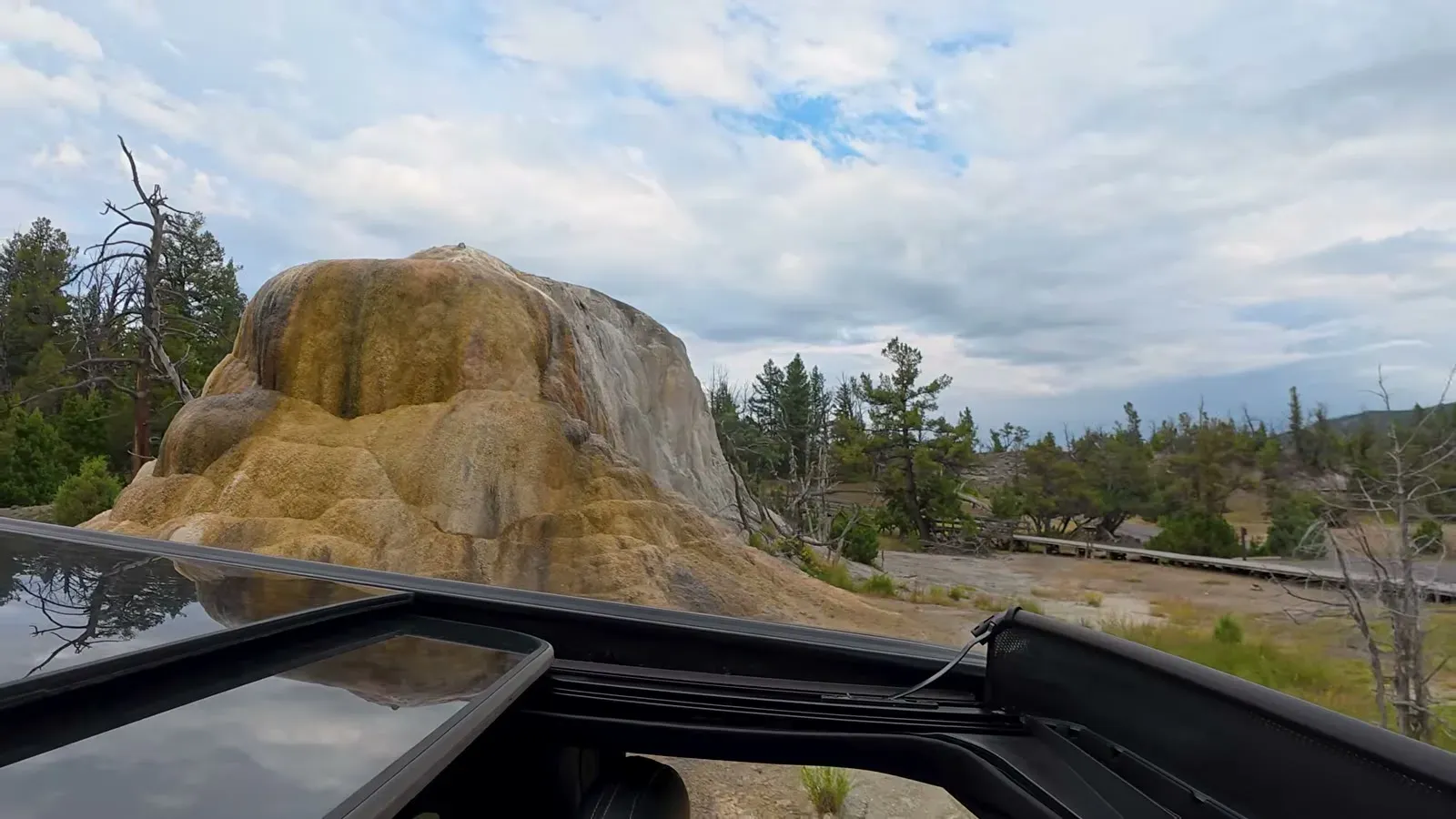
If you can only do one, we would pick the lower terraces, where you walk around on the boardwalks. If you would rather stay in your vehicle, the upper drive works well.
After that the road took us between big rock walls on both sides, which reminded us of Custer State Park. Near the west exit we drove over a bridge with a spring steaming right under it, fog and egg smell and all. It is hard not to think about what is under you in this park. Nathan admitted that on the boardwalks he is glad his feet are big enough to land on two boards at a time, just in case.
We missed the rodeo
We did not make it to the rodeo. The video ends with something else new for us instead: riding horses, and our first time riding in the rain.
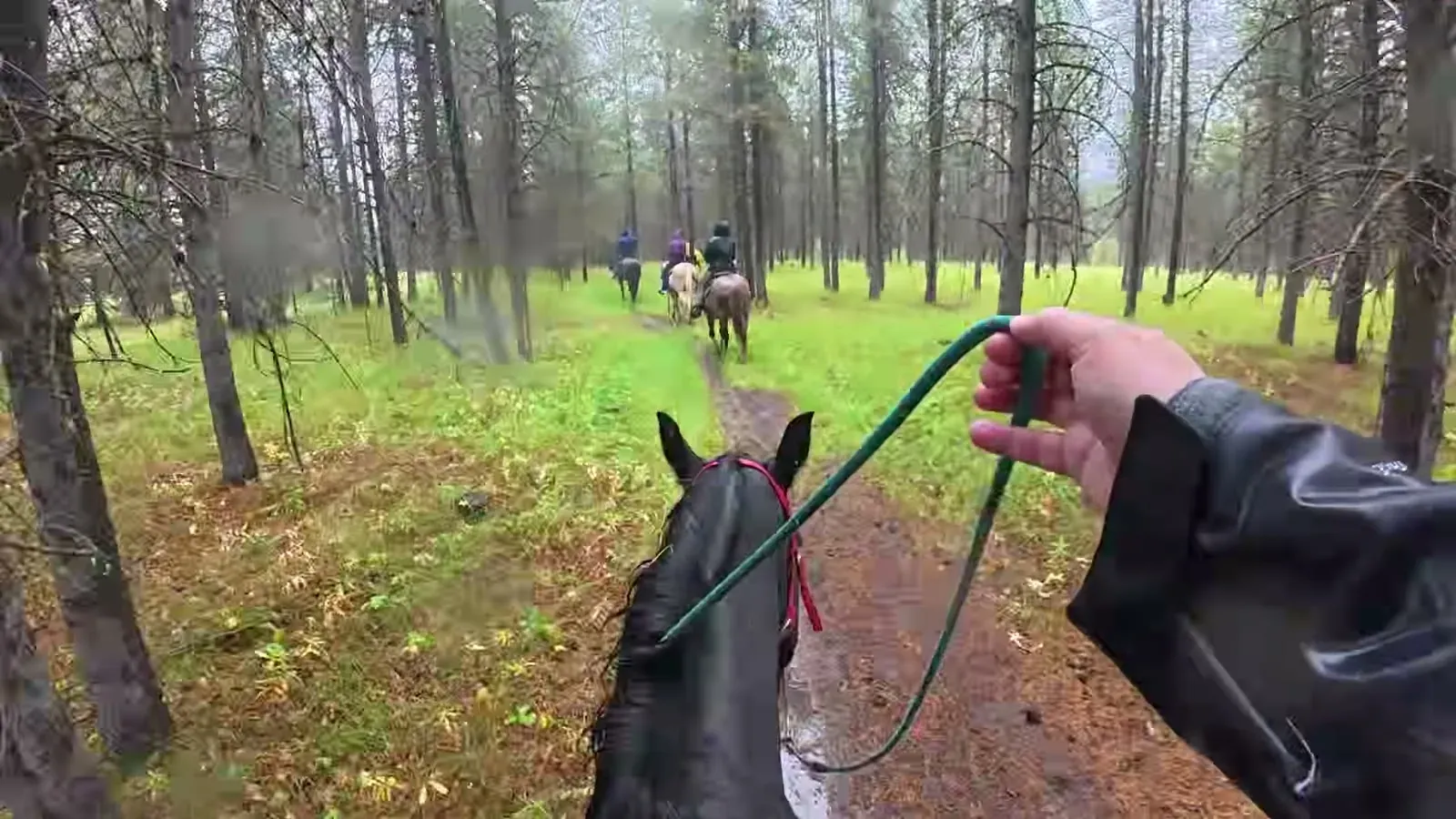
The horses knew the trail far better than we did and mostly made their own decisions. One of us compared it to a Tesla that drives itself. One of the horses stopped to pee in the middle of the ride. An average horse makes about 2.4 gallons of that a day, plus about 50 pounds of manure.
That was the end of our Yellowstone trip. If you missed the first two days, they are in part one, Old Faithful and Grand Prismatic, and part two, our night in a cabin at Canyon. We also send a short weekly newsletter with where we are and what we are up to.