
Running out of fresh water is what ends most boondocking trips. Not power, not tanks, water. We learned to refill without moving the rig across two separate stays: first with buckets and a clumsy siphon at Dupuis Campground during our 15-day challenge, then properly with a water bladder during a week at a Hipcamp farm in Florida, where we moved 24.1 gallons into the tank on our first real attempt. This guide covers the method that worked, plus the potable-water handling steps we’ve since learned we should have been doing all along.
Step 1: Find a potable water source and confirm it really is one
Before anything else, you need water that’s safe to drink. Campground spigots, dump stations with a marked potable fill, RV parks that sell a fill for a few dollars, or a host’s spigot if you’re on private land. At the Hipcamp farm, the property had a spigot too far from our site to reach with hoses, which is exactly the situation this whole method exists for. Ask the owner or host whether the spigot is on well water or city water and whether they drink it themselves. If a spigot isn’t marked potable, treat it as not potable. For a lot of rigs, water from the fresh tank comes out of the kitchen faucet later, so this is not the place to guess. We mostly don't drink from our fresh tank directly; drinking water usually came from store-bought jugs, and when we did drink tank water it went through a Brita filter first. We still treat every fill as if we drank it straight, because habits are cheaper than mistakes.
Step 2: Use food-grade containers and a drinking water hose
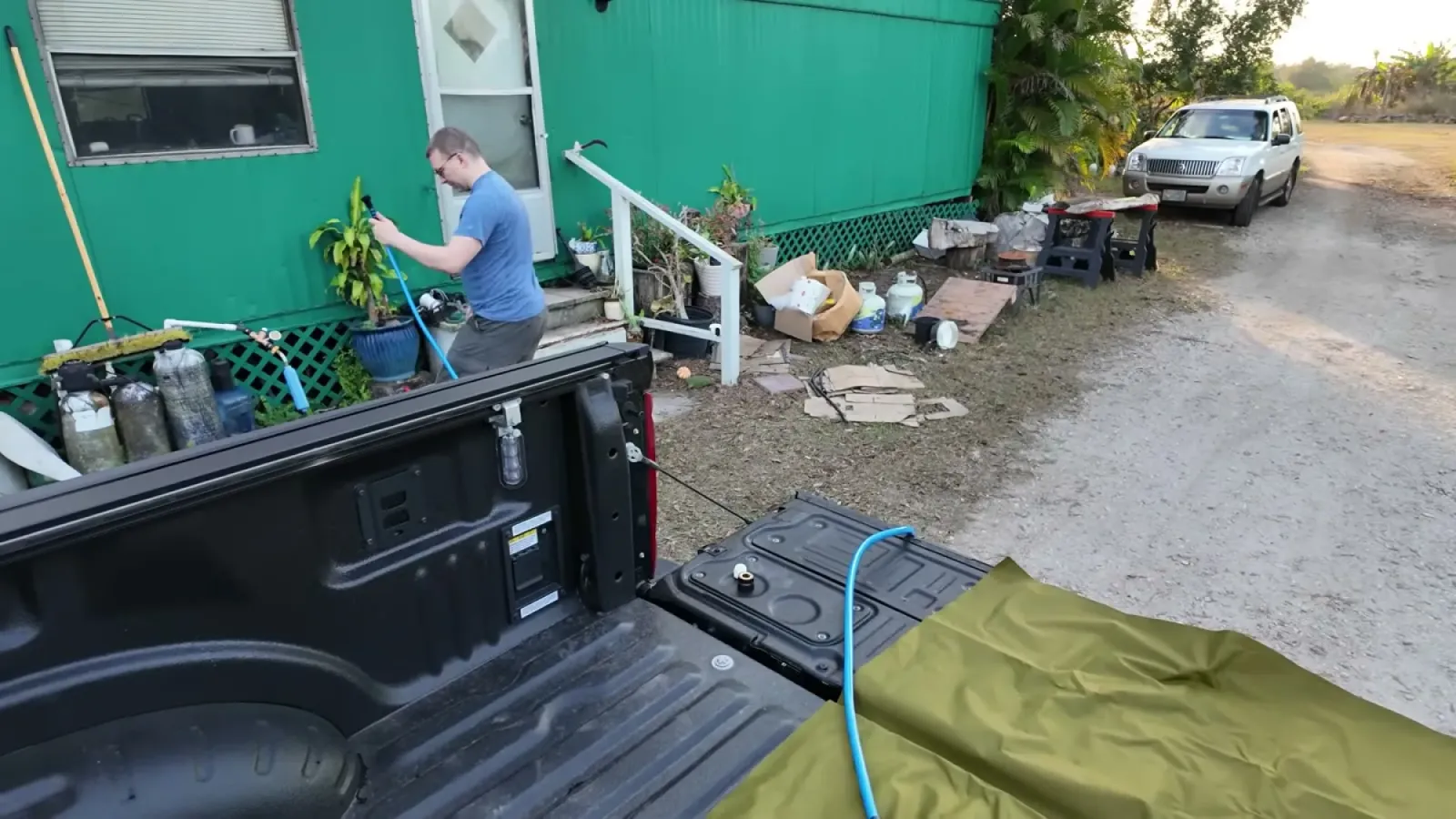
Everything the water touches should be rated for drinking water. That means a bladder or jug made of food-grade material (our water bladder is polyurethane-coated nylon rated for potable water), and a white or blue drinking water hose, never a green garden hose, which can leach chemicals and may contain lead. The CDC recommends sanitizing storage containers before use with a teaspoon of unscented bleach in a quart of water, sloshed to coat every surface, then rinsed and air-dried. If your bladder or hose has been sitting in storage, sanitize it first. Ours sat unopened for over a year before we used it, and we went straight to filling. Do the 10-minute sanitize we skipped.
Step 3: Fill the bladder at the source, not at the rig
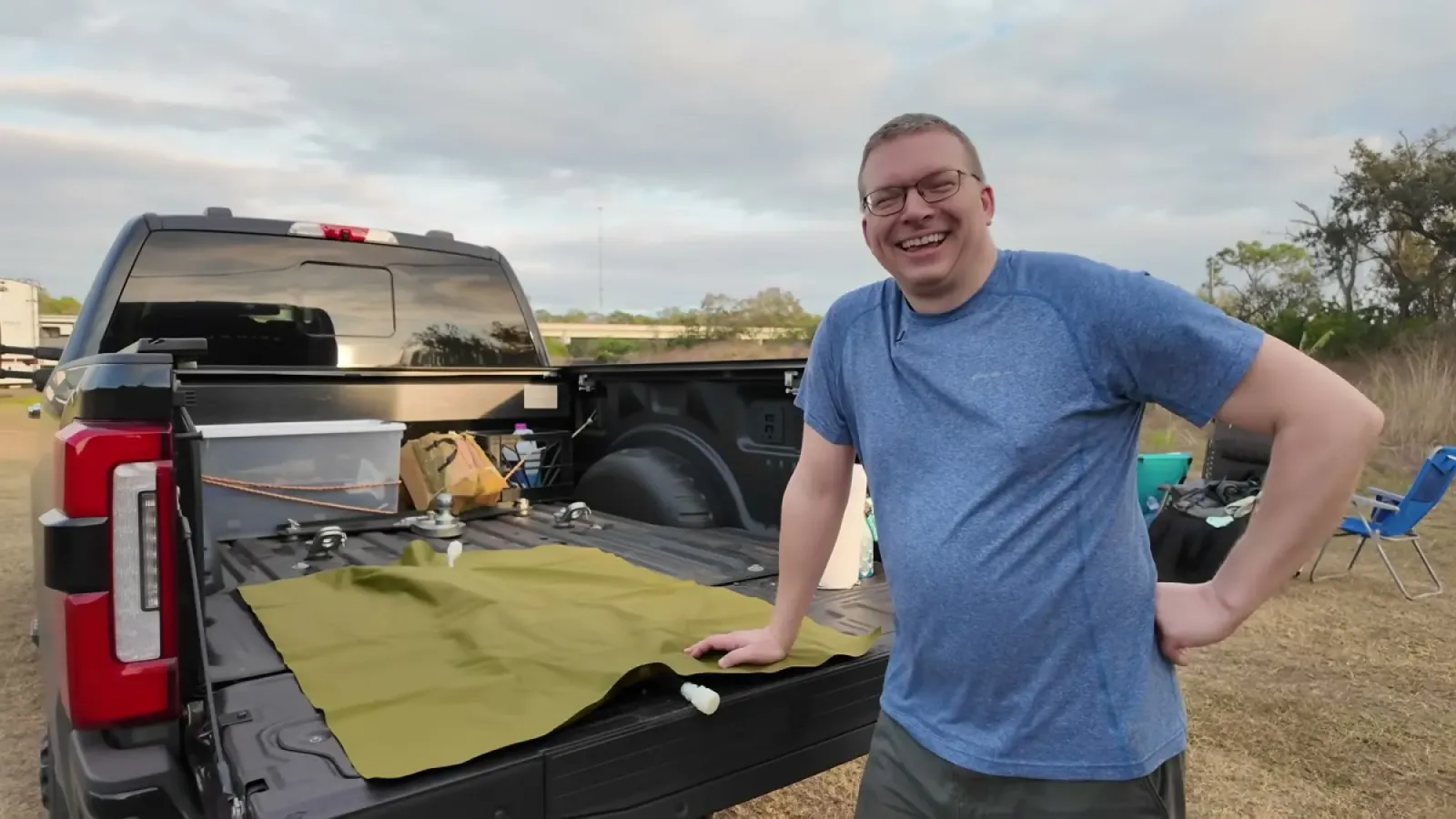
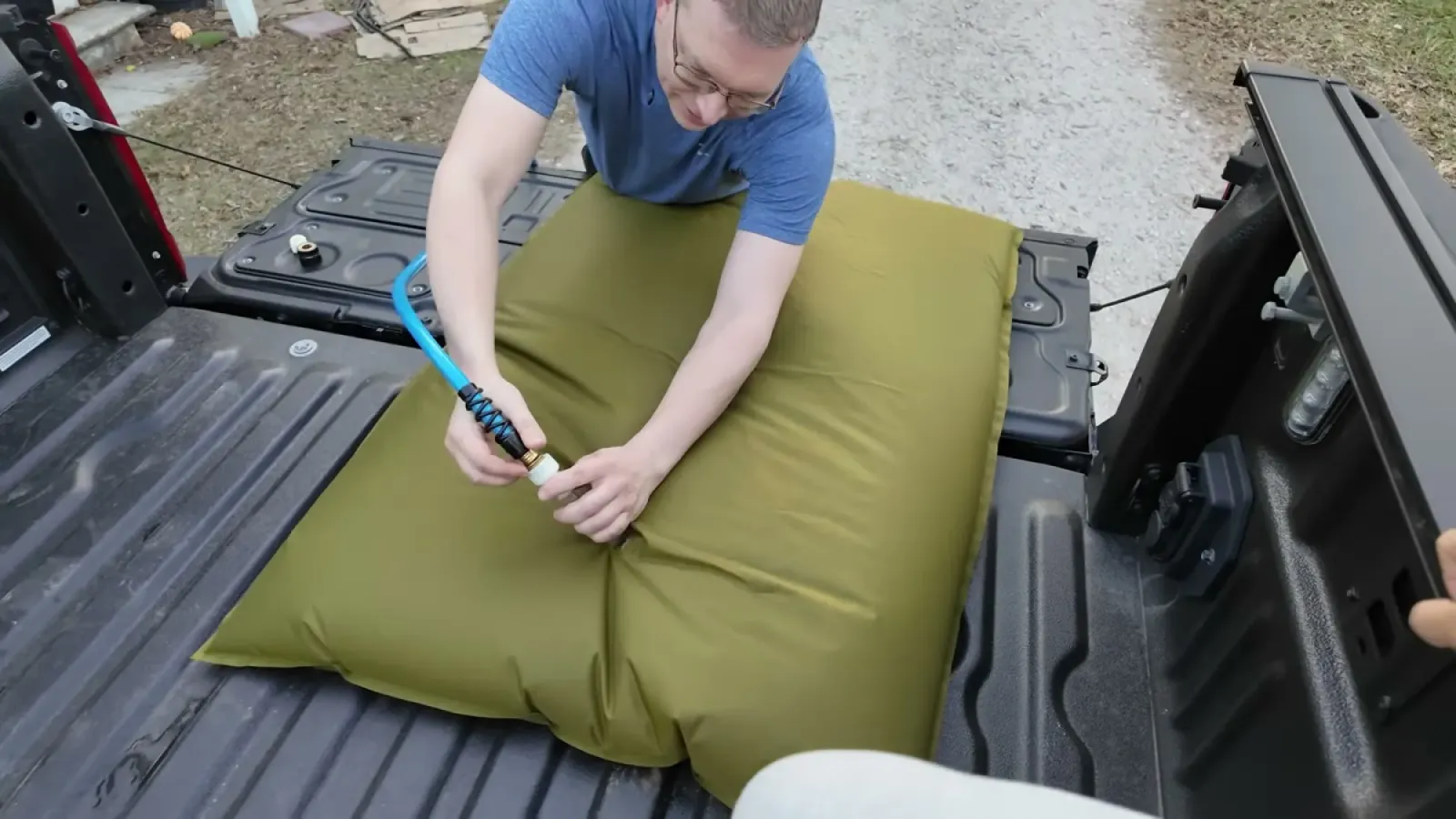
A water bladder only makes sense if you fill it where it will be transported. Water weighs about 8.3 pounds per gallon, so even our modest 24-gallon fill was roughly 200 pounds. You will not be carrying that. We laid the bladder flat in the truck bed, drove to the spigot, and filled it right there through the hose connection. Leave a little slack rather than filling it drum-tight, and check that the cap is seated before you drive. On the slow drive back, the water sloshes, so take it easy on turns.
Step 4: Park for gravity, then transfer into the tank
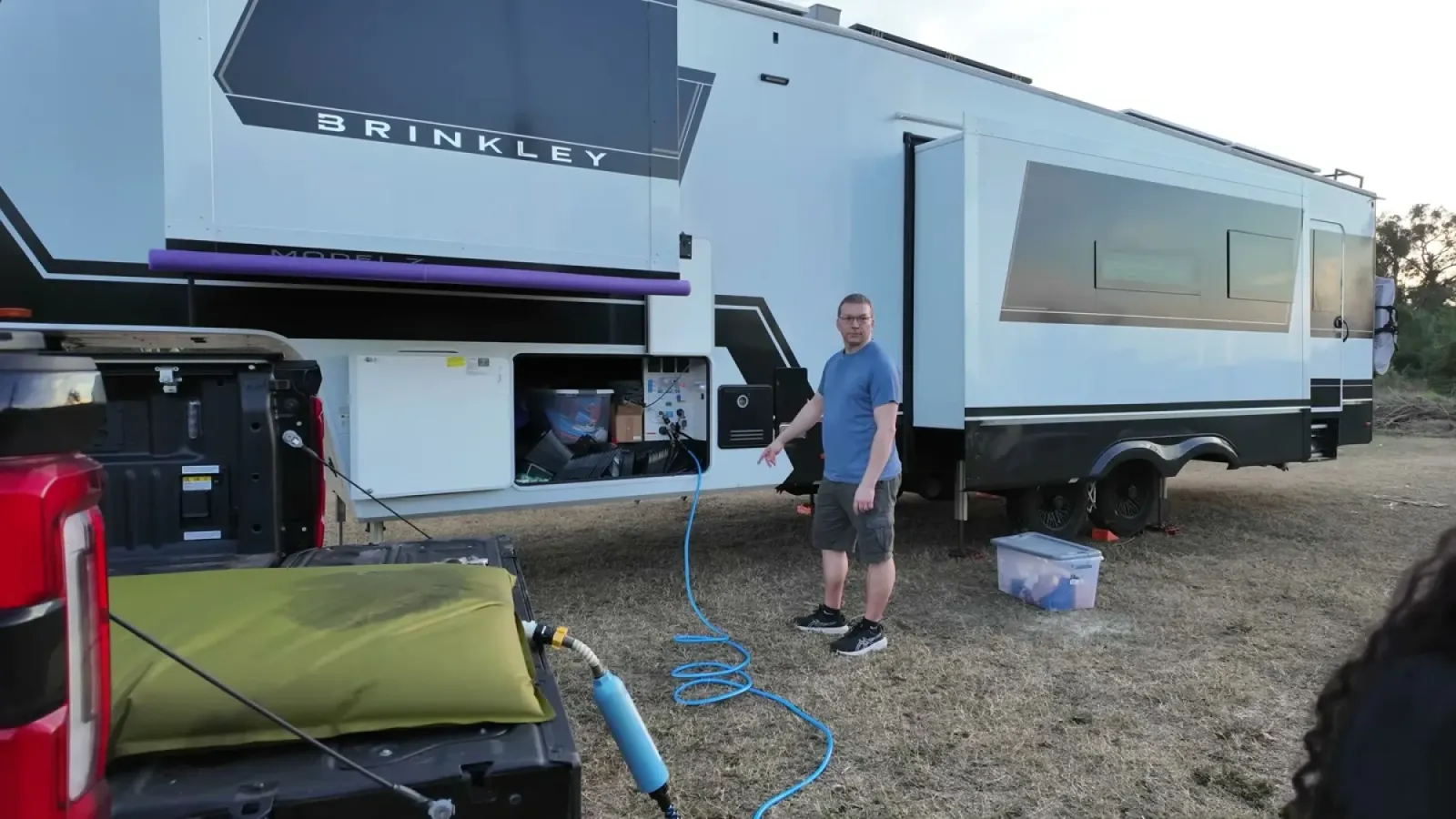
Back at the rig, height is everything. A siphon or gravity feed only flows downhill, so the bladder in the truck bed needs to sit higher than your fresh water inlet, and a truck bed usually clears that bar. We connected a hose from the bladder’s outlet to the gravity fill port and started the siphon, and once the flow began it ran on its own, no pump needed. Our first attempt took some trial and error, mostly getting the air out of the hose so the siphon would start. Fill the hose with water before connecting it rather than starting the siphon by mouth, which puts your mouth on a drinking water fitting. If your fill inlet sits higher than your container, or you want speed, a 12-volt transfer pump rated for potable water will move a full bladder in a fraction of the time; RV With Tito’s guide covers pump options well. Our gravity run moved 24.1 gallons and cost us nothing but patience.
Step 5: Know your real reserve before you need it
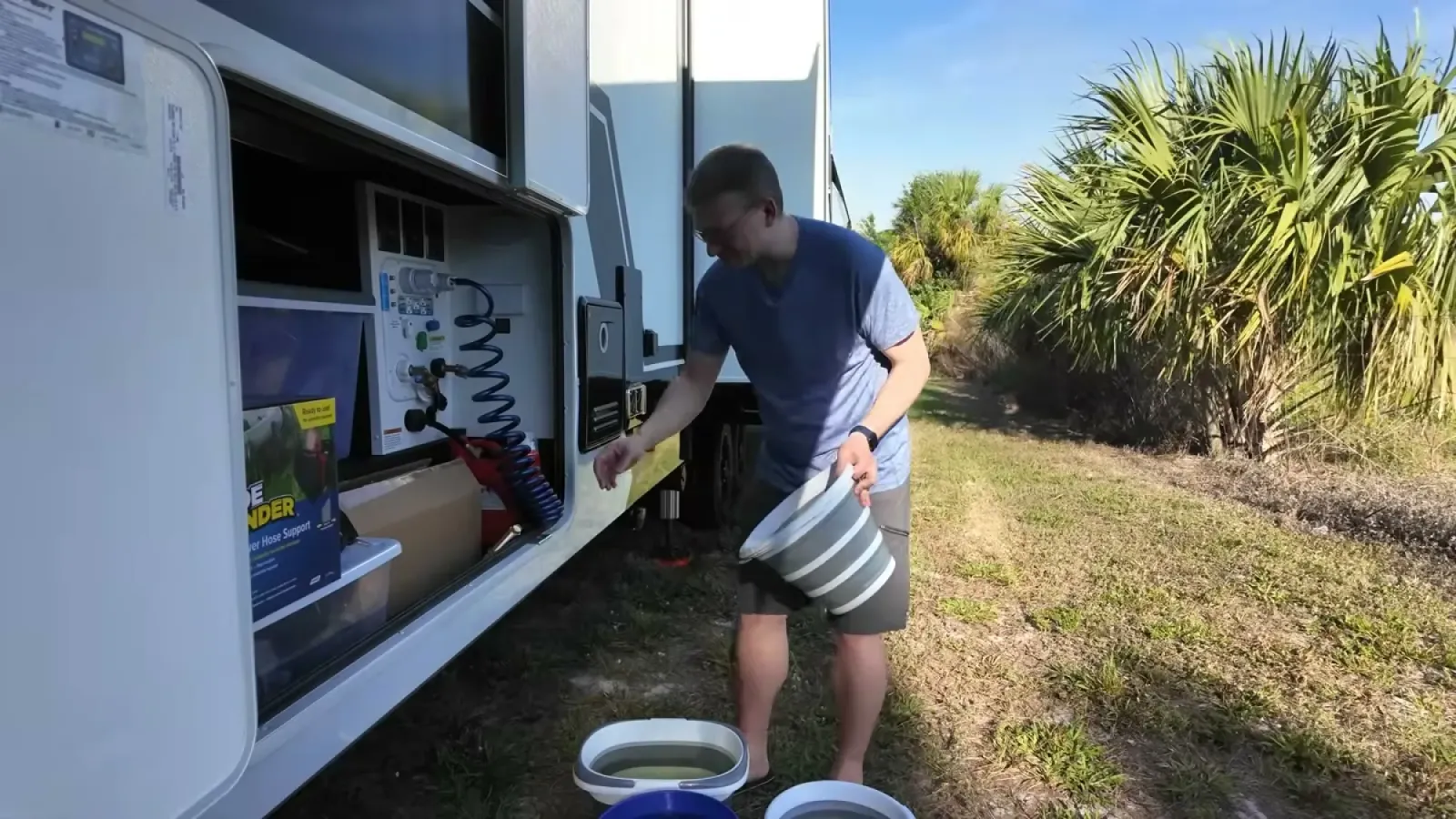
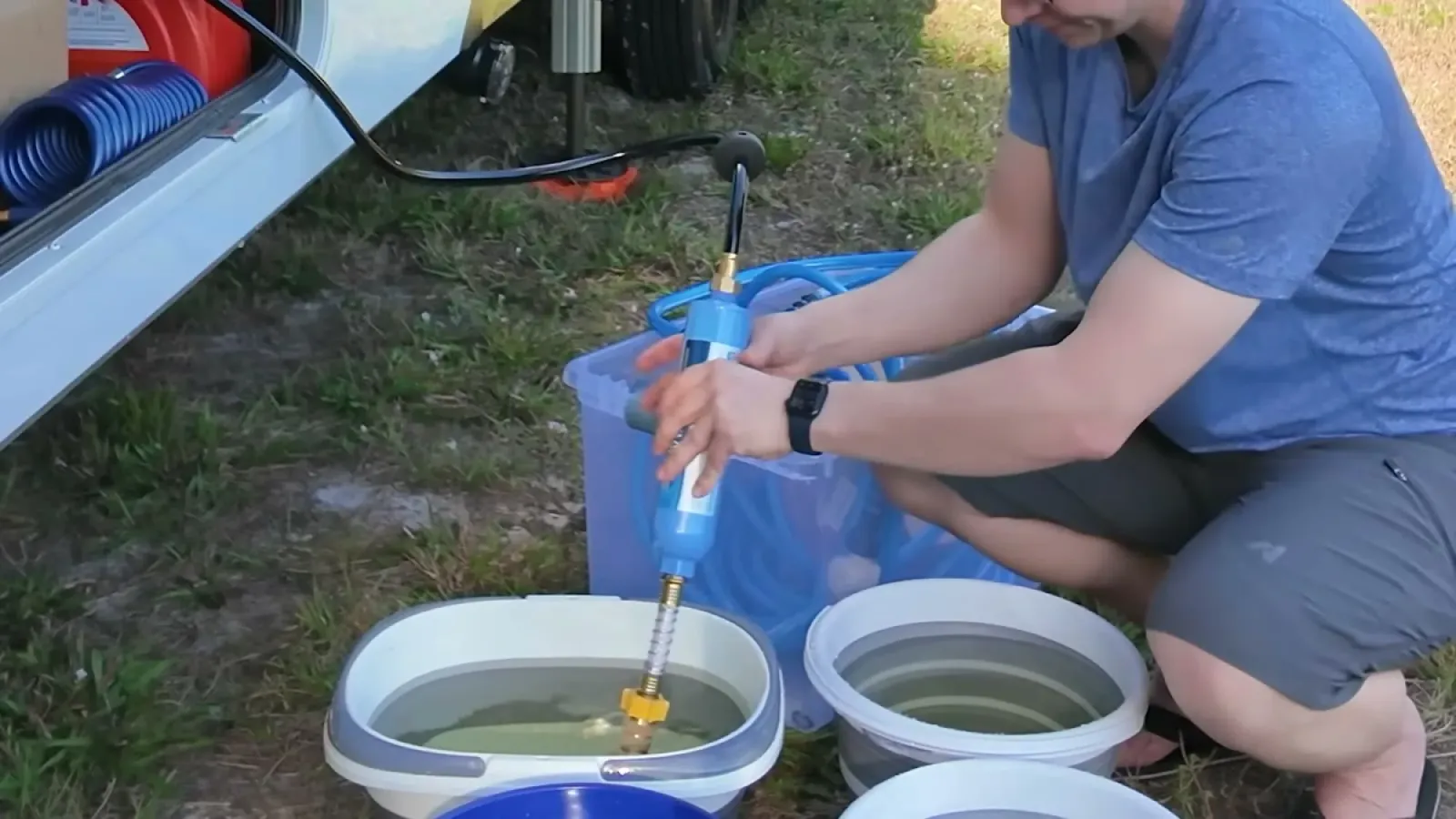
The refill matters most when your gauge says empty, and RV tank sensors lie. During the Dupuis trip we opened the low-point drain when the monitor read empty and caught what came out in collapsible buckets, one after another. There were still multiple gallons in the tank. Run that test once at a campground and you’ll know exactly how much buffer “empty” really gives you, which changes how you ration the last days of a stay. We then siphoned that water back into the tank, with a lot of sputtering, which is how we learned the siphon method in the first place.
What we got wrong
Plenty, and it’s all on camera. We hauled the bladder around for over a year without testing it, so our first setup happened under pressure instead of in a driveway. We never sanitized the bladder before that first fill, even after a year in storage, and the CDC guidance says to sanitize containers before use. At Dupuis, the buckets we drained into were ordinary collapsible mop buckets, not food-grade containers, and we siphoned that water back into the fresh tank anyway. In our defense, we rarely drank from the fresh tank, and when we did it went through a Brita filter first, which lowers the stakes of both of those. If you drink straight from yours, food-grade and sanitized is not optional. We also waited until day five to do the bladder run at the farm instead of topping up early, and we still ran dry on day seven. The method works. Our execution was the beginner version, and the fixes above are cheap.
While writing this we also leaned on Camping World’s fresh water sanitizing walkthrough for the tank-side cleanup steps. We have since sanitized our own tank the bleach-free way, and wrote up every step in how to sanitize an RV fresh water tank.
You can watch both refills happen, mistakes included, in the bladder test at the Hipcamp farm and the bucket experiment from our 15-day challenge.
This guide describes how we did it on our own rig. We are not RV technicians, and this post may contain mistakes or steps that don’t apply to your setup. Proceed at your own risk, and double-check anything safety-critical with a professional.