
After two weeks parked at a family property in Michigan, our tanks hit full and we ran out of excuses. It was time to finally use the 36-gallon portable waste tote and macerator pump we'd been hauling around the country like expensive ballast. This episode is the whole process, unedited in spirit: the setup, the mistakes, one genuinely gross moment, and the workflow we'd actually repeat.
The gear we finally unboxed
The two main pieces are a Rhino 36-gallon tote tank and a 12V portable macerator pump. The idea is simple: instead of hitching up and towing the rig to a dump station every week, you pump your tanks into the tote, drive just the tote to the dump station, and come back. The macerator grinds everything down so it can move through a small-diameter hose instead of the big stinky slinky.

That's the theory. The practice took us most of a day to figure out.
What went wrong first
We started with the kitchen gray tank as a warmup, then moved to black. Our first attempt at filling the tote barely flowed, and we spent a while confused before figuring out the venting problem: if air can't escape the tote while liquid comes in, the flow chokes. The tote has a side fill port for a reason, and once we used it properly and got the venting sorted, everything moved the way it was supposed to.
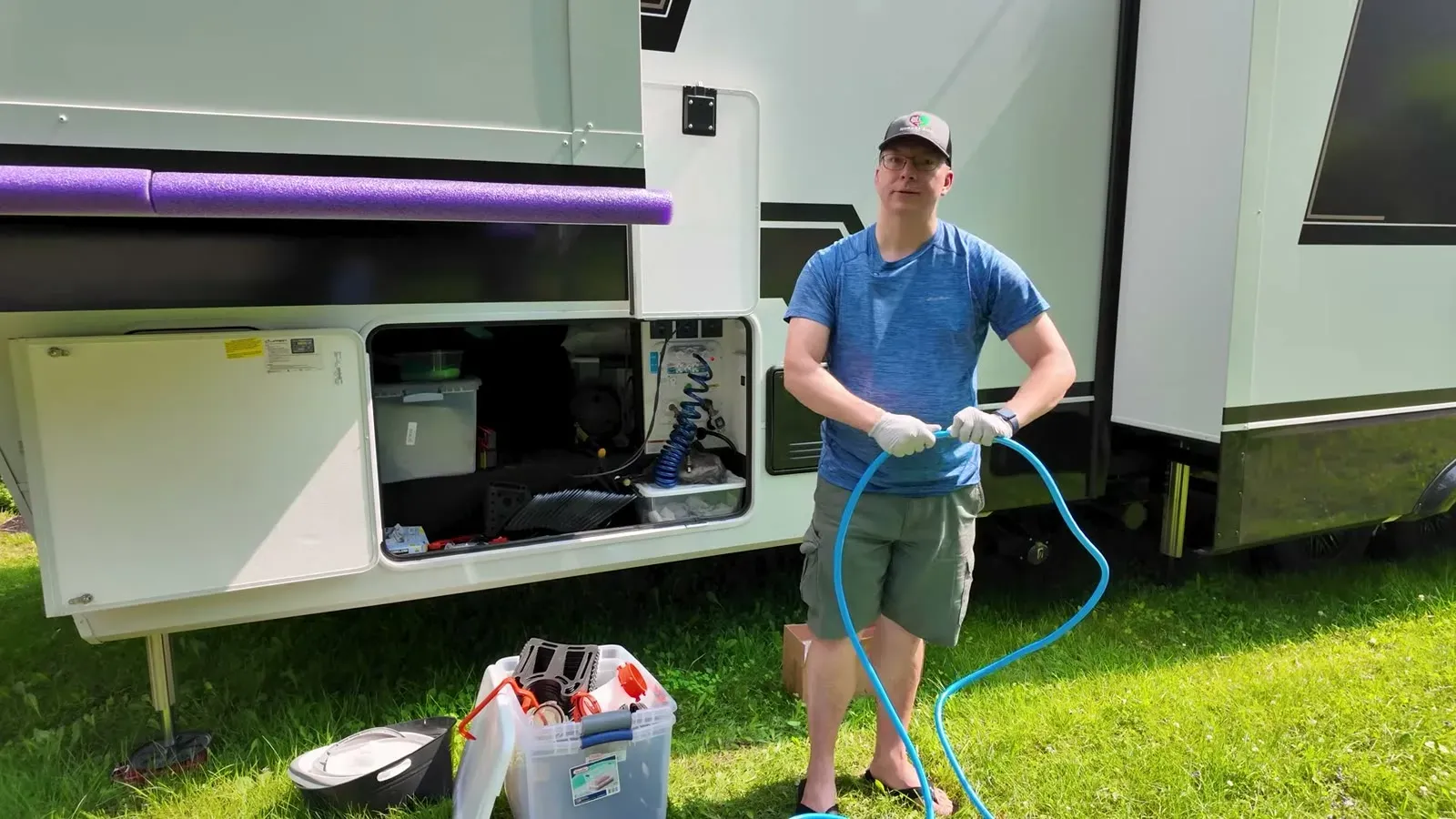
The bigger lesson was the hose. The cheap starter sewer hose that came with the rig leaked at the fitting, which is exactly the failure you do not want in this particular job. We upgraded to a Rhino Extreme hose kit with proper fittings and added an inline shut-off valve, which turns disconnecting from a gamble into a non-event. If you take one thing from this post: do not do tank work with a hose you don't trust. We learned that the visible way, in a moment the chapter list politely calls the Poopsie.
Hacks that earned their spot
A few things we'll keep doing every time. The shut-off valve on the hose end, already mentioned, is the best five minutes we spent. Pool noodles sliced lengthwise and wrapped around the gooseneck frame protect both the truck bed rails and our shins, and they cost almost nothing. And we now treat our tank sensors as fiction. The panel said one thing, the actual flow out of the tanks said another, and the tanks were right every time. We time our fills and watch what comes out instead of trusting the lights.
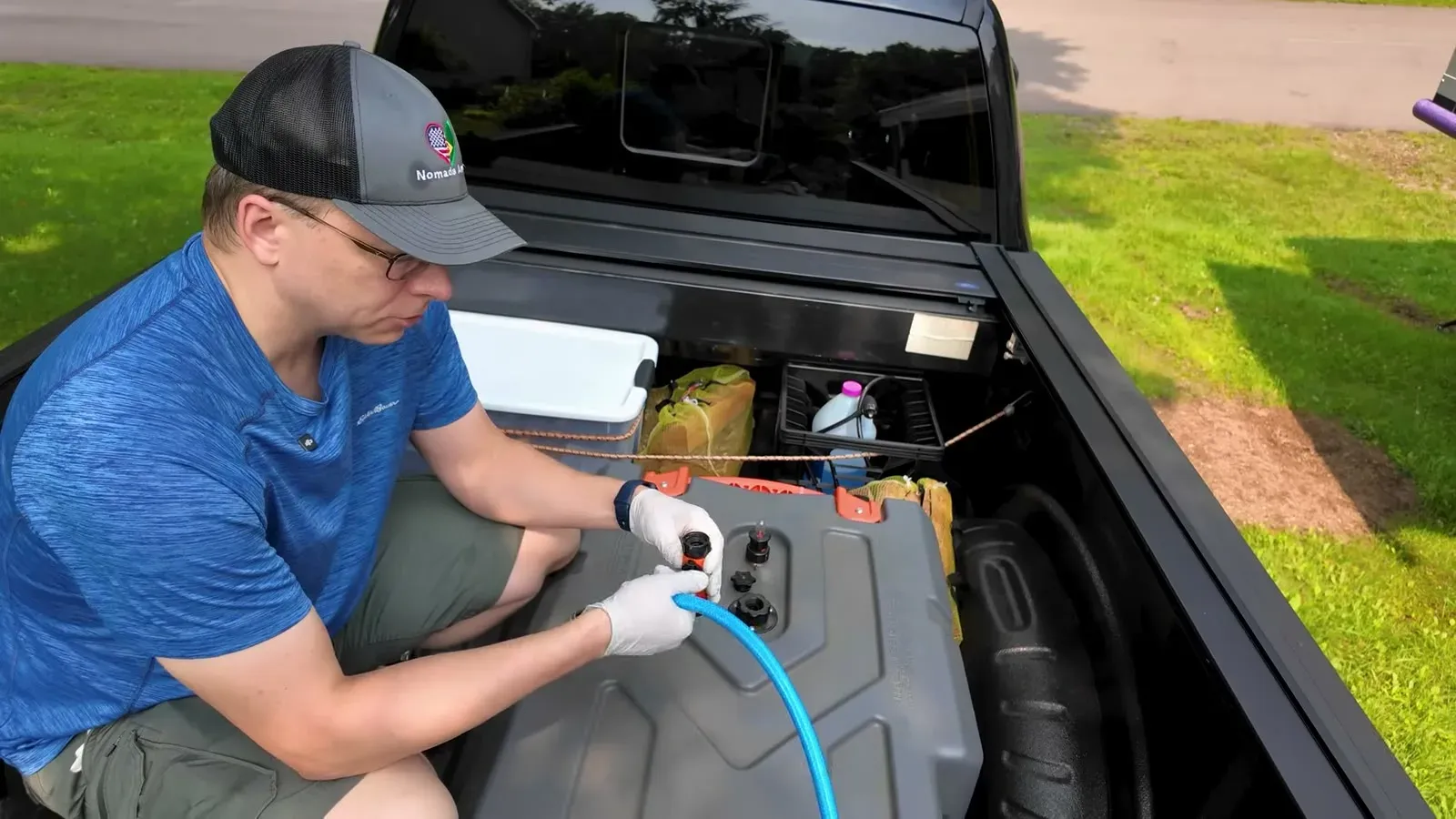
Towing the full tote with the truck also beats dragging it by hand. Thirty-six gallons of black water weighs about 300 pounds, and the little wheels on these totes are not interested in soft ground.
Was it worth it?
Yes, with caveats. The tote-and-macerator system works and it means we can stay parked somewhere good for weeks without moving the rig. But it is not a five-minute chore, at least not the first time. Between venting confusion, the hose swap, and two full fill-and-dump cycles, this took us the better part of a day. Next time we think it's under an hour, because the workflow is finally dialed.

We celebrated with pasties by the lake, which is the most Upper Peninsula sentence we've ever written.
If you've done the tote-and-macerator routine longer than we have and you're wincing at any step, tell us in the comments on the video. We're still learning and we'd rather hear it from you than from another Poopsie. Watch the full video on YouTube. We also send a short weekly newsletter about where we are and what broke this week. The signup form is on our newsletter page.